
Kei’Trel Clark was barely a year into college football when he decided that a place that had given him a scholarship was no longer a place he wanted to be. He had arrived there as an unranked recruit from Virginia, started seven games as a freshman and finished the year with 38 tackles, six pass breakups, a sack, and a blocked field goal. Then he entered the transfer portal.
Watch What’s Trending Now!
Clark later gave an unusually personal reason for the decision. He said the “cultural” competence of multiple levels of leadership at Liberty did not line up with his “code of ethics.” Louisville gave him the next stop, and he built his career from there: four years of college football, two All-ACC selections and, eventually, the No. 180 pick in the NFL Draft. Three years into his NFL career, that same insistence on doing things on his own terms has put Clark at odds with the league.
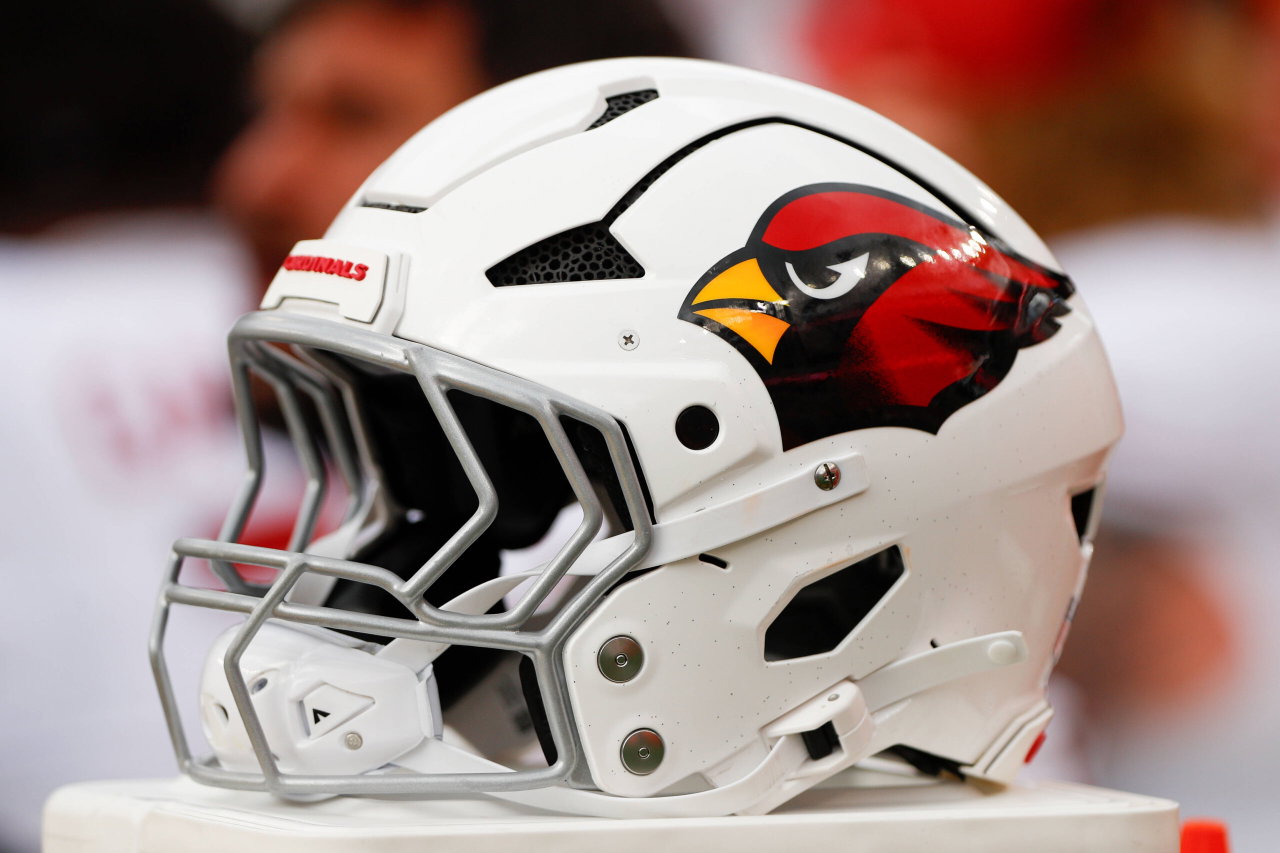
The Cardinals cornerback was fined $6,651 after wearing eye black reading “GLORY BE [peace symbol] 2 GOD…” during Arizona’s Week 1 win over the Los Angeles Chargers, a penalty he has now publicly questioned.
“I need answers,” the cornerback wrote on his Instagram Story as he shared a screenshot of the NFL’s notice. “6.6K for Giving God the Glory.”
Clark did not stop with that one post. He followed it with a string of memes aimed at the fine and also shared a picture of himself wearing eye black marked “INSHALLAH.” There is no indication, however, that the NFL separately reviewed or fined him for that image, so it is more accurate to treat it as part of Clark’s response rather than evidence that the league overlooked another violation.
The reason for the $6,651 fine is Rule 5, Section 4, Article 8 of the NFL’s 2026 rulebook. It prohibits players from wearing, displaying or otherwise conveying personal messages in writing or illustration while they are visible to the stadium or television audience on game day, unless the league has approved the message in advance. That covers more than political statements or charitable campaigns; the rule is broad enough to include personal slogans and messages such as the one Clark put on his eye black.
That distinction matters in Clark’s case. The NFL’s notice did not say he was fined for expressing his faith. It cited the unauthorized personal message on his eye black. The same provision has been used for other kinds of messages, including political and humanitarian ones, which makes the rule itself the common thread between the cases.
According to Rule 5, Section 4, Article 8 under the NFL Uniform and Equipment Rule, the players cannot display any personal message in writing or illustration on game days. But the players can wear their messages if they get them approved by the league’s officials ahead of time. The rule applies across the board to political causes, charitable campaigns, and personal slogans in an effort to maintain uniform broadcast standards.
However, Kei’Trel Clark made it clear that a four-figure penalty won’t silence his faith. He conveyed the message through the last one of his barrage of Instagram Stories.
“I got to report to God at the end of my days on the day of judgment!” Clark wrote. “I’ll always give God the Glory and out loud 😎 All good.”
This is not Clark’s first run-in with the NFL’s uniform rules. In October 2025, he was fined $5,797 after wearing what the league described as a “black streamer towel” during Arizona’s game against the Indianapolis Colts. The 2025 rulebook allowed only white, licensed towels and separately prohibited streamers or ribbons hanging from any part of a uniform, regardless of their length.
The detail that made that incident stand out was just how little there was to the violation. Arizona Sports described it as a “teeny tiny towel,” while Clark’s own response made clear how he viewed the situation. He posted the fine on Instagram and wrote, “$5,700 over a towel that match the colors I’m wearing.” He then added, “We don’t wanna wear them QB towels fam,” before posting a picture of Tom Brady with a large white towel and joking, “This my drip rest of the season at DB respect to the 12.”
Furthermore, Clark was also not the only player to find himself on the wrong side of the NFL’s towel rules in 2025. Steelers safety DeShon Elliott was fined the same $5,797 after wearing an unapproved black towel during Pittsburgh’s Week 4 win over the Minnesota Vikings in Dublin. Elliott returned from a knee injury for that game and recorded an interception, a sack, six tackles and a forced fumble before learning that the league had fined him over the towel.
His response was considerably sharper than Clark’s. Elliott posted the league’s notice on Instagram, tagged both the NFL and NFLPA, and wrote, “Count your [expletive] days … Y’all worried about the wrong things. Let’s fix things that actually mean something.”
Then there was Bears safety Jaquan Brisker, whose case showed that the issue was not simply about black towels. Brisker was fined $5,797 over a plain white towel and said he had been using the same type of towel since his rookie season. His reaction was blunt: “Just got a fine for a plain white towel. wtf lol. They just be trying take our money fam. SMH.”
The financial structure makes those small details harder to shrug off. ESPN reported that a first uniform violation carried a $5,797 fine, while subsequent violations could rise to $17,389. The same report said the NFL had collected roughly $4 million in uniform-related fines since 2011, with the money going toward charitable foundations.
There is also an important rulebook detail that has changed since Clark’s first fine. The 2025 rule governing his black towel said towels had to be white and licensed by the league. The current 2026 rulebook allows towels in white or a team’s primary color, while still requiring league approval. That means the “white towels only” language should be treated as the rule that applied to Clark’s 2025 violation, not as the NFL’s current blanket towel rule.
Clark’s latest fine, however, falls under a different part of the same larger uniform system. This time, it was not the color or shape of what he wore beneath his eyes. It was the words he chose to put there.