
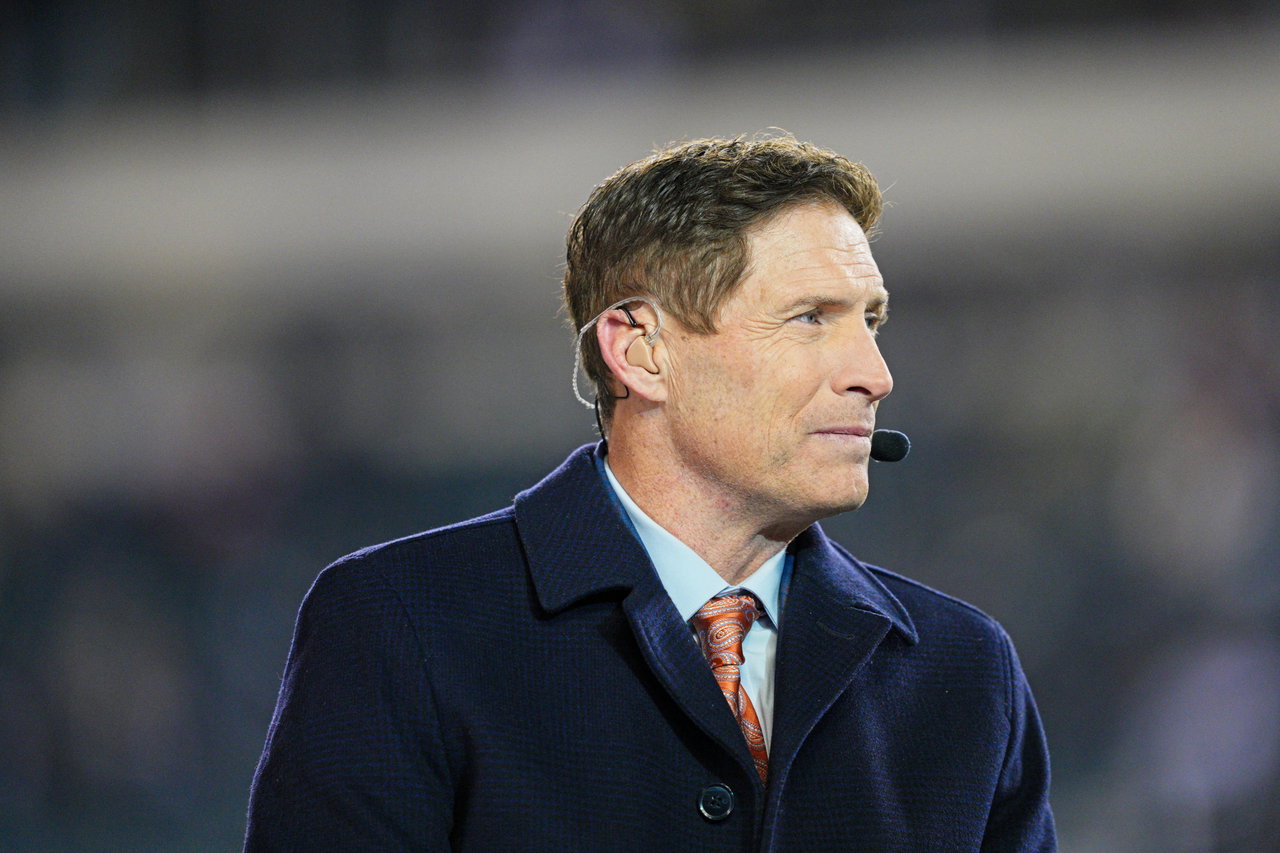
Steve Young won a Super Bowl MVP and a place in the Hall of Fame with the San Francisco 49ers, but the road there was not always smooth. The Hall of Fame quarterback has now admitted that he once wanted to settle things physically with his legendary head coach. The reason, according to Young, was the team’s poor record at the time, and he has explained what pushed him to that point.
Watch What’s Trending Now!
“Oh, jeez. … I was going to fight him,” Young said on the Dan Patrick Show. “I’d had six years of, I don’t know, whatever you want to think, victimization, that was like, pent up. And I wanted to fight him. I was yelling at him. You know, when you lose it, Dan, you know you’ve lost it when you don’t have any sense that you’re on national TV.”
“You don’t have any sense that there might be some implications for what you’re doing.”
Let’s rewind to October 1994, when Candlestick Park watched its beloved team getting bullied left and right by the Philadelphia Eagles. Young was struggling massively, having thrown two interceptions and only 99 yards through the air. It was then that Seifert made the decision to replace Young with Elvis Grbac.
Young was beyond unhappy at the decision. He could be seen cursing, frustration clear as day on his face.
To see why it boiled over, it helps to know where Young stood. He had waited since 1987 for his shot, and was only able to start for the 49ers from 1991 onwards, when Niners great Joe Montana was sidelined due to injury. But with the latter away with the Kansas City Chiefs from 1993 onwards, this was Young’s chance to leave a mark.
Young was playing his seventh season in 1994. So, with yet another QB replacing him, Young probably had flashbacks.
In his conversation with Dan Patrick, Young laughed as he recalled the moment he saw Grbac jogging into the field. Down 33-8, the 49ers were desperate.
Young said the whole thing felt personal between him and Seifert. According to him, as Seifert was heading out the door to the Carolina Panthers, he said that he always thought Young played better when he tortured him.
“It was obvious to me I should take him out the ballgame,” Seifert said. “If I didn’t handle it to everybody’s liking, it’s because I don’t have a lot of experience in this situation. And I sure hope to hell that I don’t gain any.”
Former tight end Brent Jones recalled approaching Young after the quarterback, but he was still very “fired up,” continuing to vocalize his frustration at getting benched. The next day, Jones said he was only “semi calmed-down.”
Young also recalled how his teammates had suddenly begun looking up to him as a leader since he went up against Seifert. However, the QB wanted none of it at that point, as he felt like he wanted to go home and “throw up.”
Later, he called that game the turning point of the season.
“That game, as awful as it was, galvanized our team,” Young says. “We rallied together and said, ‘We’re not gonna take this anymore,’ and from that point on, we were unstoppable.”
He was right. The Niners won 10 of their final 11 games, beat Chicago 44-15 and Dallas 38-28 in the playoffs, then crushed the San Diego Chargers 49–26 in Super Bowl XXIX. He would go on to be the next heroic quarterback in San Francisco history after Joe Montana.
As for Seifert, his San Francisco record leaves little room for complaint, with 98 wins against 30 losses over eight seasons and titles in 1989 and 1994.