
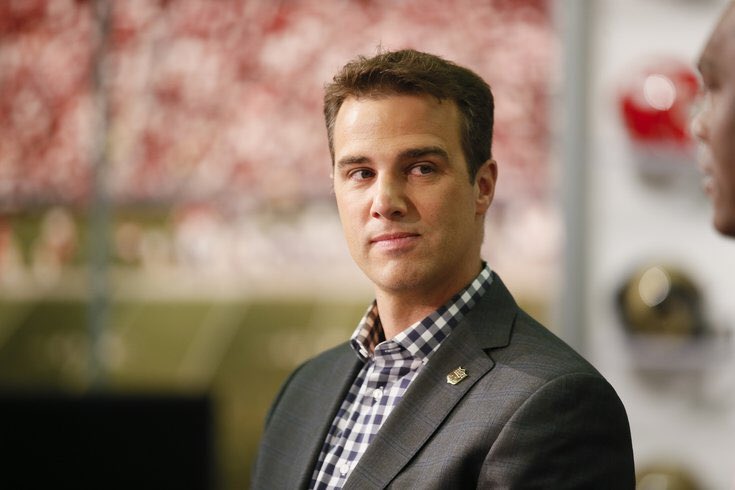
Mike Mayock developed a career by saying what others wouldn’t say in front of the camera. Today, many years away from being the analyst at NFL Network’s draft table, he’s doing the same thing again, but this time the target is the very network he worked for. During his latest appearance on a podcast, Mayock returned to an old frustration from his years in broadcasting, one that exposed an uncomfortable truth about how networks really decide who belongs on screen.
Watch What’s Trending Now!
“It was one of my really sore points at NFL Network,” Mayock said on the Ross Tucker Podcast. “It used to drive me crazy when they’d bring in a guy for the draft that was a big-name guy, that was going to talk about his position, and couldn’t tell me three names in the draft.
“And I would be like, ‘What are we doing? Like, what’s important here?’ And the producers and all the people would be like, ‘He brings credibility.’ And I would be like, ‘What about Daniel Jeremiah, Charles Davis, and me doing all the grinding of the tape? Isn’t that all the credibility we need?’ And the answer was pretty much, ‘No, we need these names.'”
So, why does this keep happening?
This isn’t unusual. Many networks pick names over knowledge. They assume that having played the game, big names would have the built-in expertise.
Here’s the thing: Most viewers just want simple, easy-to-follow analysis. If a big name can deliver the same surface-level breakdown, networks see little reason to bring in someone more knowledgeable. On top of that, players who spent years in front of cameras during their playing days already know how to look comfortable on TV. That confidence buys them time, even when their actual draft knowledge is thin, as compared to analysts who have studied the players for a long time.
And then there is the financial aspect.
Big names get more fans, and more fans result in more revenue. And this is not necessarily a new dilemma. On the other hand, however, some big names have clearly not been good on TV. In fact, back in 2018, Bleacher Report published ‘The 5 Worst Former NFL Players Turned Analysts’. Who were on the list?
- Jerry Rice
- Shannon Sharpe
- Herm Edwards
- Emmitt Smith
- Warren Sapp
“It was one of my REALLY sore points at NFL Network.” “It used to drive me crazy when they'd bring in a guy for the draft that was a big name guy that was going to talk about his position, and couldn't tell me THREE names in the draft.” @MikeMayock discusses his biggest issue Show more


Mike Mayock Interview! @RossTuckerNFL is joined by @MikeMayock to discuss what it takes to work in football & become an NFL GM, what frustrated him most during his years at NFL Network, what he’s up to now, and more!

That brings the conversation back to Mayock himself. He served as the NFL Network’s chief draft analyst from 2004 till he departed to become the general manager for the Las Vegas Raiders in December 2018. After he left, the desk was taken over by Jeremiah and Davis. Jeremiah has been working for eight years as a scout for the Eagles, Browns, and Ravens before coming on board the NFL Network in 2012.
This year, ESPN bought NFL Network in a deal that gave the league a 10% stake in ESPN, and the NFL Network staff are now ESPN employees. The 2026 Pittsburgh draft was the first one in the new system, which took place on four different telecasts. ESPN’s Burke Magnus had said that the NFL Network will probably continue providing its own coverage.
However, changes will continue. In 2027, Joel Klatt leaves the NFL Network, and it is now up to ESPN whether to continue with the tape-grinding essence that Mayock’s generation created or get another marquee name.