
When Super Bowl XXXIX came to Jacksonville in 2005, the city had to dock cruise ships downtown to house visitors. Two decades later, taxpayers are reportedly putting up $775 million for a new Jaguars stadium that can host Super Bowl and other major events.
Watch What’s Trending Now!
The development began in June 2023, when the Jaguars launched the “Stadium of the Future” campaign, a $1.4 billion structural renovation of EverBank Stadium while requesting a 50/50 financial split with the city and raising hopes of a Super Bowl stadium.
In May 2024, Mayor Donna Deegan’s administration introduced the stadium’s framework to the Jacksonville City Council, where the public funding portion was locked in at $775 million (approx. 55% of the initial budget).
When Mayor Donna Deegan and the Jacksonville City Council pushed to approve the public funding, the city relied on a commissioned economic impact study to justify the spending.
The study explicitly attributed roughly $700 million over the next 25 years to “mega-events visitor & operator spending” while specifically listing the Super Bowl, the NFL Draft, and College Football Playoff games as the target marquee events that the new stadium would allow the city to attract.
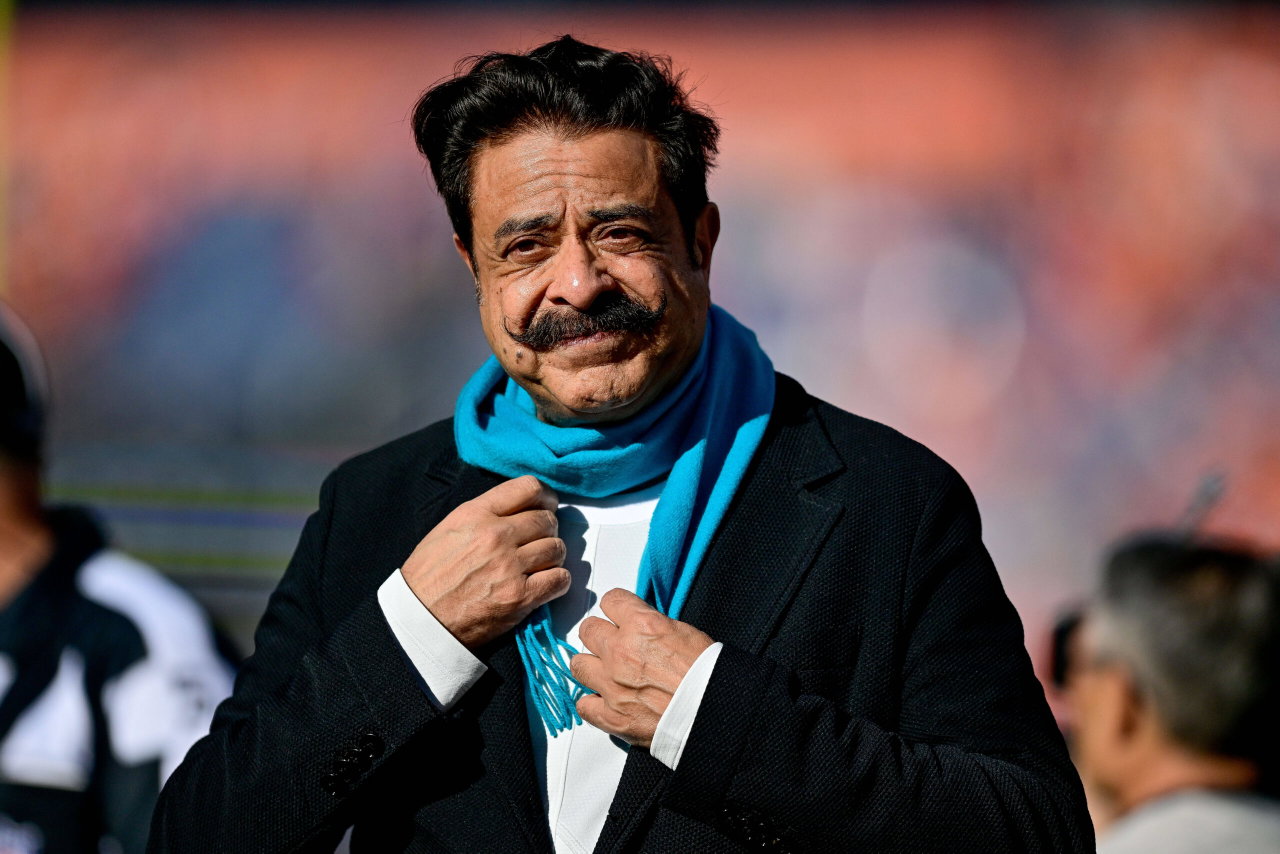
At that time, the proposal from the Jaguars seemed like a promise. The team’s own study counted on big events to bring revenue, and yet owner Shahid (Shad) Khan admitted that the city still lacked the infrastructure to host a Super Bowl.
“A Super Bowl now has really graduated to an event where it needs infrastructure besides the stadium, hotel rooms, infrastructure, and so on, and Jacksonville doesn’t have that. It does have the ability to host other NFL events, maybe the draft, and maybe some other elements, but the city will have to develop before we can be in the mix,” the Jaguars owner said in October 2025.
“It does have the ability to host other NFL events, maybe the draft, and maybe some other elements, but the city will have to develop before we can be in the mix, but it’s a covered stadium, it’s in Florida, a lot of attributes, but it doesn’t qualify.”
Shad’s statement contradicts what the Jacksonville Jaguars and the studies around it once indirectly promised.
Over the years, Khan’s perspective has been driven by financial backing rather than a lack of ambition.
“Here in Jacksonville? Absolutely not. What it takes to get a Super Bowl, I think, is setting Jacksonville up for failure,” Khan once said in 2016 in an interview. “I think with time and money, energy is much better served on something else.
“For example, what they’re going through in Miami. A big renovation with the Dolphins would be a great venue for a Super Bowl. I’d love to see Florida get Super Bowls, but I think Tampa and Miami are much better suited for that. The requirements now for hotel rooms and some of the other infrastructure amenities we don’t have here, so let’s not kid ourselves.”
As of now, the taxpayers’ investments are in. However, the team that once believed that the Super Bowl would come to Jacksonville is now seemingly going back on its own promise.
With the Jaguars winning the division twice in the last five years while leading the division 5-2 in the 2026 season, it will be interesting to see if Khan’s stance changes and if the Jaguars will ever host another Super Bowl game.
While a Super Bowl remains a pipedream due to the city’s hotel shortage, a new Jaguars stadium still remains promised and expected to lock down other major events starting in August 2028.
The stadium’s expansion capabilities (up to 71,500 seats) in first place will make it a prime candidate for the expanded college football postseason while securing the long-term future of the iconic Florida-Georgia game and the Gator Bowl in Jacksonville (which have temporarily relocated to cities like Atlanta and Tampa during active construction).