
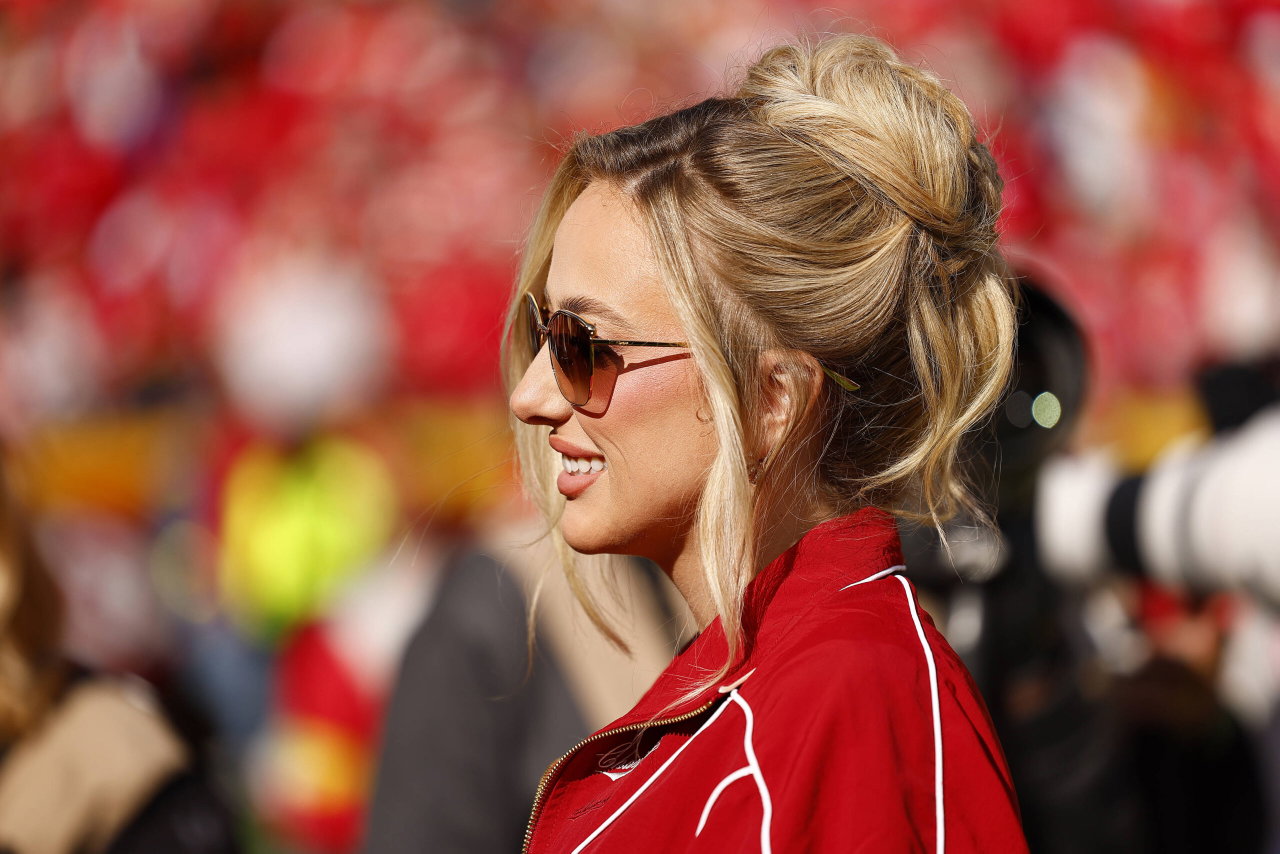
Brittany Mahomes and Kelly Stafford have both used social media to challenge decisions affecting their husbands’ teams. One questioned a crucial officiating call, while the other called out the NFL over the Los Angeles Rams’ unusual schedule. Their complaints came from different situations, but sports commentator Linda Cohn believes both need to consider how their comments sound to people outside their own circles.
Watch What’s Trending Now!
The former ESPN SportsCenter anchor addressed the two women on her show, making it clear that being married to an NFL quarterback does not put someone’s public opinions beyond criticism.
“Marriage to a quarterback doesn’t disqualify you from commentary, from having an opinion. It also doesn’t exempt your commentary from criticism,” Cohn said. “Kelly and Brittany are two people making public statements.”
Cohn acknowledged that Kelly had a legitimate point about player recovery and that Brittany was entitled to question an officiating decision. But she took issue with how the complaints were presented, particularly Brittany’s suggestion that the Chiefs were being treated unfairly because of who they are.
“Sometimes before you hit post, the most useful question is, how is this going to sound to somebody whose life looks very, very different from my own? Three words, know the room,” Cohn added.
Brittany’s comments followed Kansas City’s 28-24 loss to the Denver Broncos on November 1. The Chiefs appeared to take the lead in the final seconds when Patrick Mahomes connected with Rashee Rice for a touchdown. However, officials had already thrown a flag for a false start on right tackle Jaylon Moore, wiping out the score and moving Kansas City back five yards. Denver then sacked Mahomes on the final play to secure the win.
Brittany was furious with the decision: “You can’t tell me you call that on a game-winning TD, oh wait yeah I can cause it’s us,” she wrote on Instagram.
She followed it with another post calling it “the weakest call I have ever seen.”
Chiefs head coach Andy Reid also questioned the flag, saying he saw Moore move his head but did not see a false start. Mahomes expressed frustration with the timing of the call. However, Travis Kelce later acknowledged on his podcast that Moore had flinched before the snap, giving the officials’ decision another layer of support.
Brittany’s comments also brought back a debate that has followed the Chiefs for years. Fans of opposing teams have often accused Kansas City of getting favorable calls, especially when penalties involve contact with Mahomes. Those complaints grew louder during the Chiefs’ playoff matchup with the Houston Texans in January 2025. Cohn brought up that perception while pushing back on Brittany’s claim that the team was being targeted.
“So you can understand why people hear ‘because it’s us’ and think, ‘Are we remembering the same football games, Brittany?’ You saw those,” she said.
Kelly’s frustration was about something different. She questioned the NFL’s decision to give the Rams a shorter break between games, raising concerns about how much recovery time players would have.
Los Angeles is set to play the Arizona Cardinals on November 15 and then host the Green Bay Packers on November 25. The 10-day gap is shorter than the roughly 13 days teams usually get after a traditional Sunday-to-Sunday bye. Kelly wanted to know why the league had scheduled the Rams that way.
“Just curious to hear the thought process behind making the Rams the only team in the NFL without a true bye week,” she wrote in her Instagram story this week. “Because after 18 years around this league, even I need a week off during the season… and I have never played a single snap. I’m tired just watching from the stands. Can’t imagine how the guys feel.”
Her frustration also comes against the backdrop of a demanding travel schedule. The Rams are projected to cover 34,847 miles during the 2026 regular season, the second-highest total in the league behind the San Francisco 49ers. Their opening-week trip to Australia accounts for a significant part of that distance.
However, in Cohn’s perspective, “Kelly makes the case for player recovery that’s a conversation worth having. Just understand why your own game day exhaustion might not generate the sympathy you expect.”
Cohn did not say the two women were wrong to raise their concerns. Her point was that they also need to think about how those comments come across to people outside the NFL circle. Being close to an NFL player does not mean the public will automatically agree with every complaint or feel the same way about it.