Mark Davis Has Been the NFL’s Biggest Champion of Natural Grass and the World Cup Proved His Point

Add us on Google
Mark Davis Has Been the NFL’s Biggest Champion of Natural Grass and the World Cup Proved His Point
Add us on Google

Imago
NFL, American Football Herren, USA Jacksonville Jaguars at Las Vegas Raiders Dec 22, 2024 Paradise, Nevada, USA Las Vegas Raiders owner Mark Davis looks on during the game against the Jacksonville Jaguars at Allegiant Stadium. Paradise Allegiant Stadium Nevada USA, EDITORIAL USE ONLY PUBLICATIONxINxGERxSUIxAUTxONLY Copyright: xKirbyxLeex 20241222_map_al2_291
Imago
NFL, American Football Herren, USA Jacksonville Jaguars at Las Vegas Raiders Dec 22, 2024 Paradise, Nevada, USA Las Vegas Raiders owner Mark Davis looks on during the game against the Jacksonville Jaguars at Allegiant Stadium. Paradise Allegiant Stadium Nevada USA, EDITORIAL USE ONLY PUBLICATIONxINxGERxSUIxAUTxONLY Copyright: xKirbyxLeex 20241222_map_al2_291
For years, the debate over natural grass versus artificial turf has divided the NFL. Players have argued that grass is safer and less taxing on their bodies, while many owners have cited cost, maintenance, and scheduling challenges as reasons to stick with synthetic surfaces.
Watch What’s Trending Now!
But one owner has never wavered.
Las Vegas Raiders owner Mark Davis has long believed football should be played on natural grass, even if it means spending millions more to make it happen. As the 2026 FIFA World Cup temporarily transformed NFL stadiums into grass venues, Davis’ philosophy has once again become the center of the conversation.
With players renewing calls for permanent grass fields, Davis finds himself in an unusual position, aligned perfectly with the NFL Players Association.
Grass was a non-negotiable when building Allegiant Stadium
Imago
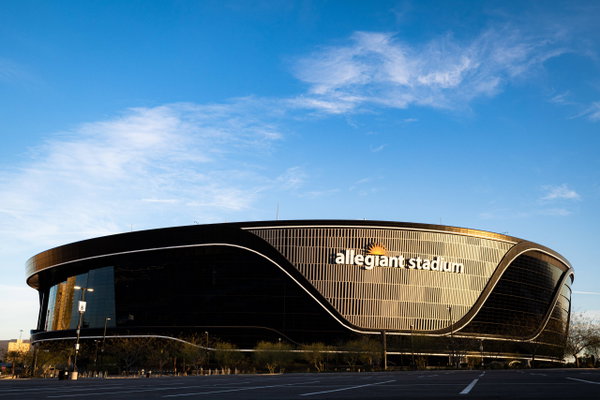
Allegiant Stadium Picture by Alex Whitehead/SWpix.com – 24/02/2026 – Rugby League – Hull KR vs Leeds Rhinos Preview – Las Vegas, Nevada, USA – A General View GV of the Allegiant Stadium. Las Vegas Allegiant Stadium United States of America Copyright: x xSWpix.comxt/axPhotographyxHubxLtdxAlexxWhitehead/SWpix.comx SWP-3030-12454
When the Raiders started designing Allegiant Stadium, Davis made one thing clear: he wasn’t interested in building another domed stadium with artificial turf.
Instead, the Raiders installed one of the most advanced playing surfaces in professional sports.
Allegiant Stadium features a roll-in natural Bermuda grass field that sits outside the stadium when not in use, allowing it to get sunlight and fresh air before being rolled inside on game days. The engineering solution added costs to the $1.9 billion project, but Davis said it was worth every dollar.
“I just always felt that football should be played on grass,” Davis said. “That’s for safety purposes, No. 1. I want it to look like a game was played even if it’s an indoor field. You see grass stains and everything else. I wasn’t going to a stadium without it being grass once I knew the capability was there. Obviously, it added a lot of cost, but it’s worth it.”
That quote perfectly summarizes Davis’ philosophy. Unlike other owners who focus on maintenance costs or stadium logistics, Davis has viewed natural grass as an investment in player safety rather than an unnecessary expense.
The World Cup strengthened Davis’ argument
Imago
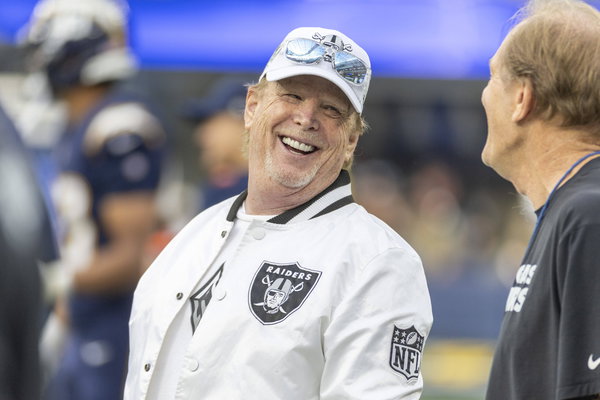
November 30, 2025, Los Angeles, California, USA: Las Vegas Raiders owner Mark Davis in a warm up before an NFL, American Football Herren, USA football game against the Los Angeles Chargers at SoFi Stadium, Sunday Nov. 30, 2025, in Inglewood, Calif. Los Angeles USA – ZUMAc68_ 20251130_zaf_c68_074 Copyright: xRingoxChiux
The 2026 FIFA World Cup became one of the strongest pieces of evidence supporting Davis’s stance.
FIFA required every host stadium to use natural grass, forcing several NFL venues to temporarily remove their artificial surfaces. When the tournament ended, those stadiums quickly went back to synthetic turf for the upcoming NFL season.
That decision frustrated players across the league, who questioned why owners were willing to install grass for soccer, but not for football.
The World Cup also demonstrated something players have argued for years: maintaining grass inside modern stadiums is no longer impossible.
Davis believes the extra cost is justified
Imago
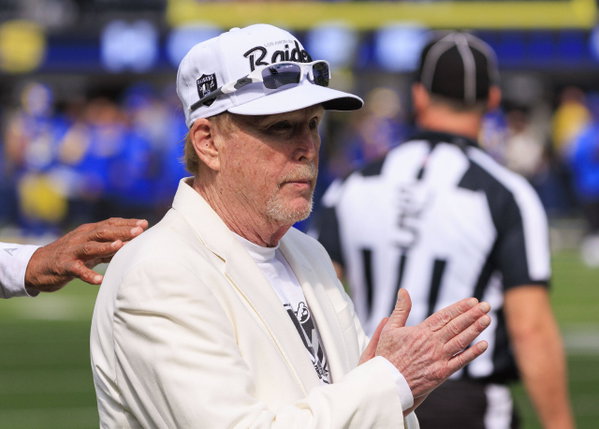
October 20, 2024, Inglewood, California, USA: Mark Davis, owner of the Las Vegas Raiders attends warmups prior to their regular NFL, American Football Herren, USA season game against the Los Angeles Rams on Sunday October 20, 2024 at SoFi Stadium in Inglewood, California. JAVIER ROJAS/PI Inglewood USA – ZUMAp124 20241020_zaa_p124_011 Copyright: xJavierxRojasx
Natural grass is more expensive than artificial turf. Grass needs irrigation, specialized maintenance crews, lighting systems, fertilization and regular replacement. Indoor stadiums often need more technology to keep the field healthy throughout the season.
Artificial turf, meanwhile, is easier to maintain and better suited for venues that host concerts, college football games and other large events. Davis acknowledges those challenges but doesn’t see them as reasons to compromise.
His position is simple: if technology exists to safely maintain grass, then player safety should outweigh the additional expense.
That philosophy separates him from many owners who continue to prioritize the operational flexibility that artificial turf provides.
Players appreciate Davis’ stance
The renewed grass movement is driven by players. San Francisco 49ers tight end George Kittle, Chicago Bears quarterback Caleb Williams and Indianapolis Colts running back Jonathan Taylor have publicly supported keeping the World Cup grass fields in place after the tournament ended.
The NFL Players Association has continued its “#WorthTheCost” campaign, pointing to player surveys showing that roughly 92% of players prefer natural grass over artificial turf.
While Davis hasn’t publicly joined the NFLPA campaign itself, his actions have matched the union’s message. Long before the latest debate resurfaced, he invested in one of the league’s most expensive grass-field systems because he believed it was the right decision.
Sean Payton has also voiced support
Imago
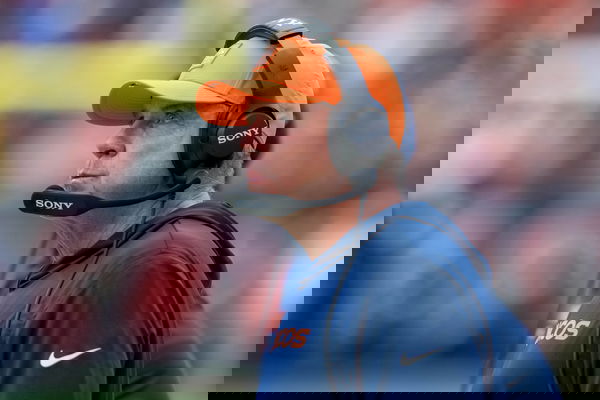
November 2, 2025: Denver Broncos head coach Sean Payton during a game between the Denver Broncos and the Houston Texans in Houston, TX. .. /CSM – ZUMAc04_ 20251102_zma_c04_723 Copyright: xTraskxSmithx
Davis isn’t the only prominent NFL figure advocating for natural grass. Denver Broncos head coach Sean Payton has publicly supported grass fields, saying he believes they are better for players. Although Payton doesn’t control stadium decisions the way an owner does, his comments add another respected football voice to the growing list of people favoring natural surfaces.
The Broncos already play on natural grass at Empower Field at Mile High, meaning Payton has seen firsthand the experience of coaching on the type of surface many players want.
Not every owner agrees
Imago
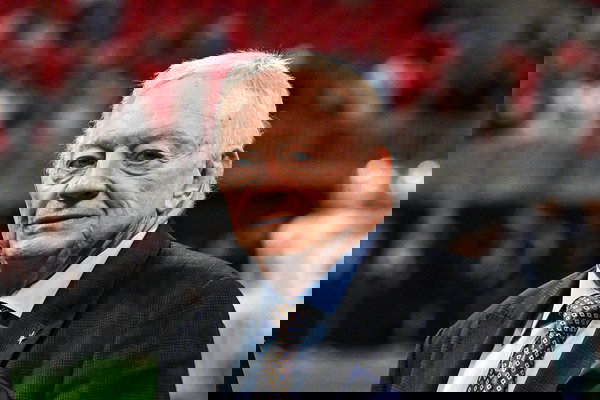
ATLANTA, GA Ð NOVEMBER 03: Dallas owner Jerry Jones looks on prior to the start of the NFL, American Football Herren, USA game between the Dallas Cowboys and the Atlanta Falcons on November 3rd, 2024 at Mercedes-Benz Stadium in Atlanta, GA. Photo by Rich von Biberstein/Icon Sportswire NFL: NOV 03 Cowboys at Falcons EDITORIAL USE ONLY Icon241103146
While Davis has become one of the league’s strongest advocates for grass, other owners are committed to artificial turf. Dallas Cowboys owner Jerry Jones has defended AT&T Stadium’s synthetic surface, arguing that artificial turf provides economic and operational advantages while rejecting the idea that it’s less safe than grass.
That position draws concern from players, particularly after AT&T Stadium temporarily installed natural grass for the World Cup before switching back to turf for the NFL season.
The differing viewpoints show why the issue isn’t solved just yet. Owners often view field surfaces through the lens of stadium operations and long-term costs. Players, and owners like Davis, tend to focus on health and safety.
Could Davis influence future owners?
Imago
NFL, American Football Herren, USA Super Bowl LIX-NFLPA press conference, PK, Pressekonferenz Feb 5, 2025 New Orleans, LA, USA The NFLPA logo at press conference at the Super Bowl LIX media center at the Ernest N. Morial Convention Center. New Orleans Ernest N. Morial Convention Center Louisiana Untied States, EDITORIAL USE ONLY PUBLICATIONxINxGERxSUIxAUTxONLY Copyright: xKirbyxLeex 20250205_tbs_al2_453
The success of Allegiant Stadium may become Davis’ biggest contribution to the debate. For years, some argued that natural grass wasn’t practical inside closed stadiums.
Allegiant Stadium proved otherwise.
Its movable field has become one of the most innovative stadium features in professional sports and served as a blueprint for indoor stadiums to maintain a high-quality natural playing surface. As more stadiums are built or renovated over the next decade, Davis’ approach could become more influential.
The grass-versus turf debate isn’t going away. The NFL Players Association has made it one of its top player safety priorities, and many expect the issue to resurface during future collective bargaining discussions.
Whether more owners follow Davis’ lead is uncertain. What is certain is that Davis has been years ahead of much of the league. While others debated whether natural grass was worth the investment, the Raiders owner had already made his decision.
For him, the answer has never been complicated. Football belongs on grass, even if it costs more.
Written by

Edited by

Antra Koul