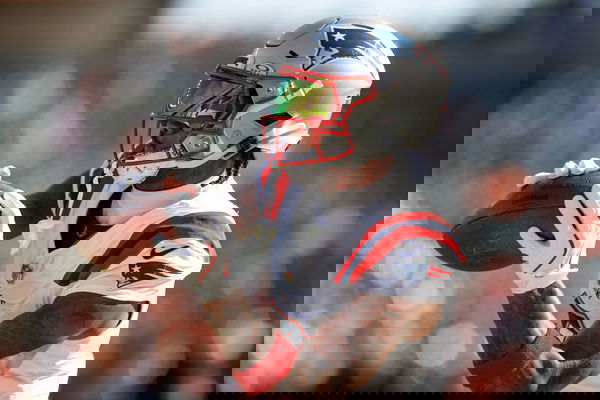
Imago
CINCINNATI, OH – NOVEMBER 23: New England Patriots wide receiver Stefon Diggs 8 warms up before the game against the New England Patriots and the Cincinnati Bengals on November 23, 2025, at Paycor Stadium in Cincinnati, OH. Photo by Ian Johnson/Icon Sportswire NFL, American Football Herren, USA NOV 23 Patriots at Bengals EDITORIAL USE ONLY Icon251123063
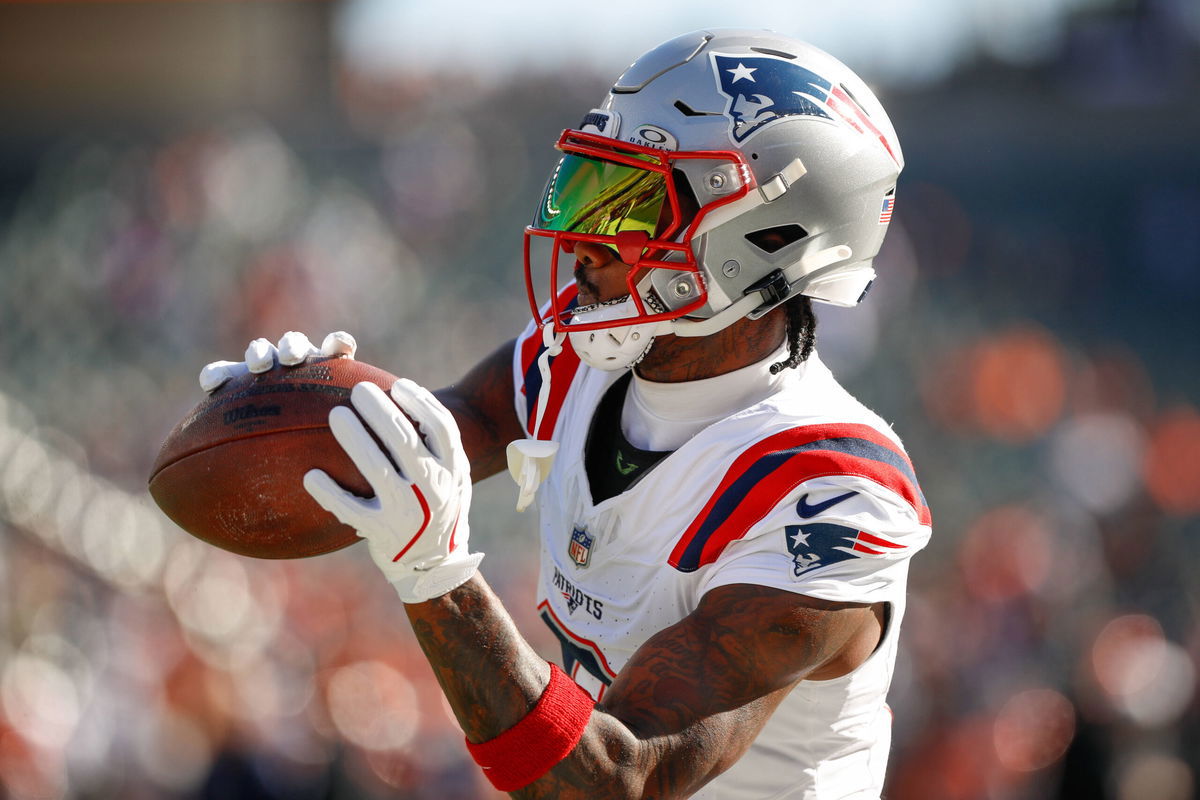
Imago
CINCINNATI, OH – NOVEMBER 23: New England Patriots wide receiver Stefon Diggs 8 warms up before the game against the New England Patriots and the Cincinnati Bengals on November 23, 2025, at Paycor Stadium in Cincinnati, OH. Photo by Ian Johnson/Icon Sportswire NFL, American Football Herren, USA NOV 23 Patriots at Bengals EDITORIAL USE ONLY Icon251123063
Imago
CINCINNATI, OH – NOVEMBER 23: New England Patriots wide receiver Stefon Diggs 8 warms up before the game against the New England Patriots and the Cincinnati Bengals on November 23, 2025, at Paycor Stadium in Cincinnati, OH. Photo by Ian Johnson/Icon Sportswire NFL, American Football Herren, USA NOV 23 Patriots at Bengals EDITORIAL USE ONLY Icon251123063
Imago
CINCINNATI, OH – NOVEMBER 23: New England Patriots wide receiver Stefon Diggs 8 warms up before the game against the New England Patriots and the Cincinnati Bengals on November 23, 2025, at Paycor Stadium in Cincinnati, OH. Photo by Ian Johnson/Icon Sportswire NFL, American Football Herren, USA NOV 23 Patriots at Bengals EDITORIAL USE ONLY Icon251123063
After a controversial moment involving New England Patriots wide receiver Stefon Diggs in Super Bowl LX, which reignited debate about missed calls and player safety, the NFL is weighing a major officiating shift. The NFL Competition Committee appears to be open to authorizing replay officials to throw flags for certain penalties – something that the league has never permitted before. Recently, NFL Insider Ian Rapoport reported that the committee is having a discussion on expanding the replay’s role, especially concerning player health and safety.
Watch What’s Trending Now!
“Just my feeling is that it really feels like the NFL would rather eject a player during the game and say this is your penalty,’ rather than have him play and the next week suspend him,” Ian Rapoport said recently on The Insiders at the NFL Combine. “There is a lot that goes into suspension—there’s the appeal, there’s the public. Ejection is like, ‘You have been penalised; it is over.’ It seems that it’s a direction that the NFL wants to go. Used the word gateway; that really seems to be the way it’s going.”
“The technology is getting better,” Rapoport added. “The camera angles, the use of AI. I mean, there are all sorts of tools that the NFL could now use to make the game better, say, but also better officiating. Seems like they are sort of wading into that water, going, ‘If you see it at home, we should be able to do something about it.’ And embracing sort of the future could be a pretty big topic.”
From The Insiders on @NFLNetwork at the Combine: When it comes to the use of technology and officiating, the NFL is embracing the future. pic.twitter.com/H6Cao4Q4D2
— Ian Rapoport (@RapSheet) February 24, 2026
For years, the league has firmly maintained that on-field officials control the game. While replay review and replay assist have expanded, NFL officials on the field still carry the final authority. Coaches can challenge calls, but the replay officials cannot independently throw flags. According to Rapoport, technological advancements are influencing the league’s thinking.
Some members of the NFL Competition Committee are reportedly rallying around a limited entry point: non-football acts that officials miss in real time. On February 23, NFL executive vice president of football operations Troy Vincent addressed the topic during a break in committee meetings.

“You don’t want to just be expanding Pandora’s box,” Vincent said. “But we believe that things like the non-football act, you can really, really restrict what that is. That’s something that we believe—that potentially there’s a little bit of tweaking in the language, and that may be the first step.”
NFL owners have historically resisted giving the league’s replay officials authority to throw flags, fearing it would undermine on-field referees, and Vincent himself acknowledged that concern.
“That may be the first step in getting to putting flags on the field,” Vincent further added. “I just think in the era of legalized sports betting, just as a former player, I would’ve found it very difficult to be at Lincoln Financial [Field]; a big play occurred, nothing happened real-time in the stadium, and then all of a sudden, 10, 12 or 25 seconds later, before the ball snapped again, I see [a flag] on the field before the next snap. I don’t know.”
The hesitation from the NFL owners reflects a broader concern. Firstly, nearly every NFL play could include a minor infraction. If the NFL’s replay officials start reviewing plays for possible penalties, where does it stop?
Secondly, NFL players, coaches and fans might not trust decisions that originate from ‘the eye in the sky’ instead of the officials standing just feet away from the action.
So, the NFL could try this officiating change first with one player safety foul. But Vincent also pointed out that with the officiating change, blatant acts of unsportsmanlike conduct, like with the Stefon Diggs incident, might face immediate consequences rather than postgame fines or suspensions.
What was the incident involving Stefon Diggs that led the NFL to consider an officiating change?
In the fourth quarter of Super Bowl LX, Stefon Diggs ran a route near the right sideline of the field on a play in which he wasn’t even targeted. But after stepping out of bounds, Diggs absorbed a hard shove from Seattle Seahawks cornerback Josh Jobe, who drove him to the ground with force.
Then, Stefon Diggs quickly got up, confronted Jobe, grabbed his facemask, and began shouting. The situation escalated when Jobe appeared to have punched Diggs in the helmet, but Patriots wide receiver Mack Hollins and NFL officials rushed in to separate the players. Surprisingly, the NFL officials threw no penalty flag on the play, but the league later fined Jobe.
However, the lack of an in-game penalty drew widespread criticism as replay footage clearly showed Jobe’s left-handed punch to Stefon Diggs’ helmet. Meanwhile, the cameras at that time focused more on Patriots head coach Mike Vrabel’s reaction to the non-call. If replay officials had authority to act, they could have assessed a penalty or even ejected Jobe on the spot, and that could have affected the outcome.
A similar officiating controversy unfolded in the first quarter of the Seahawks vs. the Los Angeles Rams Week 16 game when Seahawks linebacker Derick Hall stepped on Rams guard Kevin Dotson’s leg after a play. Dotson even injured his leg due to that incident, but NFL officials on the field missed the act, and the league only suspended Hall later for one game, citing unsportsmanlike conduct and unnecessary roughness.
These examples raise an obvious question: If the NFL ultimately disciplines players after reviewing tape, why not address the behaviour immediately during the game?
But expanding replay authority carries risks as the NFL fears opening a floodgate that could eventually include hip-drop tackles, roughing the passer, facemask calls, and other penalties. And that would obviously alter how NFL games flow and how the referees operate.
Still, the NFL Competition Committee will continue discussions regarding the officiating change at the NFL Combine this week in Indianapolis. Any formal proposal would then require approval from the 32 teams at the annual meeting next month.
For now, the NFL’s replay assist can only determine whether a flag that was already thrown should stand, not whether a new penalty should be added.