
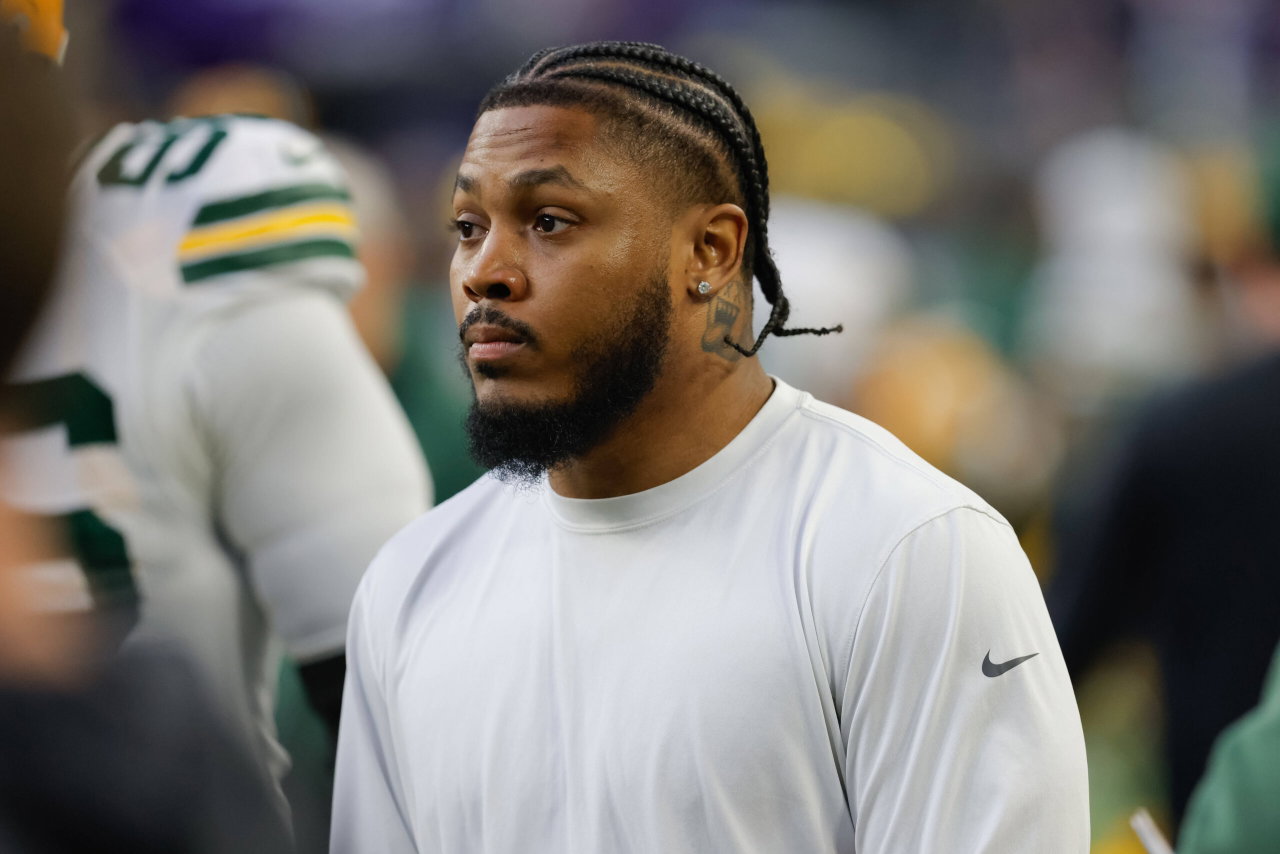
Green Bay’s running game has struggled to find its footing, averaging just 60.4 rushing yards per game. For an offense built to lean on Josh Jacobs, that absence has left a noticeable gap in the backfield.
Watch What’s Trending Now!
Denver, meanwhile, has been without a pass rusher who started every game for three straight seasons and piled up 27 sacks over that span. Jonathon Cooper’s absence has left the Broncos without another established presence on the edge. Now, the NFL has made a decision on both players’ immediate futures.
“The National Football League today notified Josh Jacobs of the Green Bay Packers that he will be removed from the Commissioner Exempt List on Oct. 19,” the NFL wrote in a statement, via Ian Rapoport. “He will be eligible to play in the Packers’ Week 7 game on Oct. 25 after missing six games.”
Rapoport also shared the statement announcing Cooper’s removal from the list.
“The National Football League today removed Jonathon Cooper of the Denver Broncos from the Commissioner Exempt List. He will be eligible to play in the Broncos’ Week 7 game on Oct. 25 after missing six games.”
In both cases, the league maintained that its investigations into the players’ respective legal matters remain ongoing.
Jacobs was arrested in May following an alleged altercation with his then-girlfriend in Wisconsin. Police said the woman reported that he grabbed her and threw her to the ground, causing her to hit her head. He was initially booked on five charges, including felony strangulation, before prosecutors ultimately pursued misdemeanor charges of battery and criminal damage to property.
In late August, Josh Jacobs was charged with battery and criminal damage to property, and on September 10, he pleaded no contest to both charges. The plea followed the initial arrest and a subsequent decision by prosecutors to pursue the two misdemeanor counts. Under the agreement, the criminal damage charge can be dismissed after 12 months if Jacobs meets the conditions imposed by the court.
The legal proceedings have not ended there. On October 15, Jacobs filed a lawsuit seeking to permanently seal evidence from the case, including surveillance footage from the garage at his home. The criminal complaint said the footage corroborated the woman’s account. The dispute has added another layer to the NFL’s investigation, as the league has reportedly sought access to the video while Jacobs and the woman involved have sought to prevent its public release.
Jacobs’ lawyers have argued that releasing the material could compromise the woman’s privacy and expose sensitive security details about his home. His attorney said Jacobs supports keeping identifying and private records from being made public.
“Josh has dedicated the last several months to bettering himself, and he accepts responsibility for his actions,” the RB’s attorneys said in a statement. “He is excited to get back to work and on the field with his teammates. Josh is grateful for the support he is receiving from his teammates, coaches, the Packers organization and the greatest fans in the world.”
The NFL’s decision does not amount to a conclusion in Jacobs’ case. The league’s review under its Personal Conduct Policy remains active, and further discipline remains possible. Time spent on the Commissioner Exempt List can be credited toward a potential suspension under league rules, but the removal announcement does not establish that the NFL has issued or ruled out any additional punishment.
Jonathan Cooper was arrested on June 4 after an argument and physical confrontation with his then-girlfriend. Prosecutors later dropped charges against the woman and added charges against Cooper, including felony second-degree assault by strangulation. A protection order was also granted to the woman. Cooper pleaded not guilty on June 9.
Three days later, Cooper was arrested again on allegations that he had violated the protection order through repeated phone calls. He faces additional charges connected to that alleged violation. His trial has since been moved to March 2027, with a pretrial hearing scheduled for February 19. The NFL has not announced when its own investigation will conclude.
For now, Cooper is grateful for the chance he is getting.
“Playing in the NFL and representing the Denver Broncos is a privilege I do not take for granted,” Cooper posted on Instagram after his reinstatement. “I’m grateful to ownership, my teammates, coaches, and everyone in the organization for their support, as well as Commissioner (Roger) Goodell and the league for the opportunity to return.
“Over the last several months, I’ve spent a lot of time working to better myself. That work will continue.
“My focus is on being the best person, father, teammate and member of this community I can be. I will show that commitment through my actions every day.”
The timing of Cooper’s return is notable for Denver. The Broncos improved to 4-2 after beating the Seattle Seahawks 17-14 in overtime on Thursday Night Football. Cooper had started all 17 games in each of the previous three seasons, recording 27 sacks over that span, including eight in 2025. His return gives Denver another established option on the edge as it prepares for its Week 7 matchup against the Arizona Cardinals on October 25.
Green Bay’s situation is more pressing on offense. The Packers went 3-2 during Jacobs’ absence and entered Week 7 ranked last in the league in rushing, averaging 60.4 yards per game through their first five games. Jacobs had rushed for 1,329 yards and 15 touchdowns in 2024, then added 929 yards and 13 touchdowns in 2025. His return gives Green Bay its leading back again, although the team will still need to decide how quickly to work him back into the offense after six games away.
Jacobs is eligible to return against the Detroit Lions on October 25, while Cooper can suit up against the Cardinals on the same date. Their reinstatements resolve the immediate question of when they can return to football, but not the separate question of whether the NFL will impose further discipline after completing its investigations.