
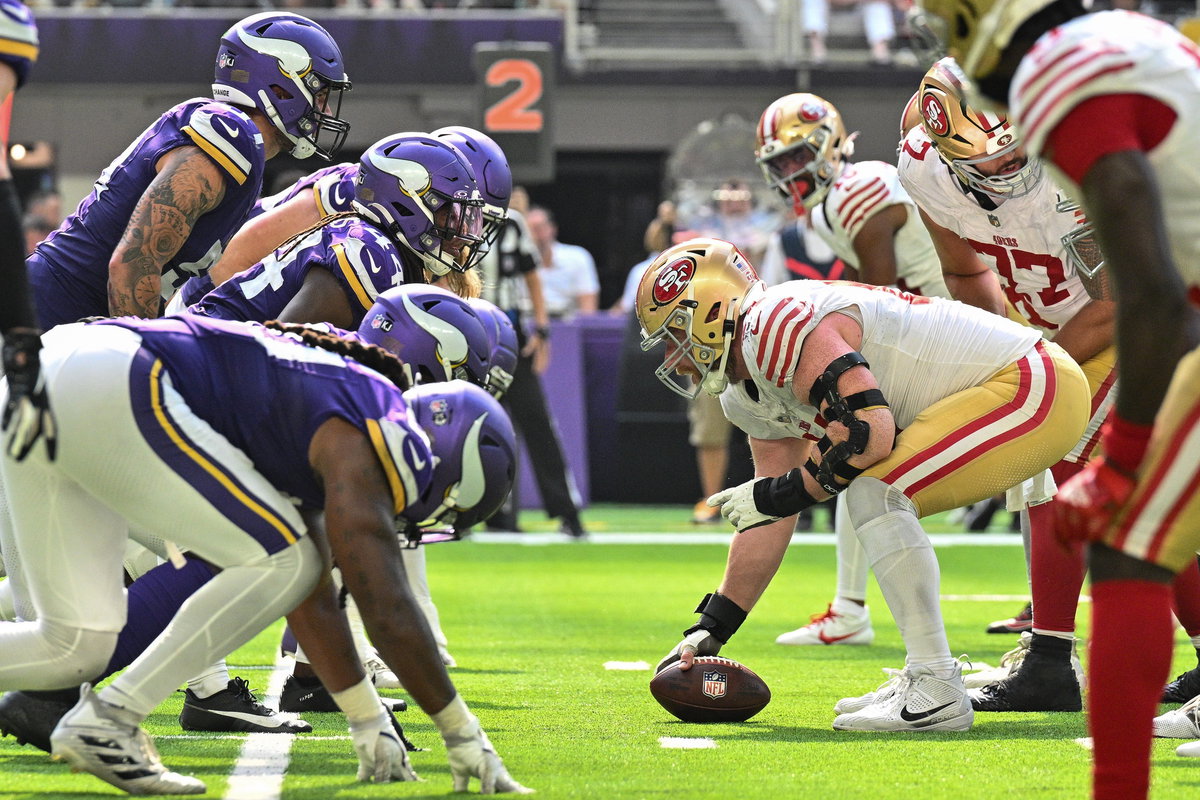
To host the 2026 FIFA World Cup, all 11 stadiums across North America needed to install natural grass to provide an ideal playing surface. This was something that the NFL players have been asking for for ages. However, the majority of stadium owners continue to prefer highly criticised artificial turf. And that isn’t something that the players like, especially when the stadiums will likely revert to turf surfaces after the World Cup.
Watch What’s Trending Now!
“The temporary installation of natural grass fields for the World Cup is a choice by certain NFL team owners to do for soccer players what they refuse to do for NFL players,” an NFLPA spokesperson publicly stated. “NFL players—who regularly compete on these fields, help fund these stadiums and whose work makes the league what it is today—deserve the same commitment to quality grass fields.”
The spokesperson further claimed that players felt “slapped in the face” as the stadiums installed grass surfaces for soccer players.
NFL players have been advocating for grass surfaces for years. As per a survey of 1,700 NFL players around 2012-2018, 92% preferred playing on grass over artificial turf. And seeing temporary grass installations arrive for another sport in their own stadiums further intensified their frustration.
New York Giants offensive linebacker Jermaine Eluemunor claimed that he hasn’t felt anything better than the grass throughout his 10 seasons in the NFL. He asked the NFL to think of the players. After all, the Giants offensive lineman plays one of the most physically challenging positions in the sport. But the league office revealed that bringing in a grass surface isn’t as simple as it seems.

When the United States Men’s National Team plays at SoFi Stadium today, they will be stepping onto newly installed natural grass. NFL players say that’s a “slap in the face.” nbcnews.com/sports/soccer/…
“It would not be acceptable for any venue to provide a grass surface that doesn’t meet that compliance, so grass is not just the box to check, right?” Nick Pappas, the NFL’s field director, explained. “It’s quality of surface that is important to provide for the athlete.” I lean towards the idea that we need to continue to determine how to improve all of our surfaces, irrespective of surface type.
The complexity doesn’t lend itself to being that simple to just turn to,” Pappas continued. “And the route we’re taking is done so with the NFLPA. Most people just don’t understand that all this work is being done with the NFLPA. The Joint Surfaces Committee is not something that is unbeknownst to the executive director of the NFLPA, or anybody within the NFLPA.”
For the FIFA World Cup, it was FIFA’s administration that paid for all the expenses around modifying the stadiums to host the games. Meanwhile, the NFL is nearing $25 billion per year of revenue generation. Yet, not every team is thinking of putting up grass fields.
Despite the league’s logistical hesitation, the scientific and physical evidence strongly dictates exactly why grass is better than turf.
John Harbaugh’s stance in the grass vs turf debate
Just days before the 2026 FIFA World Cup got underway, New York Giants coach John Harbaugh was asked about the natural grass surface temporarily laid at MetLife Stadium for the tournament.
“Oh, you’re going to try to draw me into the turf vs. grass [debate],” he said. “[NFL commissioner Roger Goodell] is going to call me off and he’s going to get mad at me because I’m probably not going to say what he wants me to say. That’s all I’m going to say.”
Before Harbaugh, NFLPA executive director JC Tretter previously revealed why grass is better than turf. He collected injury data from 2012 to 2018 and found that non-contact injuries happened more on artificial turf than on grass. And the data highlighted both practice sessions and games.
Tretter also explained how turf can negatively affect a player’s body. Football players tend to put high levels of force on the surface and rotate pretty quickly. In such cases, grass usually breaks and releases the cleats before the players get injured. But artificial turf doesn’t behave that way, and the knees and ankles absorb all the force. That’s what makes the turf an injury-prone surface.
Nevertheless, some NFL stadiums are planning to invest in grass surfaces. Stephen Ross, owner of the Miami Dolphins, invested in a property near Palm Beach County to let the team have better control over the field surface. The Las Vegas Raiders also invested in a sliding grass field that can be moved in and out of Allegiant Stadium.
These proactive franchises and the World Cup grass prove the transition is possible. But can the entire league accommodate similar changes?