
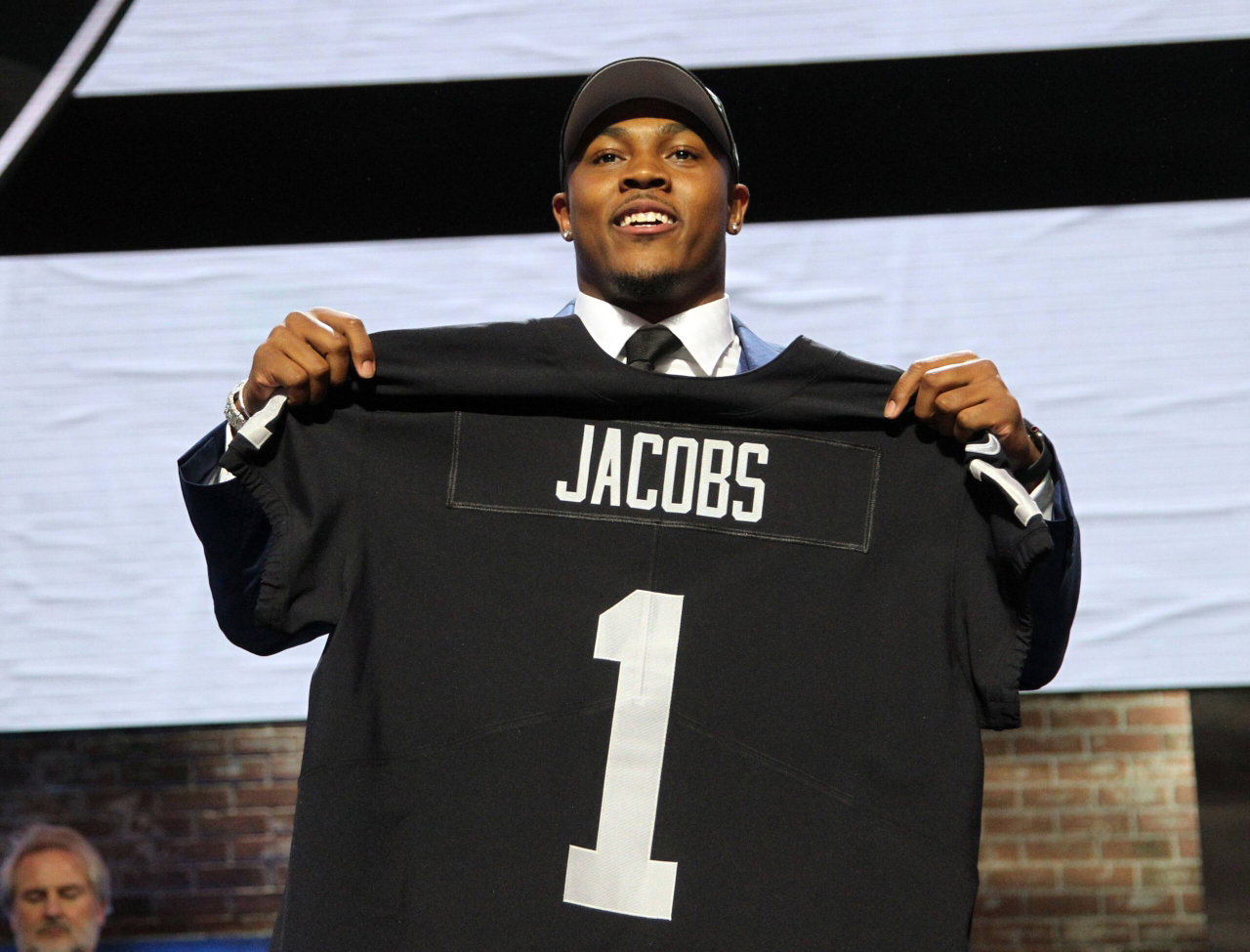
Green Bay opened its 2026 season Sunday at home against the Minnesota Vikings with one of its most important offensive pieces nowhere near the field. Running back Josh Jacobs wasn’t injured, wasn’t a healthy scratch, and wasn’t dealing with a contract dispute. He simply wasn’t allowed to be there.
Watch What’s Trending Now!
That absence traces back to a legal fight the NFL is currently losing, and one it’s reportedly working hard to reverse. According to NFL Network insider Ian Rapoport, the league is “trying all sorts of legal maneuvers” to obtain a home surveillance video at the center of Jacobs’ criminal case, a video a judge has sealed at Jacobs’ own request.
“My understanding is the NFL wants to interview Josh Jacobs. That will happen. They’re also trying all sorts of legal maneuvers to try to get the video of the incident that has since been barred by the court. So we’ll see if the NFL is able to do that before suspending,” Rapoport reported.
Jacobs himself addressed the situation directly in court just days earlier, when he pleaded no contest to two misdemeanor charges.
“I fully understand the seriousness of the situation, and I take full responsibility,” Jacobs told the court.
The case dates back to May 26, 2026, when Jacobs was arrested at his home by the Hobart/Lawrence Police Department on five initial charges, including a felony count of strangulation and suffocation. The Brown County District Attorney’s Office later found insufficient evidence to pursue the felony charge, narrowing the case to two misdemeanors: battery and criminal property damage.
On September 10, three days before Green Bay’s opener, Jacobs pleaded no contest to both misdemeanor charges. Judge Marc Hammer accepted the plea, fined him $1,000 for battery and put the criminal damage charge under a 12-month deferred judgment agreement. Jacobs must avoid any new criminal offenses, have no contact with the victim, complete counseling, remain under supervision, and pay restitution.
The NFL had already placed Jacobs on the commissioner-exempt list shortly before final roster cuts in late August. That kept him from practicing or playing while the league continued its own review of the case.
The video is now a major part of that review. According to the criminal complaint, a surveillance system inside Jacobs’ home captured part of the alleged incident. Jacobs reportedly asked for the footage to be sealed, and the judge granted that request. So even though the criminal case has now been resolved, the video remains out of the public record.
The NFL wants to see it anyway before deciding what discipline to hand down under the Personal Conduct Policy, which sets a baseline suspension of six games without pay for domestic violence, dating violence, child abuse, or other family violence, with aggravating factors capable of increasing that number.
Jacobs’ attorney, David Chesnoff, also stressed that the plea was about accepting responsibility and complying with the conditions imposed by the court.
“This plea reflects Josh’s acknowledgement of his actions and his acceptance of responsibility for these actions. There are significant consequences for Josh, and he intends to meet all the requirements the court imposes under these negotiations.”
Jacobs will receive credit toward any suspension for the games he misses while on the exempt list. He still cannot play while the NFL’s review is ongoing, and his eventual punishment has not been decided. The league will have to finish that review before it can determine what comes next for him.
Why the League Learned This Lesson the Hard Way Before
The league’s interest in the footage also has some history behind it. The last time a major domestic violence case turned on video, the NFL was caught without the full picture. That was the Ray Rice case in 2014.
Rice, then a running back for the Baltimore Ravens, was initially suspended for two games after the league investigated the incident involving his then-fiancée, Janay Palmer, at a New Jersey casino. The NFL did not have the full elevator video showing Rice hitting Palmer when it issued that punishment. Then-Commissioner Roger Goodell later acknowledged that the league had not seen the footage before making its decision.
The video’s release was followed by the Ravens releasing Rice and the NFL suspending him indefinitely, prompting a complete overhaul of the Personal Conduct Policy, including the six-game baseline that Florio says could apply to Jacobs.
That history is exactly why NBC Sports insider Mike Florio, who broke news of the league’s pursuit of the Jacobs video, framed the stakes so bluntly.
“Given the league’s experiences with the Ray Rice case, it’s hard to envision the matter being finalized without the NFL first seeing the video,” Florio wrote.
That comparison explains why simply accepting Jacobs’ plea deal and moving on isn’t an option the NFL appears willing to take. Getting blindsided by a video after the fact cost the league its credibility once already. A decade later, with Jacobs sidelined and Green Bay’s season already underway without him, the NFL clearly isn’t interested in finding out the hard way whether history is about to repeat itself.