
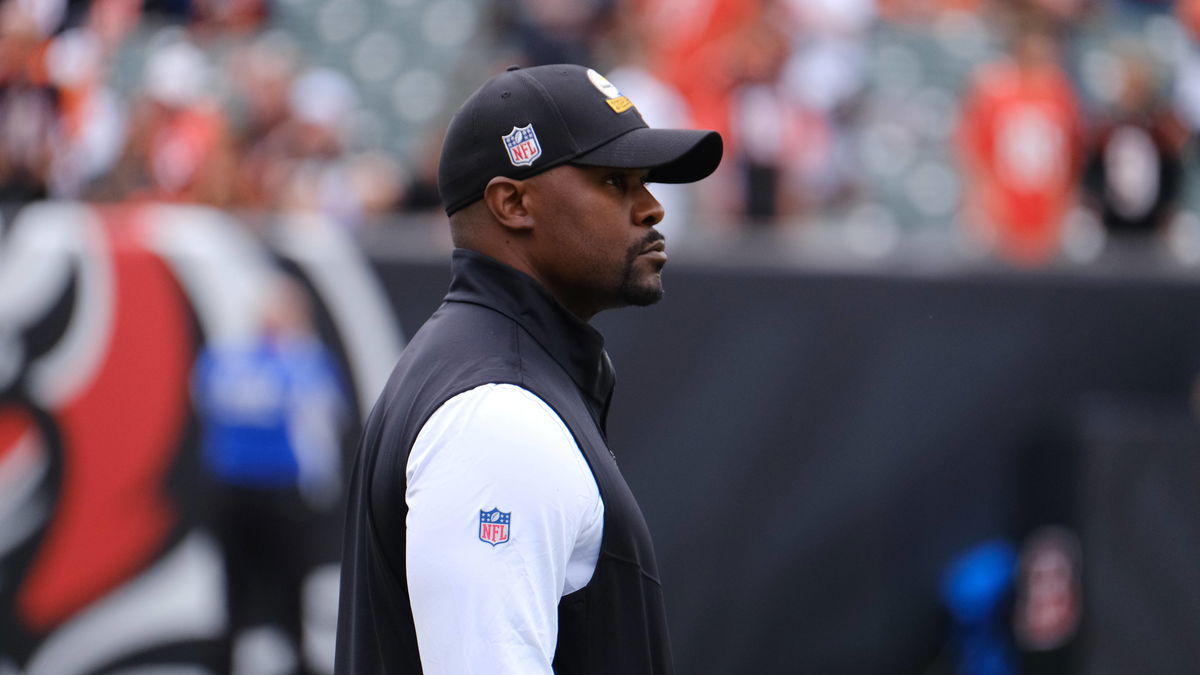
The NFL’s power might not work every time and everywhere. Despite the league’s relentless push to fight Brian Flores’ lawsuit outside the courtroom, it was handed yet another tough verdict.
Watch What’s Trending Now!
Federal Judge Valerie Caproni has rejected the league’s latest request to move the case to arbitration, per official records.
“Defendants’ seemingly-never-ending list of arguments why they should not have to litigate this case has run its course,” the ruling read, via NBC. “Stepping back, while Defendants are free to spend endless attorneys’ fees to pursue the forum they think will be most advantageous to them, arguments about the superior efficiencies of arbitration ring hollow.”
Flores’ case is raising an uncomfortable concern in the NFL: racial bias in the hiring of league coaches. The Minnesota Vikings’ defensive coordinator, along with co-plaintiffs Steve Wilkis and Ray Horton, had also subpoenaed 31 teams from the league for this case.
This was the third time the NFL tried to move this case into arbitration, and comes after the Supreme Court blocked the league from moving the lawsuit into arbitration. A previous court ruling and an appeals court had ordered the case to stay in court.
In arbitration, NFL Commissioner Roger Goodell serves as the arbitrator, complicating his position as the defendant. Flores’ team had argued against it in 2022 itself, to help fight what is set to be a landmark lawsuit in the history of the NFL.
Flores was fired from the Miami Dolphins after three years as a head coach. In his lawsuit, Flores accused the New York Giants and the Denver Broncos of holding “sham interviews” to satisfy the Rooney Rule, which requires NFL teams to interview a certain number of minority candidates for open coaching positions.
He also argued that team owner Stephen Ross offered him $100,000 for every game the team lost to get the No. 1 pick in the 2020 NFL Draft. He also claimed that after refusing, the Dolphins treated him differently, called him difficult to work with, and eventually fired him.
Imago
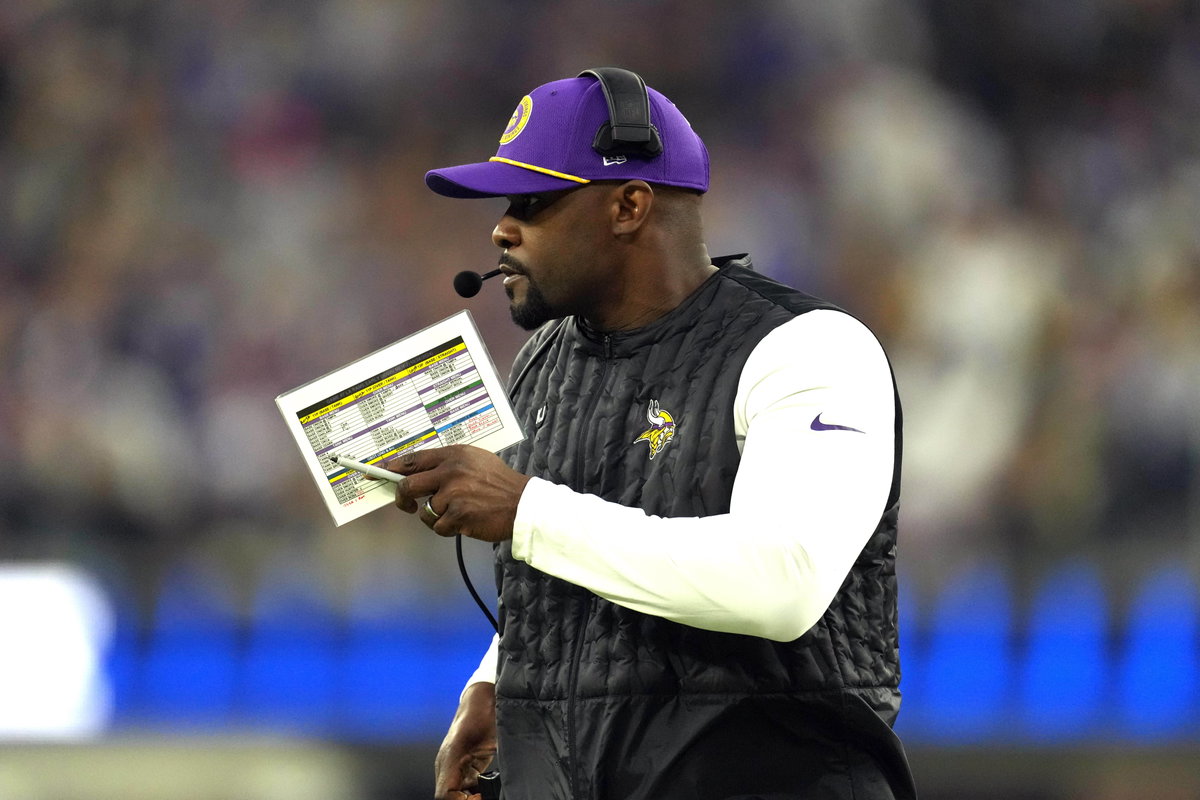
NFL, American Football Herren, USA Minnesota Vikings at Los Angeles Rams Oct 24, 2024 Inglewood, California, USA Minnesota Vikings defensive coordinator Brian Flores watches from the sidelines against the Los Angeles Rams in the first half at SoFi Stadium. Inglewood SoFi Stadium California USA, EDITORIAL USE ONLY PUBLICATIONxINxGERxSUIxAUTxONLY Copyright: xKirbyxLeex 20241024_sjb_al2_546
Wilks claimed that the Arizona Cardinals hired him as head coach in 2018 only as a temporary or “bridge coach” and replaced him without a proper chance to succeed. Ray Horton, who last coached in the NFL in 2019, claimed the Tennessee Titans never conducted a genuine interview with him for its 2016 head coaching vacancy.
Only three head coaches in the NFL today are Black. According to a 2022 report by The Washington Post, Black coaches “have resigned themselves to the notion that they will never get an opportunity to be a head coach.”
“I’ve constantly heard this mantra the last six years in the NFL that people hire the most qualified candidates, which I hope is true and accurate,” New England Patriots defensive coordinator Thomas Brown told ESPN. “But you’re also seeing almost every time that is never a Black coach. Which is frustrating. I’ve also heard the phrase ‘there’s not many candidates in the pipeline to choose from.’ I do take issue with that, because I’ve been around some high-level great communicators, great connectors of people, at every stop I’ve been.”
How the Rooney Rule came to be
In the NFL’s 80-year history, only six Black coaches had ever become head coaches. It was a peculiar number, since an overwhelming majority of players in the league are African American. This prompted lawyers Cyrus Mehri and Johnnie L. Cochran Jr. to probe into why there was such a discrepancy in representation in the coaches’ tier.
To prove their point, they asked Dr. Janice Madden, a University of Pennsylvania academician, to study NFL coaches’ records from the previous 15 years. Her research showed that Black head coaches were performing as well as, or even better than, white head coaches. Per her research, Black coaches won 2.7 more games on average in their first season and 1.3 more games in their final season before being fired.
Mehri and Cochran used their research to show that Black coaches were performing well but were not getting equal chances to become head coaches. They released a report called “Black Coaches in the NFL: Superior Performance, Inferior Opportunities” and warned that they could take the NFL to court if the league did not improve its hiring process.
Instead of fighting in court, the NFL and the lawyers reached an agreement that created the Rooney Rule in 2003.
After the league amended the rule in 2020, the rule now requires franchises to interview at least two external minority candidates for head coaching vacancies and at least one minority candidate for any coordinator role. And, teams must interview one external minority candidate for senior football operations and general manager jobs.
However, the reality doesn’t give that picture. When Caproni first announced her ruling on Flores’ appeal, she had described the allegations as “incredibly troubling.” The NFL’s repeated attempts to take this matter behind closed doors only complicates its position on this whole issue.