
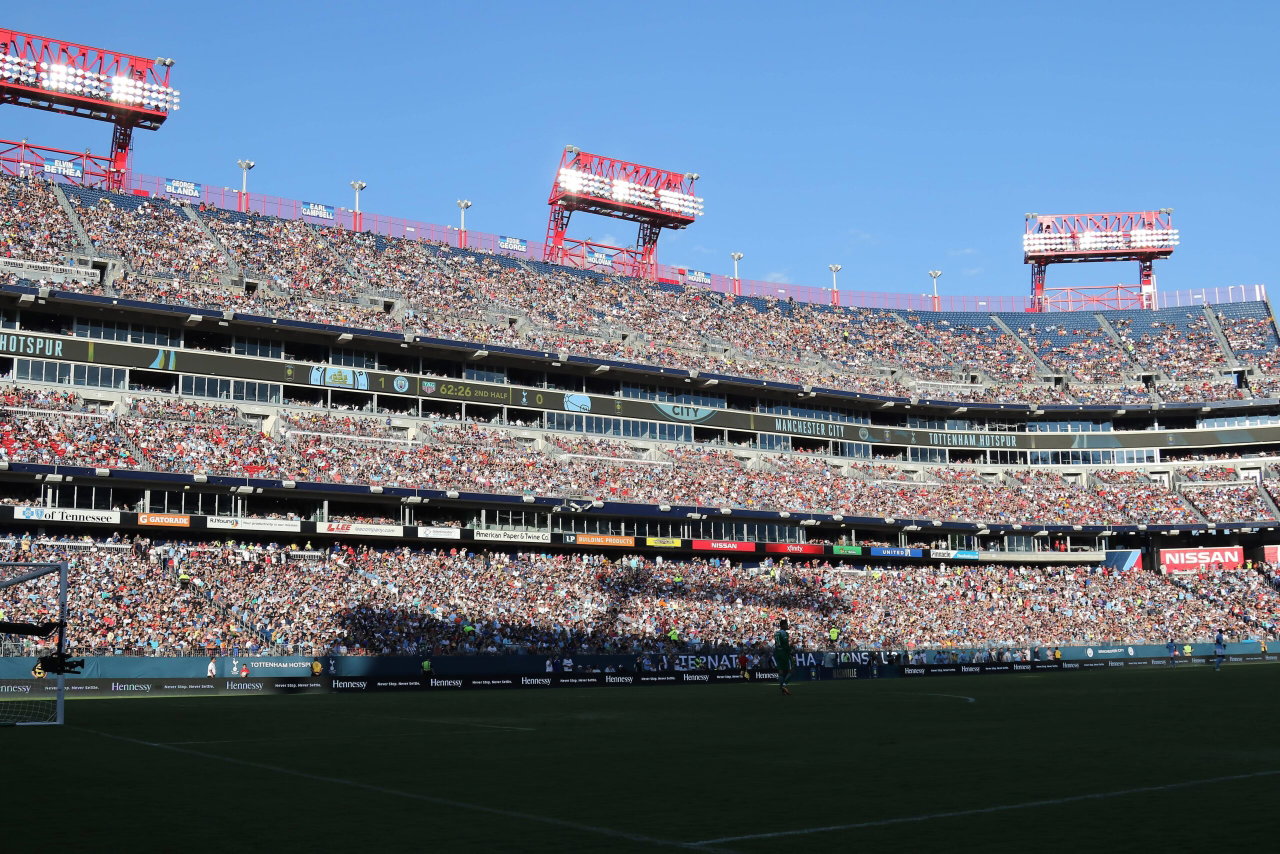
What if an NFL stadium could make millions even when no football game is being played? That idea is driving teams to invest billions in covered venues. For decades, NFL stadiums had one main purpose. That is to host football games. Teams also made money from concerts, boxing matches, and other sporting events, but football remained the biggest attraction. Now, that approach is changing. NFL franchises are investing billions of dollars in covered stadiums, hoping to turn their venues into year-round entertainment destinations.
Watch What’s Trending Now!
This change is already taking shape across the league. Nashville’s $2.1 billion Nissan Stadium is scheduled to open in April 2027. New covered stadiums will also come up in Cleveland, Washington, Kansas City, and Denver. Jacksonville is also adding a roof to its stadium as part of a major renovation. According to Sports Business Journal’s Bret McCormick, covered stadiums could outnumber open-air venues in the NFL by 2031, with a 16-14 split.
But why are teams spending so much? Beyond weather protection, they want to host concerts, sports events, and private gatherings, making money even when football is not being played.
The NFL’s growing interest in covered stadiums shows a major change in how teams view their businesses. A modern stadium is no longer just a place to watch football. It can also work as a concert venue, convention centre and entertainment hub.
Kansas City Chiefs President Mark Donovan explained this idea.
“It’s this broad-based business, and a venue like this is an accelerator,” Donovan said. “When we think about the fact it’s a fixed-roof building, we think about it across all our businesses. How can each one of these businesses benefit from that?”
A covered venue can host events throughout the year without worrying as much about the weather. It can also attract major events such as the Super Bowl, NCAA Men’s Basketball Final Four, and FIFA World Cup.
The commercial value of this model is already clear at Allegiant Stadium in Las Vegas. The Raiders’ home has become a strong example of how an NFL stadium can make money beyond football. According to Pollstar figures cited by Sports Business Journal, Allegiant Stadium earned $269.3 million in concert ticket sales from 13 shows in 2025. It also hosted 106 private events that year, along with football, international soccer and boxing events.
The stadium also shared its own figures in April 2026. It reported more than $281 million in gross revenue from live music and entertainment events in 2025. The Raiders’ 2025 impact report also estimated that 62% of visitors came to Las Vegas specifically for a live sports, music, or entertainment event at the stadium. These visitors created an estimated $1.1 billion in economic impact.
These numbers show why other NFL teams want to follow the same model. A busy event calendar can bring money from ticket sales, parking, merchandise, food, drinks, premium seats and private hospitality. It can also attract visitors to the surrounding city and help local hotels, restaurants and businesses.
Now, let’s make this point even stronger. NFL teams are not the first sports organisations to see the business value of hosting events outside their main sport. Tottenham Hotspur Stadium in London is a strong example of how a modern stadium can earn money throughout the year.
Since opening in 2019, the venue has hosted NFL games, concerts, rugby, boxing and other events. It has also welcomed some of the biggest music stars, including Beyoncé, Lady Gaga, P!NK and Travis Scott. In August 2024, Tottenham announced that it had received permission to host up to 30 major non-football events every year.
The club’s financial results for the year ending June 2025 also showed the value of this business. According to a Spark Intel report, Tottenham earned £77.3 million in other revenue, up from £64 million the previous year.
However, this income came from more than concerts and other sports events. It also included memberships, stadium tours, the Dare Skywalk attraction, F1 Drive, and conference and event services.
The stadium has also helped London’s economy. A December 2023 EY study published by Tottenham estimated that the club added £900 million to London’s gross economic output and generated another £478 million in gross value added (GVA). The study also found that two NFL games and four concerts in 2021/22 generated around £10 million in GVA.
For NFL teams, Tottenham offers a clear example of how a stadium can attract visitors and generate business even when its main team is not playing.
Covered stadiums can reduce weather-related financial risks
Weather is another big reason why NFL teams want covered stadiums. Rain, thunderstorms, extreme heat, and freezing temperatures can disrupt outdoor events, affect attendance, and hurt earnings.
Nissan Stadium has already faced these problems. Alan Jackson’s final concert at the venue on June 27 earned $34.7 million, according to Touring Data. However, thunderstorms and lightning forced 56,000 fans to move towards the concourses.
157 degrees. That is what the artificial surface reached, hot enough to melt the plastic bottoms of several players’ cleats. Less than three months after their last meeting, the Titans faced the Eagles again, and this time the heat index hit 106. Nick Sirianni needed intravenous fluids. The field was not just uncomfortable. It was breaking equipment.
“There isn’t a person in my role in the NFL who doesn’t stress about a weather forecast every single game of the year, especially as the weather has become more extreme,” Kansas City Chiefs President Mark Donovan said.
Weather problems also affect concerts and other events. A cancelled show can cost promoters, artists and stadium operators a lot of money. These events need expensive equipment, workers and careful planning. Finding a new date can also be difficult because artists and venues may have other bookings.
A report found that 71% of event organisers faced at least three weather disruptions in five years. Another 58% said these risks had increased.
Event cancellation insurance can help, but it can cost six figures for one event. A roof cannot remove every risk, but it can lower weather-related costs and insurance needs.
“If you’re competing to get people out of their house,” Jacksonville Jaguars senior vice president of live entertainment Zane Collings said, “you may have to create something more like their house.”
A comfortable, climate-controlled stadium can attract more fans, artists and event organisers, giving people another reason to attend events there.
Private events could become another major revenue stream
Concerts and major sporting events may attract the most attention, but private and corporate events could become another important source of income for NFL teams.
Modern stadiums have luxury suites, premium clubs, meeting rooms, and access to the playing field. These facilities can host different types of gatherings. They can accommodate small business meetings as well as large corporate events involving thousands of employees.
The Denver Broncos already make around $2 million to $3 million every year from their private events business, according to team president Damani Leech.
The Tennessee Titans have even bigger plans for their new Nissan Stadium. Their current venue hosts around 150 private events every year. The team wants to increase that number to more than 300 at the new stadium. It also hopes to earn three times its current revenue from these events.
The playing field itself could become one of the most valuable parts of this business. Companies may be ready to pay more to organise an event at the same venue where NFL players compete every week.
Mercedes-Benz Stadium has already shown how valuable this opportunity can be. According to Tim Zulawski, president of AMB Sports and Entertainment, around 90% of the stadium’s private-event revenue came from just half of its events. Around 70% of those most successful events included the playing field.
The Titans also want to make better use of their playing field. They are targeting 30 to 40 private events on the field every year at their new stadium. Their current venue hosts only a handful of such events.
The billion-dollar investment: Can covered stadiums deliver the returns?
Building a roof can add hundreds of millions of dollars to a stadium project. However, new materials and technology are helping teams explore better and more affordable roof designs.
One such material is ethylene tetrafluoroethylene (ETFE). It is lightweight and allows natural light to enter the stadium while keeping outside weather away.
A traditional metal roof can weigh around 15 pounds per square foot. In comparison, ETFE weighs just one pound per square foot.
This major difference can reduce the need for heavy support structures. It also gives architects more control over how much sunlight enters the stadium.
Retractable roofs offer another option. However, they usually need heavier structures, mechanical systems, and more maintenance. The Denver Broncos are exploring a different approach. Their plan includes a retractable roof that would allow them to play outdoor football on natural grass while protecting concerts and other events from bad weather.
This technology matters because teams do not want their covered stadiums to look and feel like closed warehouses. They want to offer the comfort of an indoor venue without losing the atmosphere of an outdoor sporting event.
Now that we’ve covered all these points, though, building a covered stadium does not mean teams will automatically make money. They need regular concerts, business events, and major sports competitions to recover their huge investments.
The Broncos, meanwhile, are privately funding their $4 billion stadium and real estate project. However, they will also get public money for infrastructure.
Cities expect these projects to bring tourists, create jobs and help local businesses. But hosting events like the Super Bowl and NCAA Final Four also requires enough hotels, transport and other facilities.
Nashville has already secured the 2030 Super Bowl. This will give the Titans a chance to showcase their new stadium. The venue is also expected to host concerts before the team plays its first game there.
“Our hope and expectation is this ends up being one of the busiest buildings in the world,” Titans President Burke Nihill said.
His comments reflect the NFL’s changing approach. Teams now want their stadiums to attract visitors, host events and make money throughout the year, not just during football games.
Covered stadiums could help them achieve this goal. However, the real challenge will be keeping these billion-dollar venues busy even when the NFL season is over.
What are your thoughts? Let us know in the comments.