
Every week before Thursday Night Football kicks off a new NFL week, I’ll drop an article like this going over my thoughts on a couple of games that happened the previous NFL week. Between draft work and writing here at EssentiallySports, I can’t recap every game, but I’ll try to cover as many as I can.
My goal is to share my overall thoughts after reviewing the statistics and film from these games over the past week. Hopefully this can be a recurring thing every Thursday as the season progresses.
Here are my thoughts on five games from Week 2 of the NFL season.
Denver Broncos vs. Jacksonville Jaguars
Imago
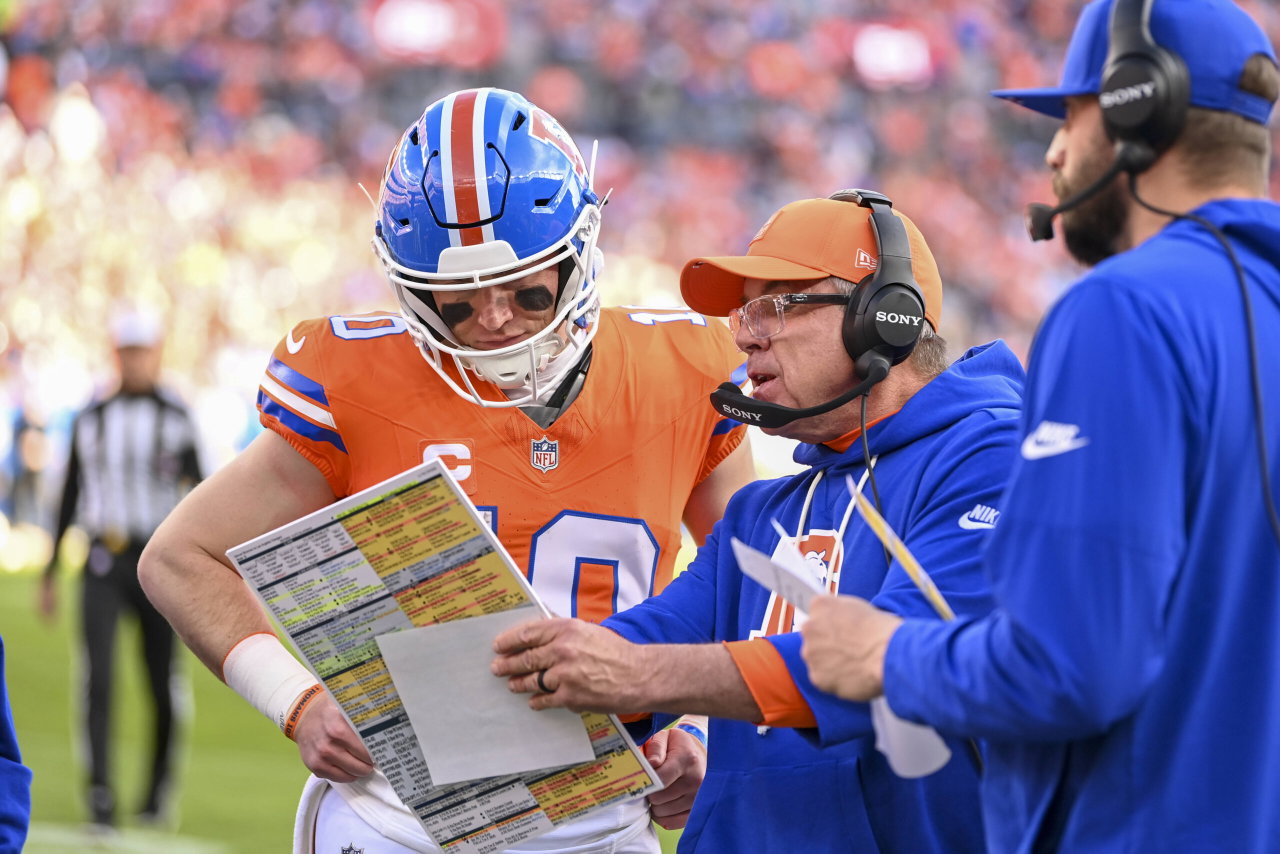
DENVER, CO – JANUARY 04: Denver Head Coach, Sean Payton and Bo Nix 10 of the Denver Broncos, discuss a play during a game between the Los Angeles Chargers and the Denver Broncos at Empower Field at Mile High in Denver, CO on January 04, 2026. Photo by Kevin Langley/Icon Sportswire NFL, American Football Herren, USA JAN 04 Chargers at Broncos EDITORIAL USE ONLY Icon202601011
Broncos
The biggest difference for the Denver Broncos from Week 1 to 2 was targeting Jaylen Waddle more. In Week 1, Bo Nix targeted Waddle three times. In the win over Jacksonville, he threw 10 passes, and Waddle caught eight of those targets for 138 yards. Waddle did his damage all over the field, whether it was on deep post routes, in the seams or double moves down the sideline. Overall, he had a 60 percent target success rate and led the Broncos in target share with 34.5 percent. It’s clear Waddle is the main staple of this Broncos offense going forward.
Running the ball was a different story for Denver. They couldn’t run the ball in heavier sets like 12 or 13 personnel, but had a 55.6 percent success rate in 11. You have to give credit to Jacksonville’s front, but overall, toward the end of the game, the line opened holes for Jonah Coleman, who impressed with his 12 carries. Garrett Bolles posted a shutout in pass protection, along with the rest of the offensive line for the most part. Jacksonville struggled to pressure Nix, which was a big factor in Waddle’s success.
Defensively, it wasn’t a crazy good performance, but it got the job done. Yes, the Broncos allowed just 13 points against the Jaguars. Watching the film back, Trevor Lawrence was having a day against the Broncos’ zone coverage. But a creative double-mug look from Vance Joseph that turned into a Cover 2 look forced Lawrence into a bad decision, which ultimately won Jacksonville the game. Riley Moss and Malcolm Roach had days against Jacksonville, executing the scheme perfectly. Overall, a major bounce-back performance from Denver, but there are still questions about how the offense operates under Davis Webb.
Jaguars
Imago
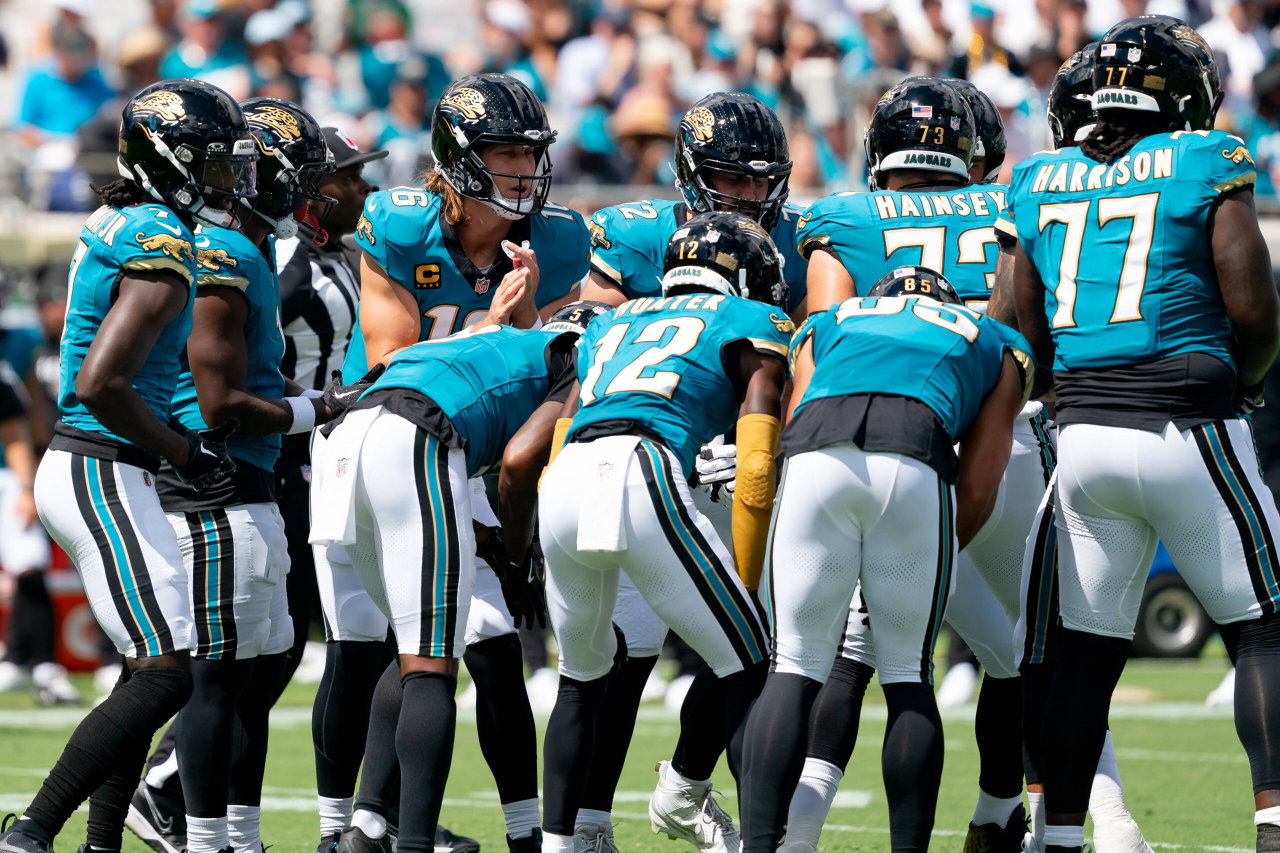
JACKSONVILLE, FL – SEPTEMBER 21: Jacksonville Jaguars quarterback Trevor Lawrence 16 and the Jacksonville Jaguars huddle up during an NFL, American Football Herren, USA game between the Houston Texans and the Jacksonville Jaguars on September 21, 2025, at EverBank Stadium in Jacksonville, FL. Photo by Chris Leduc/Icon Sportswire NFL: SEP 21 Texans at Jaguars EDITORIAL USE ONLY Icon250921018
Watching the Jacksonville Jaguars’ offense, it was just the one interception that threw off the whole groove. If they had converted that third down, they likely would have won. The numbers aren’t pretty for Lawrence, but as mentioned, he was facing this Broncos defense. Still, the Jaguars offense ran the ball against Denver at a 45.8 percent success rate, finding more success in 12 personnel than 11.
Bhayshul Tuten looks like he’s won the main back role for this offense and rightfully so. He had a success rate of 46.2 percent when carrying the ball and had five yards before contact on his 13 rushes. The holes are opening up for him, and he’s taking them with his acceleration. Just wait until the Jaguars face teams without elite fronts like Denver, and you’ll start to see Tuten put up bigger stat lines.
On defense, the interior defensive line just can’t handle pressure. The unit of Arik Armstead, Davon Hamilton, and Ruke Orhorhoro all have pass-rush win rates of zero percent on true pass-set sacks, according to PFF. Against the run is a different story; Hamilton is playing lights out and was a huge factor in the game against Denver. They just can’t get to the quarterback. Defensive coordinator Anthony Campanile tried to turn up the heat, blitzing 41.9 percent of the time, but it didn’t work as the Jaguars had a pressure percentage of 38.7 percent. They’ll have to start generating more pressure on receivers like Waddle and gas them for 100-plus yards consistently.
Bengals vs. Texans
Imago
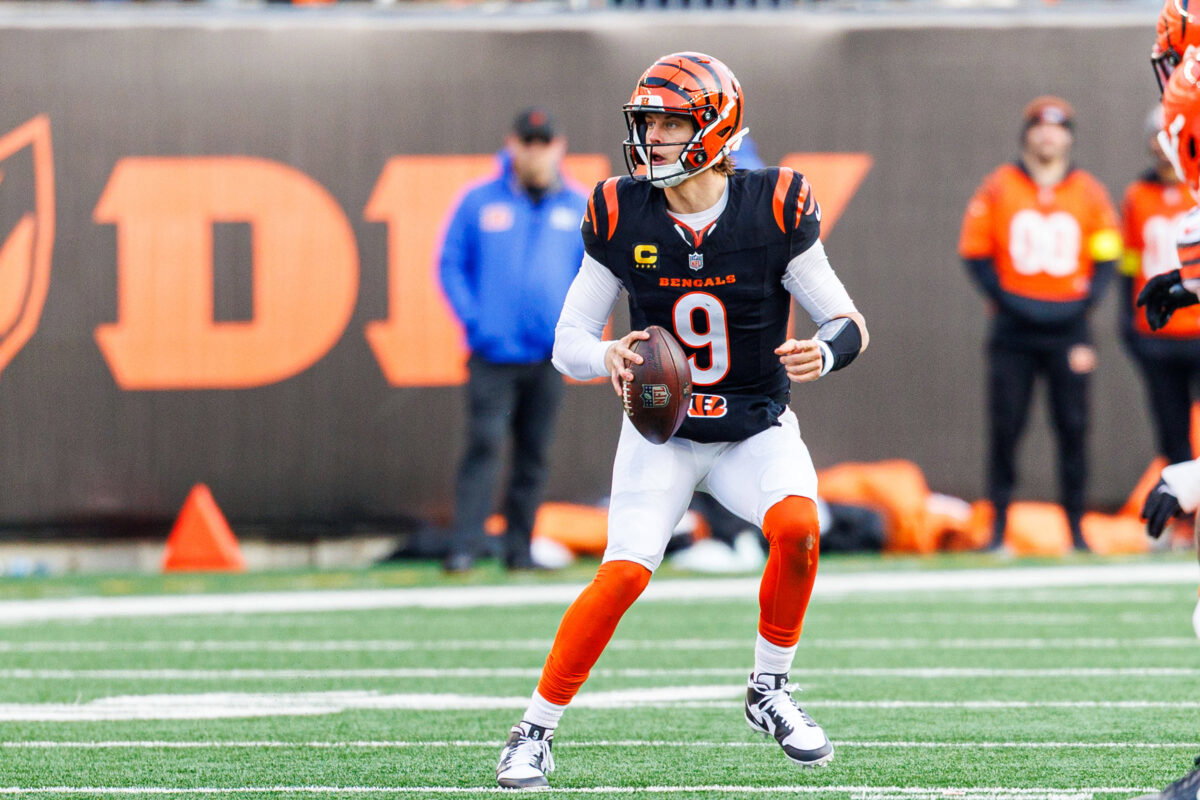
January 04, 2026: Cincinnati Bengals quarterback Joe Burrow 9 looks to pass the ball during NFL, American Football Herren, USA game action against the Cleveland Browns at Paycor Stadium in Cincinnati, Ohio. /CSM Cincinnati United States of America – ZUMAc04_ 20260104_zma_c04_296 Copyright: xJohnxMersitsx
Bengals
So, the Cincinnati Bengals have a defense now? The front of Cincinnati played lights out against Houston, having a run-stuff percentage of 40 percent and pressuring the quarterback 44.4 percent of the time. The best part is the Bengals didn’t have to blitz, rushing four 82.5 percent of the time. Dexter Lawrence has been everything the Bengals could’ve imagined, and it seems they’ve hit on their second-round pick, Cashius Howell, who had six pressures in the game.
It’s a luxury to stop the run in nickel in the NFL today, and Cincinnati can. The Bengals played nickel 79.5 percent of the time, and Houston’s rushing attack succeeded 16.7 percent of the time. Cincinnati has a real front seven, which should excite Bengals fans all over.
The reason? The offense hasn’t hit its stride yet. They did just face the Texans’ defense, which ultimately did its best to keep Houston in the game; the offense for the Texans just couldn’t do anything. A big play to Ja’Marr Chase ultimately is what made this score worse than it was. The Bengals couldn’t run the ball, with a 30.4 percent success rate, and had a league-low 27.8 percent passing success rate.
You’re only as strong as your weakest link, and the Bengals have a left tackle issue. Orlando Brown Jr. has let up six pressure in two weeks, and PFF has him responsible for three of the five sacks Joe Burrow took. On the bright side, Amarius Mims looks like the real deal at left tackle. Mims shut out Will Anderson Jr. and Danielle Hunter this past Sunday.
Houston

Imago
September 29, 2024, Cypress, Texas, USA: Texans quarterback CJ STROUD 7 celebrates after throwing a touchdown during the Houston Texans and Jacksonville Jaguars game at NRG Stadium in Houston. Cypress USA – ZUMAg261 20240929_znp_g261_028 Copyright: xDomenicxGreyx
I’ll be the first to come to CJ Stroud’s defense. He ranked 26th in the league this past weekend in EPA/Pass with -0.13, but this Houston Texans line didn’t do him much good. I’m trying to figure out whether it’s a Houston issue or just a testament to how good this Cincinnati front has looked in two weeks. Center Evan Brown couldn’t block Lawrence to save his life, and the two tackles for Houston couldn’t contain the edge rushers for the Bengals.
It’s never a good look when you look back at the statistics and see the Bengals had a zero percent success rate running the ball between the tackles; that’s how bad it was. What bothers me is how good Stroud is in the play-action game. He was 5-for-10, throwing for 80 yards. He operates efficiently, turning his head to the defense; the issue is that defenses aren’t scared of the play-action at all.
There was a chunk play to Foster Moreau in the second quarter off a play-action look; Houston executed it perfectly. Those types of plays are rare because teams with better backers won’t bite so hard on play-action looks.
Houston has a problem, and once again, it starts up front.
Not much to say for Houston’s defense. Will Anderson Jr. was dominant again, and the entire unit overall held the Bengals for most of the day. The 32-yard touchdown to Chase was a big factor in the double-digit loss.
Eagles vs. Titans
Imago
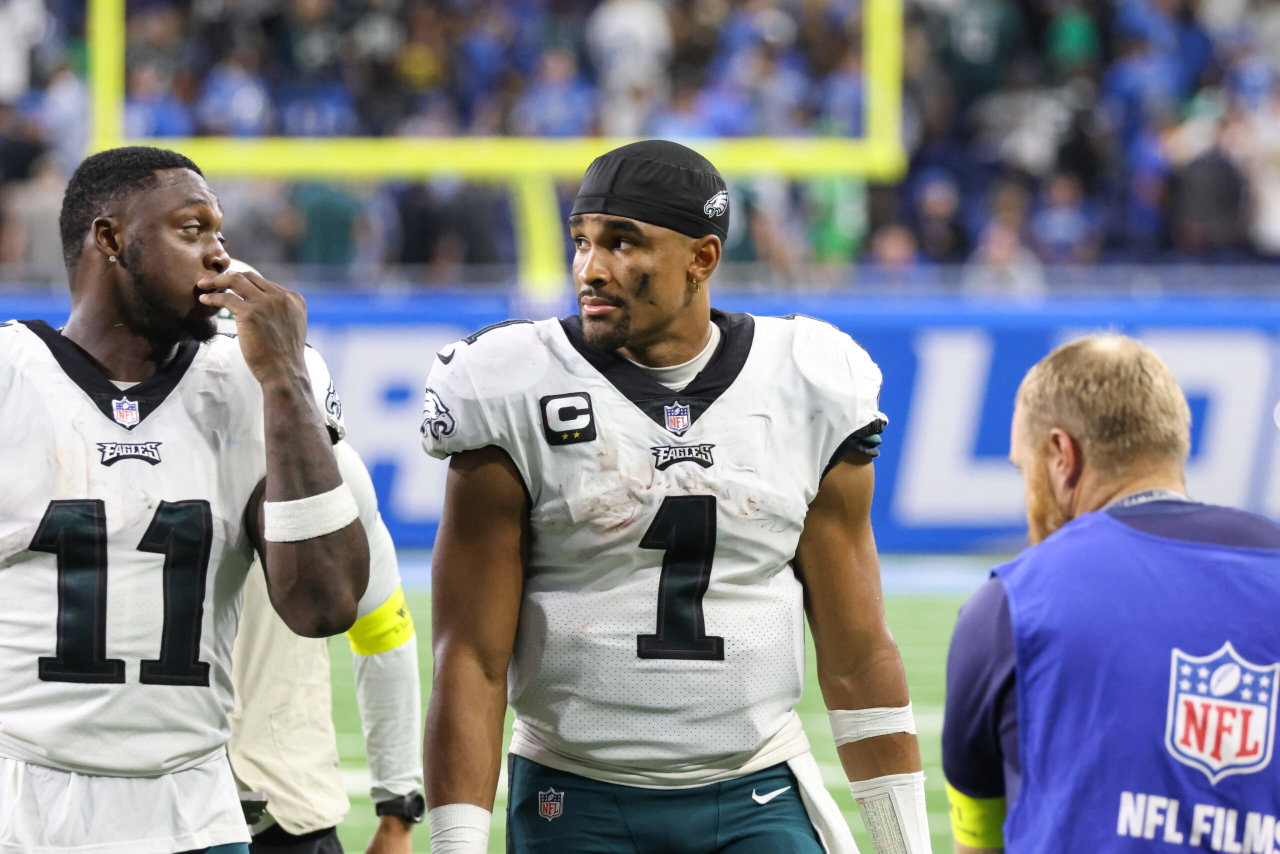
DETROIT, MI – SEPTEMBER 11: Philadelphia Eagles quarterback Jalen Hurts 1 talks to Philadelphia Eagles wide receiver A.J. Brown 11 at they walk off of the field together at the conclusion of a regular season NFL, American Football Herren, USA football game between the Philadelphia Eagles and the Detroit Lions on September 11, 2022 at Ford Field in Detroit, Michigan. Photo by Scott W. Grau/Icon Sportswire NFL: SEP 11 Eagles at Lions Icon220911270
Eagles
Gotta give Jalen Hurts his flowers for his performance. Yes, the first interception wasn’t the best, and he was hit while throwing the second time. Looking at how he did on third down against the Titans, he was surgical, going 9-for-13 for 134 yards and helping keep drives alive for the Philadelphia Eagles. Everyone was concerned with how he’d throw the ball over the middle (don’t worry, I was as well).
Through two weeks of throws between the numbers that are 10-plus yards downfield, he’s gone 6-for-8 for 116 yards with three touchdowns and one interception. The connection with DeVonta Smith is alive, with Hurts having a 69.2 percent success rate when targeting him.
Philadelphia’s big issue is the interior offensive line. The loss of Landon Dickerson hurts. Tyler Steen and Cam Jurgens have struggled at the guard spots, with Jurgens allowing four pressures against Tennessee. Not only that, but Steen has struggled to open up consistent holes in the running game, which is what Philadelphia is known to be dominant at.
That hasn’t been the case with this offensive line. Philadelphia had a rushing success rate of 34.4 percent against Tennessee. If this unit wants to be one of the league’s best, they’ll have to get the running game sorted out, because Hurts is, quite frankly, keeping them in games right now.
Defensively, the Eagles defense struggled to stop the run, allowing 122 yards and 4.2 yards per carry. The linebacking duo of Zack Baun and Jihaad Campbell has gotten off to a slow start this season, but overall they’ve been good enough. You want to see their play improve, because we’re not used to this Philadelphia front giving up rushing yards like this. One player who’s been doing it for them is Moro Ojomo. He’s a rotational player for Philadelphia, but he’ll get a big contract next offseason.
Titans
Imago
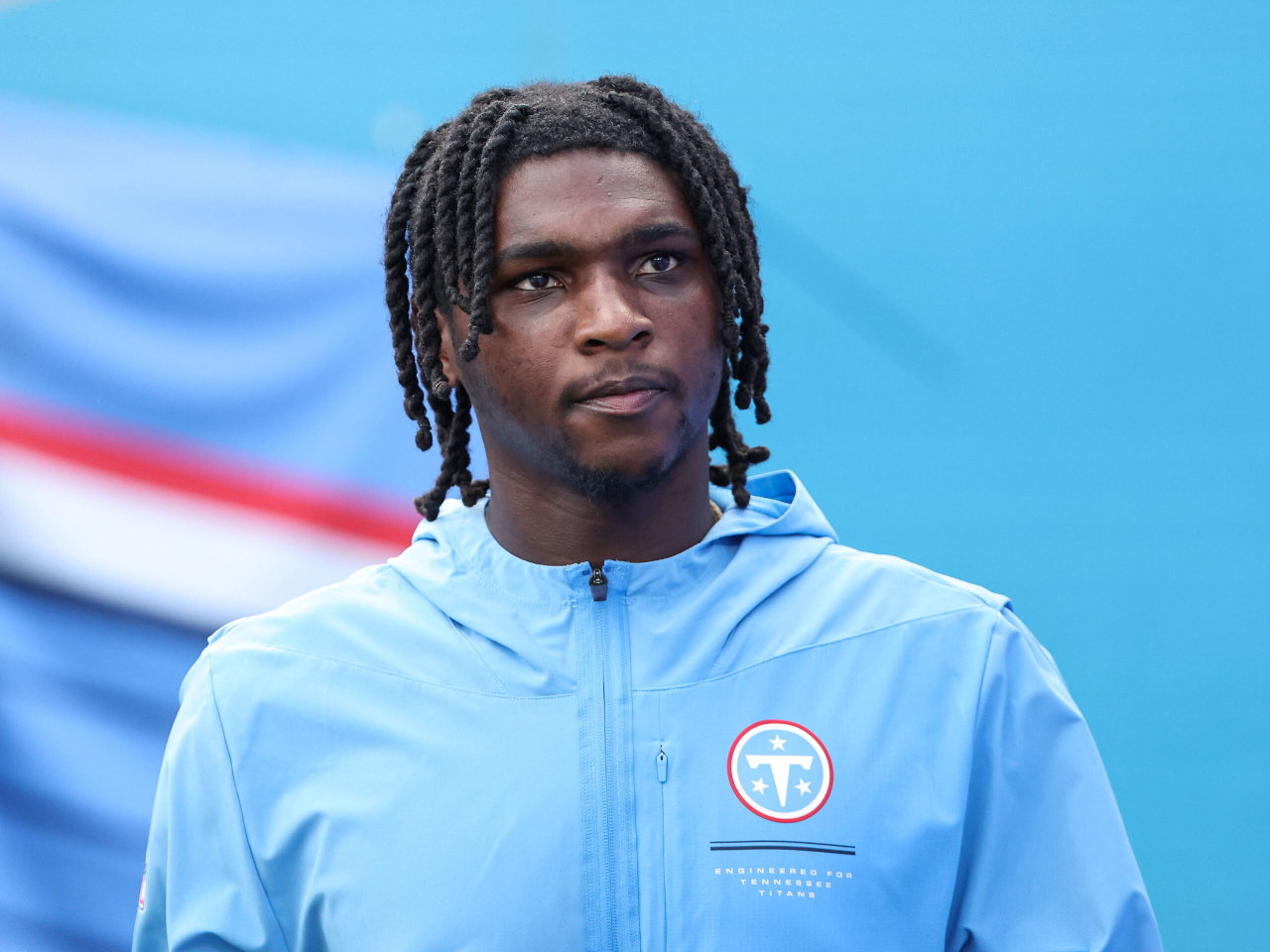
Aug 29, 2026 Nashville, Tennessee, USA Tennessee Titans quarterback Cam Ward 1 walks into the stadium during warm-ups prior to the NFL, American Football Herren, USA pre-season game between the Chicago Bears and Tennessee Titans at Nissan Stadium Nashville. Mandatory Credit: -Cal Media NFL 2026: Bears Vs Titans AUG 29 PUBLICATIONxINxGERxSUIxAUTxONLY – ZUMAc04_ 20260829_zma_c04_034 Copyright: xStephenxFurstx
The biggest story with the Tennessee Titans was the rushing performance. Having an EPA/Rush of 0.11 against the Eagles’ front should be a big boost in confidence for Titans fans. Tyjae Spears showed the explosive back he can be when he’s on the field; he averaged 5.3 yards per carry and had a couple of explosive plays in the passing game.
Cam Ward was better in this game, going 13-for-20 for 183 yards with no touchdowns or picks. He kept the team in the game and took what the Eagles gave him. The whole operation looked a lot cleaner than Week 1, and while the team didn’t win, it’s exciting. The one issue with Ward is he still struggles to fully anticipate throws on certain occasions.
There was a rep where he had Carnell Tate uncovering on a two-high safety look on a post, but he pulled the ball down and started to scramble when there was no pressure. Ward faced a lot of pressure in his rookie season, and this rep shows his internal clock is sped up. It’s fixable, but you want to see him step up in the pocket and rip that post, because we all know he can make that throw.
Much like the Bengals ‘ offensive line, a unit is only as strong as its weakest link. Left tackle Dan Moore Jr. has struggled to start off this season. While he only gave up one pressure, Eagles edge Jalyx Hunt had his way with Moore for the majority of the day. The Titans also had a negative EPA/Play when they ran the ball behind Moore. They’ll need better play from him going forward.
For the defense, I’m very impressed with what this front seven has shown. They had eight tackles for loss and a pressure rate of 45.2 percent. Jeffery Simmons is as dominant as ever, and rookie Anthony Hill Jr. has been lights out. The secondary is the main concern for this Titans defense.
Saints vs. Ravens
Imago
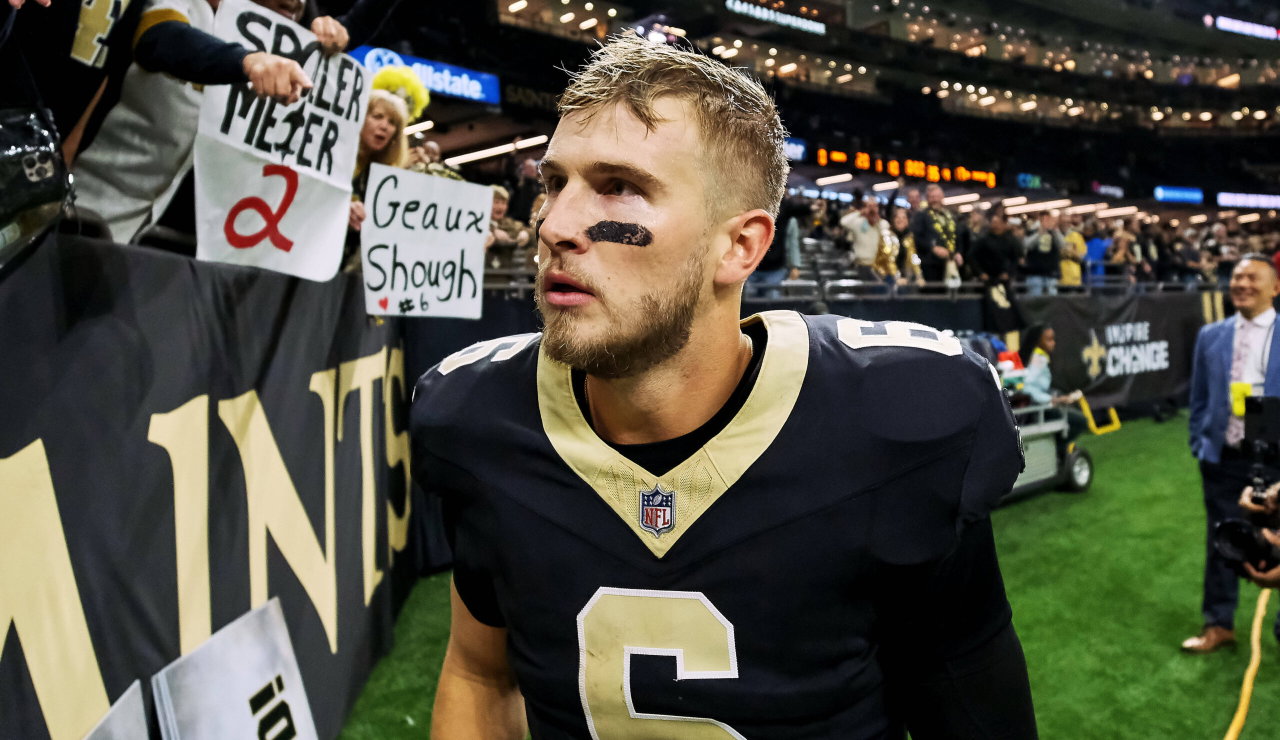
December 14, 2025, New Orleans, Louisiana, U.S: December 14, 2025, New Orleans, Louisiana, USA: New Orleans Saints quarterback Tyler Shough meets fans after playing the Carolina Panthers during an NFL, American Football Herren, USA regular season game. The Saints beat the Panthers 20-17. New Orleans U.S – ZUMAa14_ 20251214_zaf_a14_030 Copyright: xDanxAndersonx
Saints
What a win for the New Orleans Saints. The Saints marched into Baltimore and had an EPA/Play of 0.11 against this Jesse Minter defense. You have to give major credit to quarterback Tyler Shough, who rose to the occasion. Whether it was a rotation safety look in the back end or a confusing double-mug blitz look, Shough dissected the defense every time and made the right plays.
Against the blitz, Shough was 10-for-13 for 102 yards. He didn’t flinch when pressure was staring him down. The connection to Chris Olave is real and alive; imagine what this offense looks like when it gets Jordyn Tyson back.
New Orleans’ main concern is the injury to Kelvin Banks Jr., who was placed on IR with an ankle injury. Asim Richards came in to replace Banks and, in 14 pass-block snaps, gave up zero pressures. A good start, but looking ahead, the Saints will face Maxx Crosby, Dallas Turner, Abdul Carter and TJ Watt in the coming weeks. If Richards can rise to the occasion, this offense won’t skip a beat.
It’s rare to give up a success rate of 64.3 percent against a team and still come out with a win. This Saints defense didn’t play the best, but made plays in the second half when it mattered. If the Ravens had Zay Flowers and Ja’Kobi Lane, this game might’ve been different,t but we don’t live on “ifs” in the NFL.
The Saints’ pass rush came alive when it needed to, especially against lightning Lamar Jackson. New Orleans has a pressure rate of 44.7 percent thanks to well-timed blitzes from Kaden Elliss, who was a wrecking ball coming downhill.
Ravens
Imago
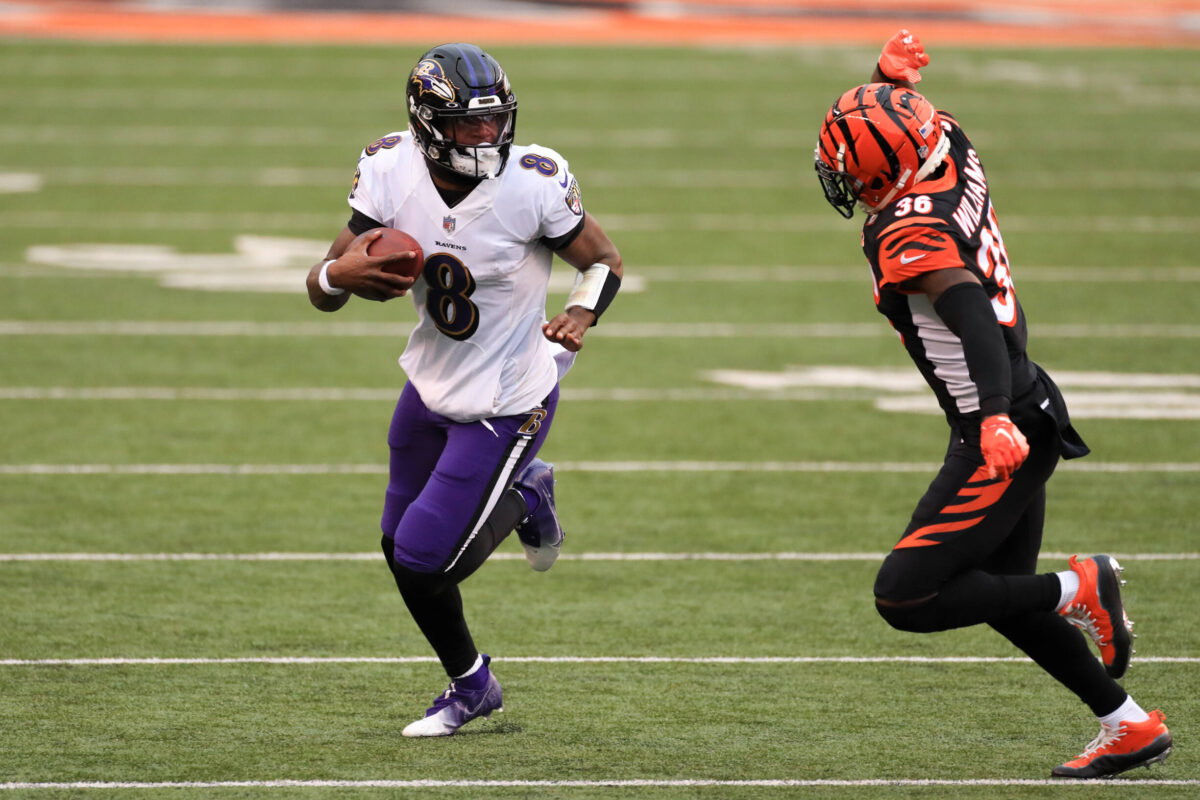
CINCINNATI, OH – JANUARY 03: Baltimore Ravens quarterback Lamar Jackson 8 carries the ball during the game against the Baltimore Ravens and the Cincinnati Bengals on January 3, 2021, at Paul Brown Stadium in Cincinnati, OH. Photo by Ian Johnson/Icon Sportswire NFL, American Football Herren, USA JAN 03 Ravens at Bengals Icon210103086
Same old Baltimore Ravens? Baltimore went into halftime with a 14-6 lead over New Orleans, but football isn’t just a 30-minute game. After a 14-play drive that ended in a field goal for Baltimore, they had two straight three-and-out drives. Then they got the ball back late in a two-minute situation, and Jackson threw an interception. Guess how many times the Ravens handed the ball off to their 6-foot-2, 250-pound back? One time. That’s it.
The kicker is, the Ravens weren’t having much trouble rushing the ball. They had a 77.3 percent rushing success rate. This offensive line was working the New Orleans front, especially the right-side duo of Vega Ioane and Roger Rosengarten. Not much more to say about this offense; the rushing attack was what it needed to be, but for some reason Baltimore opted to go away from it late.
Defensively, Baltimore played well and executed well. Just some big-time reads from Shough late were the decider, and sometimes that’s all it is. It’s hard to stop a quarterback hitting on all cylinders, and Shough was. The one issue was Baltimore’s overall pressure rate. They pressured Shough 33.3 percent of the time, which isn’t gonna get it done in the NFL.
The edge rushers for Baltimore put in work; the interior didn’t. Calais Campbell, Broderick Washington, John Jenkins and Travis Jones combined for two pressures on the day.
Raiders vs. Chargers
Imago
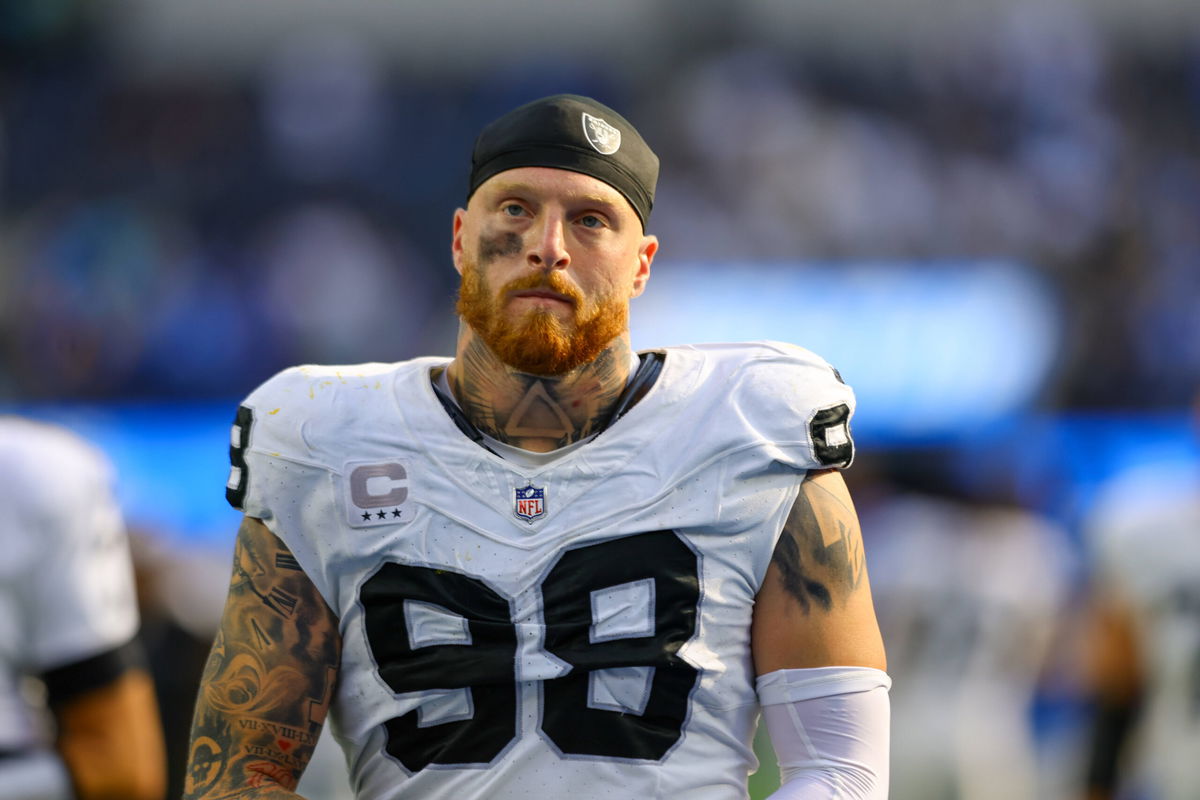
INGLEWOOD, CA – OCTOBER 1: Las Vegas Raiders defensive end Maxx Crosby 98 walks off the field after the NFL, American Football Herren, USA regular season game between the Las Vegas Raiders and the Los Angeles Chargers on October 1, 2023, at SoFi Stadium in Inglewood, CA. Photo by Jordon Kelly/Icon Sportswire NFL: OCT 01 Raiders at Chargers EDITORIAL USE ONLY Icon231001912
Raiders
Who would’ve thought that, after two weeks, the Las Vegas Raiders would be second in the league in pressure percentage; massive credit to their defensive coordinator, Rob Leonard. The best part is it’s natural pressure. Las Vegas blitzes 20.6 percent of the time and rushes with four 72.1 percent of the time.
Compare that to the Minnesota Vikings, who blitz 75 percent of the time and rush with four 22.7 percent of the time. When the Raiders blitz, it’s calculated; Leonard has done a great job bringing corners at the right time and using creative stunts to free up rushers.
It’s not only the pressure numbers that are impressive, but it’s also the ability to defend the run. Against Los Angeles, the Raiders allowed an EPA/Rush of -0.48, ranking third in the NFL for the week. The signings of Nakobe Dean and Quay Walker have been real difference-makers for this Raiders front. Not only that, but the interior defensive line was a worry for Las Vegas coming into this season. Well, Tonka Hemingway and Folorunso Fatukasi have played above expectations.
Offensively, it’s the Klint Kubiak offense. Under center, heavy sets, and running the ball. It’s what we expected this Raiders offense to look like, and it’s stayed true so far. The offensive line looks completely different this season, and it’s all because of the coaching.
It’s the same unit from last season, with the main addition being Tyler Linderbaum, but they’re blocking completely differently than a season ago. The rushing attack wasn’t as successful in Week 2, but it did enough to get the win. Also, Tre Tucker suprirecmny, surprisingly has found a real role in this Kubiak offense.
Chargers
Imago
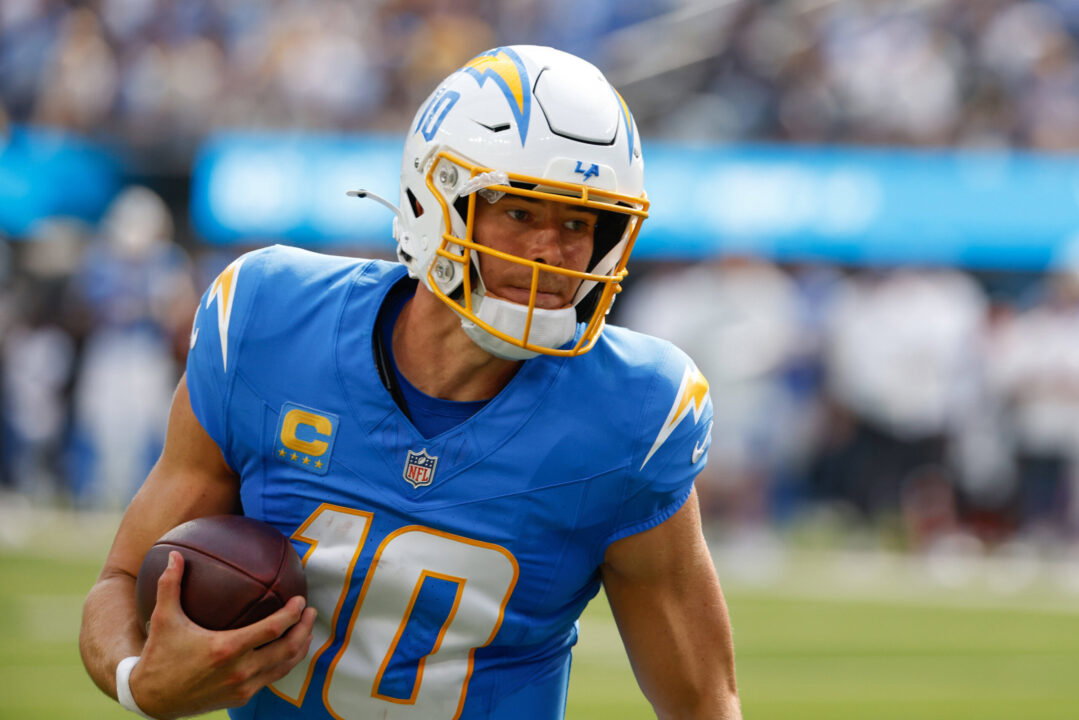
INGLEWOOD, CA – SEPTEMBER 13: Los Angeles Chargers quarterback Justin Herbert 10 rolls out to run during the NFL, American Football Herren, USA game between the Arizona Cardinals and the Los Angeles Chargers on September 13, 2026, at SoFi Stadium in Inglewood, CA. Photo by Jevone Moore/Icon Sportswire NFL: SEP 13 Cardinals at Chargers EDITORIAL USE ONLY Icon260913516
What can be said that already hasn’t been said about this Los Angeles Chargers team? Running the ball is a staple in the Mike McDaniel offense. Against Las Vegas, the Chargers had an EPA/Rush of -0.48, as previously mentioned. That’s not going to get it done, and it starts up front. The interior just isn’t played up to standard. Cole Strange and Jake Slaughter have struggled mightily, which isn’t that surprising, to be quite frank.
But what’s more surprising is Joe Alt getting outworked by Crosby for the entire day. Alt gave up three pressures, had three false starts, and one holding penalty that resulted in a safety. The Chargers offense needs to figure it out, and it starts up front.
Not here to defend Justin Herbert, because he hasn’t been playing his best to start the season, but this receiving core isn’t helping him. Drops by Brenen Thompson, Quentin Johnston, and David Njoku eliminated explosive plays from this offense in the game.
Ladd McConkey is the only player who Herbert seems to trust. When targeting McConkey, Herbert had a success rate of 66.7 percent, but due to an injury, McConkey was limited in the matchup with Las Vegas.
But again, it starts with the run game. McDaniel ran the ball 50 percent of the time against Las Vegas, so it shows how much this team wants to run the ball. The execution just hasn’t been there.
On defense, the team is missing Jesse Minter. The numbers aren’t that bad when you look at them. The Chargers allowed a 33.3 percent success rate and held the Raiders to 57 rushing yards. The passing game routinely hurt the Chargers, and it’s not like the team wasn’t getting pressure. Los Angeles was fifth in pressure rate this past weekend with 46.9 percent.
The secondary just couldn’t cover the Raiders’ receiver room and got caught in some bad looks against the Raiders’ passing attack. The big touchdown to Tucker was a two-high look, with one safety getting dragged in by a deep curl, leaving Tucker wide open.