
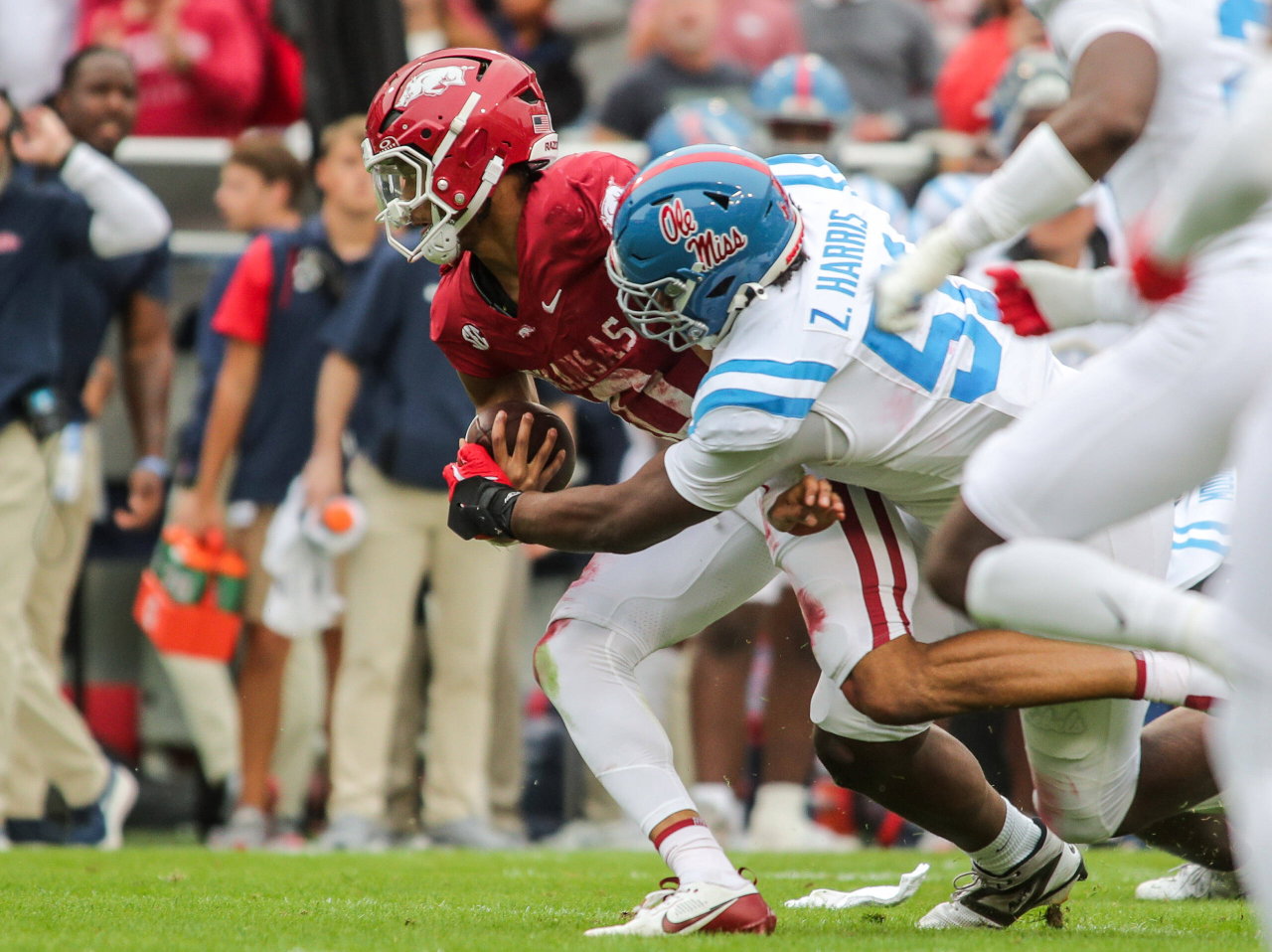
On Tuesday, Zxavian Harris was still getting NFL looks. He walked into Green Bay still chasing an NFL roster spot. It was not his first attempt to find a way back in, but this one came after a particularly strange detour. Just weeks earlier, the former Ole Miss defensive tackle had been trying to revive his college career at LSU alongside Lane Kiffin.
Watch What’s Trending Now!
The Packers workout gave Harris something concrete to hold onto. After all the uncertainty surrounding his next football home, he was back in front of an NFL team, with another chance to make the case for himself. And for Dae’Quan Wright, the situation was taking a similarly unexpected turn, with his agent Drew Rosenhaus saying multiple NFL teams remained interested in the former Browns tight end. Then came the NFLPA’s latest move.
“The NFLPA is looking into exactly what Zxavian Harris, Dae’Quan Wright and others did individually upon returning to college, and the possibility of a grievance is still on the table after the NFL barred them for the 2026 season,” wrote NFL analyst Tom Pelissero on X.
The investigation dates back to why Harris and Wright left the NFL in the first place. Both were undrafted in 2026 after playing under Lane Kiffin at Ole Miss. Both signed with NFL teams after the draft, with Harris joining the Saints and Wright spending time with the Eagles and Browns, before ultimately being waived. The two college players entered college in 2022 and had exhausted their four-season availability under the older NCAA rules.
A new NCAA rule introduced a five-year playing window for athletes who began college in 2023 or later, excluding the 2022 class. That distinction left players from the 2022 recruiting class outside the new five-season framework. Harris, Wright and other affected athletes challenged the eligibility rules in court, seeking another season of competition as well as the educational and NIL opportunities that came with it.
That legal battle eventually opened another door. Louisiana District Judge William Jorden issued a preliminary injunction that temporarily cleared the way for Harris, Wright, and other affected athletes to start another college season. The ruling covered 42 athletes across sports and put Harris and Wright in position to return to LSU.
That ruling held back the NCAA and the SEC from taking certain action against the schools involved and led the former Ole Miss players to reunite with Kiffin at LSU. But the court ruling did not erase the conflict with the SEC (Southeastern Conference). The SEC had already adopted a rule barring athletes with professional experience from returning to college competition, and it threatened penalties against LSU if the Tigers proceeded.
LSU did not put Harris or Wright on its opening roster, even after the injunction. The Tigers instead filled their available roster spots with other players, leaving both former Ole Miss standouts without a college team to play for. Wright’s agent later said multiple NFL teams were interested in his client if the league cleared him to return. Then came the NFL’s response.
“The following players who were eligible for the 2026 NFL Draft returned to college and participated with their college football team after the opening of NFL training camp, and therefore, they are ineligible to visit, try out with, or be signed by NFL clubs during the 2026 season,” wrote the NFL in the memo, dated September 16 and sent to all NFL clubs.
The league had already warned teams in late August that players who returned to the college ranks would be prohibited from signing with an NFL team during the 2026 season. The September memo formalized that position for Harris and Wright, barring them from visits, tryouts and signings until the 2027 season.
The timing created an especially unusual twist for Harris. The Packers had worked him out on September 15, one day before the NFL’s memo was issued. Tom Pelissero later reported that Green Bay was not expected to face discipline over the workout.
The league also warned its clubs to verify players’ eligibility before signing contracts or inviting players for visits or tryouts. It made clear that each club would be responsible for checking eligibility, with possible discipline including fines and the loss of draft picks.
The league stated that teams could face discipline for eligibility violations, including fines and loss of draft picks. The memo also acknowledged that Harris and Wright were the only players specifically mentioned in the notice, while not every 2026 draft-eligible player who returned to college was mentioned. The NFL said its list “is not inclusive of all 2026 draft-eligible players who returned to college,” leaving open the possibility that other cases could require individual review.
This is where the NFLPA’s involvement becomes significant. The union has not announced a formal grievance against the NFL. Instead, an NFLPA spokesperson told Front Office Sports that it is “in touch with each of the players’ representatives” and will “explore all options to ensure each players’ rights are protected within the Collective Bargaining Agreement.”
Wright’s agent, Drew Rosenhaus, has also stated that the tight end is considering his legal options. “Dae’Quan is looking at his legal options right now and we will have more to say in the near future,” Rosenhaus told Front Office Sports.
That review could matter because the NFL’s position turns on what Harris, Wright and other players actually did after returning to college—not simply whether they explored the possibility of going back. Pelissero reported that the NFLPA is examining those circumstances individually before deciding whether a grievance is warranted.
For Harris and Wright, their attempt to regain college eligibility led to a legal win, but LSU did not offer them a roster spot. Their return to college, meanwhile, triggered the NFL’s eligibility ruling. Now the NFLPA is investigating what each player actually did and if the league’s response can withstand a challenge under the CBA.
There is also a wrinkle in how the two players reached this point. Wright’s camp had been trying to keep his NFL option alive while the LSU situation played out; Rosenhaus said Wright was waiting to hear whether he could return to the league after LSU closed its roster door. Harris, meanwhile, was still taking NFL workouts as late as September 15.
That leaves the two players in an unusual gap between the two levels of football: a court ruling opened the way back to college, LSU ultimately did not roster them, and the NFL has now shut them out for the rest of 2026. The question before the NFLPA is whether the league’s interpretation can stand under the CBA.
The NFL has closed the door on Harris and Wright for 2026. Whether that door stays closed until 2027 may now depend on what the NFLPA finds in the details of their attempted return to college.