
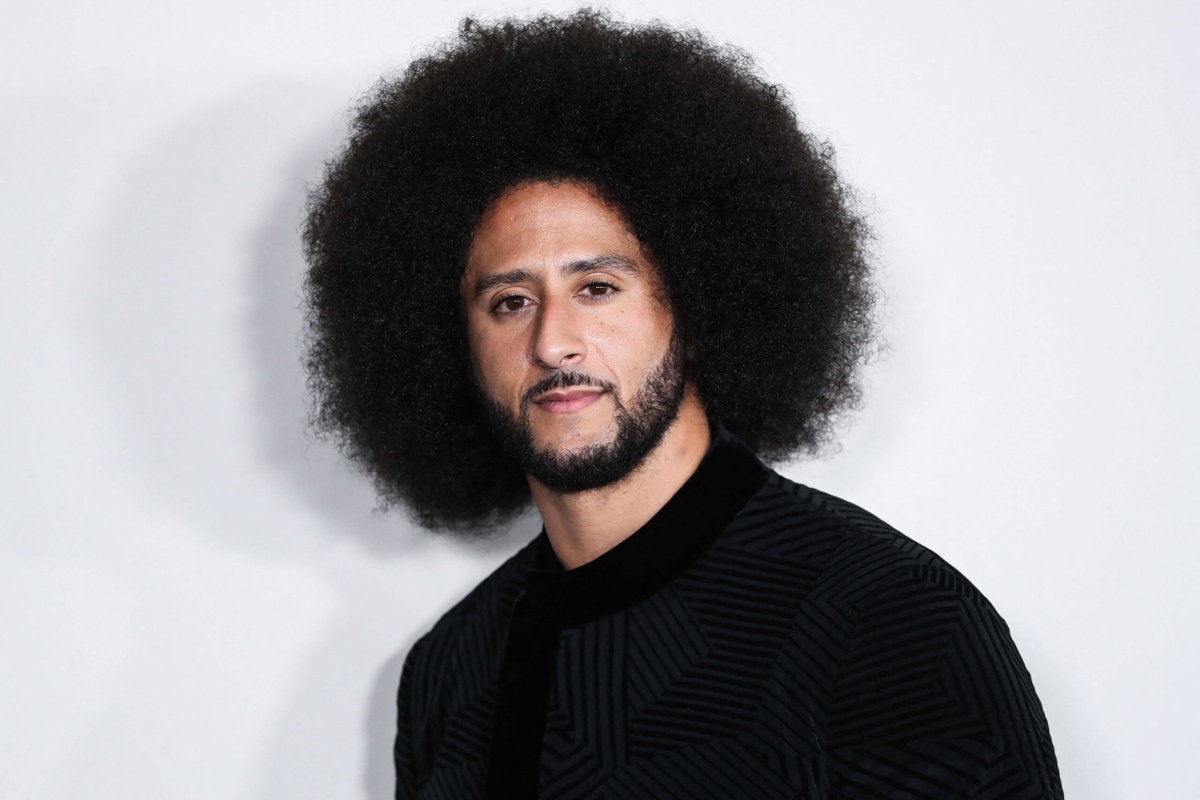
Before Colin Kaepernick was a 49ers quarterback, he was a 6-foot-5 high school pitcher with a fastball that touched 90 mph. MLB scouts took notice, and the Chicago Cubs eventually drafted him in the 43rd round in 2009. But football was the dream. As a fourth-grader, Kaepernick had written down that he wanted to play for the 49ers or Packers someday. San Francisco would eventually make that childhood prediction come true. But by the 2016 preseason, that story had already shifted.
Kaepernick sat during the anthem before San Francisco’s games. He wasn’t in uniform for those first games because he was recovering from injury, which helped the protest go unnoticed. It was a photograph from the August 26 preseason game that brought attention to what he was doing. But a photograph brought the protest into view, and a conversation with former Green Beret Nate Boyer helped shape the gesture that would follow: Kaepernick and Eric Reid chose to kneel rather than sit. Now, a decade after that knee became one of the most recognizable images in sports, Kaepernick is taking the story on the road.
He has announced a nationwide tour for his memoir, The Perilous Fight, which arrives September 15, with the first stop set for September 14 in Brooklyn. In a statement, Kaepernick shared:
“My memoir, The Perilous Fight, is out September 15, 2026. I’ll be visiting cities across the country to talk about the experiences that shaped me, the convictions that continue to guide my work, and how we build collective power,” He wrote on Instagram.
The 11-city tour will move from Brooklyn to Harlem, New Orleans, Atlanta, Sacramento, Los Angeles, Oakland and Baltimore in September before continuing to Dallas, Little Rock and Houston in October. The Houston stop is scheduled for October 28 at Windsor Village Church, hosted by CLASS Bookstore. But the tour is not simply a series of book appearances.
Legacy Lit describes The Perilous Fight as “equal parts memoir and manifesto,” and the book reaches much further back than Kaepernick’s NFL career. It traces his childhood in Turlock, California, where he grew up as a Black child adopted into a white family and began wrestling with questions of identity long before he became one of the most recognizable athletes in America.
Kaepernick also writes about the people and ideas that shaped his political development, including Malcolm X, Muhammad Ali, Huey P. Newton and Angela Davis. His account is built around the idea that the protest most people remember was not an isolated decision, but the product of years of experiences that shaped how he understood race, identity and injustice.
“People saw the moment. But they didn’t see the years that made it possible: the questions about who I was; the injustices I could no longer ignore; the voices of those who came before me that I carried into that stadium,” Kaepernick said in the book announcement. “That journey, from a Black kid navigating an identity the world didn’t always make space for, to an athlete who realized the game was bigger than football, shaped everything. When I took a knee, it wasn’t a sudden act. It was the result of years of becoming.”
That makes the timing of the memoir significant.
Kaepernick’s first national anthem protest came on September 1, 2016, meaning the book arrives just two weeks after the 10-year anniversary of the moment that changed the way much of the country saw him. But the memoir’s focus is not limited to that afternoon or the fallout from it; it is an attempt to put the moment inside the much longer story Kaepernick believes led him there.
That story eventually intersected with one of the most consequential periods of his NFL career. Kaepernick had already spoken publicly about the police killings of Alton Sterling and Philando Castile that summer before his protest drew national attention. After sitting during the anthem, he explained his reasoning to NFL Media: “I am not going to stand up to show pride in a flag for a country that oppresses Black people and people of color.”
Kaepernick continued kneeling throughout the 2016 season, with Eric Reid joining him, and the gesture eventually spread across the NFL. The protest also became a political flashpoint. Donald Trump was never in support of players who knelt during the anthem in 2017, helping turn what began with Kaepernick into a much broader fight over race, patriotism and athletes’ role in political debate.
His football career had already taken a complicated turn by then. Kaepernick spent six seasons with the 49ers, playing 69 games and making 58 starts. He threw for 12,271 yards, 72 touchdowns and 30 interceptions while adding 2,300 rushing yards and 13 touchdowns. His defining football achievement came in the 2012 season, when he took over as San Francisco’s starter and led the team to Super Bowl XLVII, where the 49ers lost 34-31 to the Baltimore Ravens.
His final season was far less spectacular. Kaepernick went 1-10 in his 11 starts in 2016, but still threw 16 touchdowns against four interceptions and posted a 90.7 passer rating. After the season, he opted out of his contract and entered free agency as a new coaching regime took over in San Francisco. He was not signed by another NFL team. That distinction is important because Kaepernick never presented his NFL career as finished.
In 2017, he filed a grievance accusing NFL owners of colluding to keep him out of the league. The grievance was settled in 2019, with the terms remaining confidential. The settlement did not publicly establish that the league had colluded against him, but Kaepernick continued to maintain that he was capable of playing and trained for a potential return.
There were later opportunities to work out for NFL teams. The Seattle Seahawks considered him in 2020, and the Las Vegas Raiders worked him out in 2022, but neither led to a contract. Kaepernick has remained outside the league since the 2016 season.
His work since then has increasingly centered on the themes explored in the memoir. Kaepernick founded Know Your Rights Camp and Kaepernick Publishing in 2019, using the latter to work on books including We Are Free, You & Me, I Color Myself Different and the graphic novel Change the Game. He has also worked on Our History Has Always Been Contraband and Abolition for the People.
So while The Perilous Fight inevitably returns to the knee that became Kaepernick’s defining image, its scope is considerably wider. It is the story of the person before the protest, the athlete who came to believe that “the game was bigger than football,” and the activist and publisher he became afterward. The nationwide tour now gives him a chance to tell that story himself, a decade after the moment that first made the world listen.