Imago
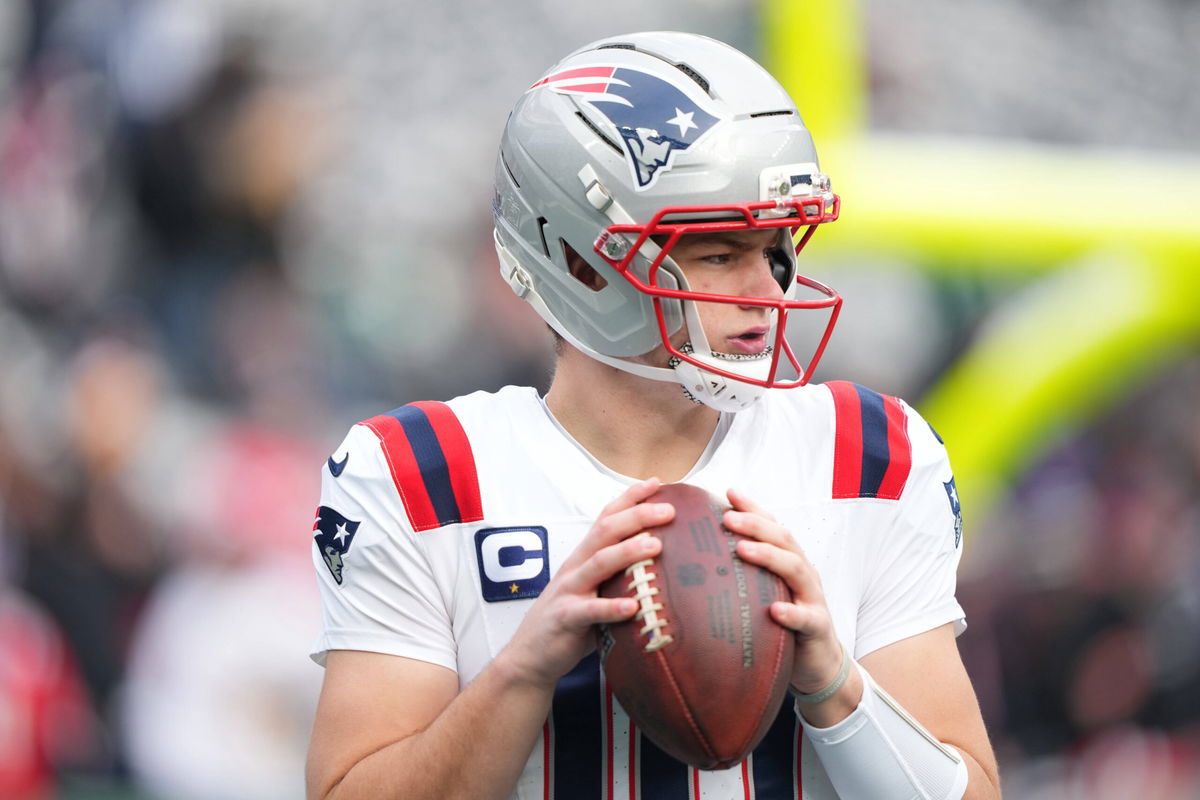
NFL, American Football Herren, USA New England Patriots at New York Jets Dec 28, 2025 East Rutherford, New Jersey, USA New England Patriots quarterback Drake Maye 10 warms up prior to the game against the New York Jets at MetLife Stadium. East Rutherford MetLife Stadium New Jersey USA, EDITORIAL USE ONLY PUBLICATIONxINxGERxSUIxAUTxONLY Copyright: xRobertxDeutschx 20251228_ajw_jo9_024
Imago
NFL, American Football Herren, USA New England Patriots at New York Jets Dec 28, 2025 East Rutherford, New Jersey, USA New England Patriots quarterback Drake Maye 10 warms up prior to the game against the New York Jets at MetLife Stadium. East Rutherford MetLife Stadium New Jersey USA, EDITORIAL USE ONLY PUBLICATIONxINxGERxSUIxAUTxONLY Copyright: xRobertxDeutschx 20251228_ajw_jo9_024
Essentials Inside The Story
- Early pressure on Drake Maye threw the offense off rhythm.
- Injuries and a young O-line struggled under the moment.
- The game showed how much protection matters on the biggest stage.
The New England Patriots are still picking through the wreckage of their 29–13 loss to the Seattle Seahawks in Super Bowl LX, and the questions around what exactly went wrong aren’t going away anytime soon. Patriots quarterback Drake Maye took six sacks, threw two interceptions, and struggled throughout the game. But recently, former Patriots safety Jason McCourty looked beyond Maye’s mistakes and blamed his struggles on the offensive structure around him.


“Drake Maye was also off on the times that they did have guys open,” Jason McCourty said in the latest episode of the Up & Adams Show with Kay Adams. “He missed on a lot of those throws, and I think that’s what happens when your quarterback gets hit early. It speeds everything up for him, and he’s kind of playing rush. And that’s what it looked like last night for the Patriots on the offensive side of the ball.”
Watch What’s Trending Now!
While playing in Super Bowl LX, the Patriots’ offense managed to score only 13 points, averaged 4.9 yards per play, converted just six of 15 third downs, and turned the ball over three times. While Drake Maye’s mistakes were real, the offensive line around him did little to help. As McCourty observed, a young quarterback like Maye could not settle in when pressure arrived almost instantly.
Imago
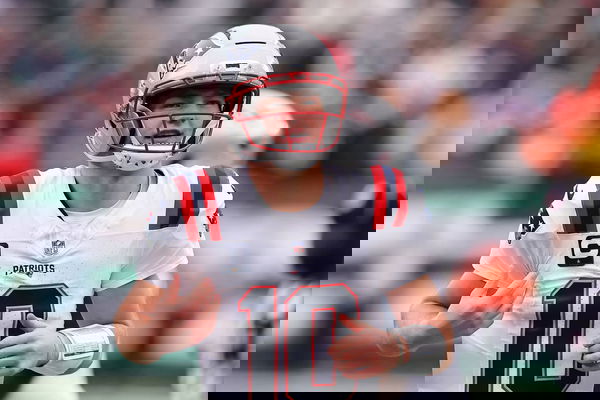
EAST RUTHERFORD, NJ – DECEMBER 28: Drake Maye 10 of the New England Patriots during the game against the New York Jets on December 28, 2025 at MetLife Stadium in East Rutherford, New Jersey. Photo by Rich Graessle/Icon Sportswire NFL, American Football Herren, USA DEC 28 Patriots at Jets EDITORIAL USE ONLY Icon25122821886

Where Does Patriots Still Lack Elite Talent?
Let Tony do the scouting, you just make the pick.
Pick your positions. Get Tony’s top 5:
The Patriots’ offensive line, in particular, collapsed under the pressure of the big moment. They didn’t score a touchdown until the fourth quarter, and much of that delay can be traced back to protection issues related to Drake Maye. The left side of the Patriots’ OL, with rookies Will Campbell and Jared Wilson, became an obvious target for the Seahawks’ defense. According to Next Gen Stats, Campbell’s outing was especially rough, as he allowed 14 pressures, which was the most surrendered by any offensive lineman in a single game all season.
But what made matters worse was how simple it was for Seattle to generate pressure on Drake Maye. With a basic four-man rush, the Seahawks exposed technical flaws that plagued Campbell all game long. Maye rarely had time to scan the field, evidenced by the 21 sacks he took across four postseason games.
But Campbell was also not fully healthy down the stretch this season. He suffered a Grade 3 MCL sprain on November 23 during the game against the Cincinnati Bengals. It was an injury that NFL insider Albert Breer described as “very significant,” even if it didn’t end Campbell’s season. On top of that, Maye himself revealed after the Super Bowl that he played through a shoulder injury.
“My shoulder feels…I shot it up so…not much feeling,” Drake Maye said in the presser after the Super Bowl loss. “It was good to go.”
The injury occurred late in the third quarter during the AFC Championship game against the Denver Broncos, when Drake Maye landed awkwardly on his right shoulder. After that, although he practiced fully before the Super Bowl, Maye’s game-day status remained unclear, and doctors reportedly gave him painkillers to get him through the night. It did not completely limit him physically during the Super Bowl, but combined with relentless pressure, it certainly didn’t help Maye.
In Super Bowl LX, Maye and the offense finally put points on the board in the fourth quarter with a 35-yard touchdown pass to receiver Mack Hollins. Another touchdown followed with 2:21 remaining, and for a brief moment, it felt like New England might find some momentum. But the uphill climb proved too steep for Maye.
The defining moment came with 8:49 left, facing second-and-three, Maye targeted wideout Kyle Williams, but Seahawks safety Julian Love intercepted the pass and returned it to New England’s 38-yard line. That interception effectively sealed the Patriots’ fate. Maye finished the night completing 27 of 43 passes for 295 yards and 2 touchdowns. But afterward, head coach Mike Vrabel refused to pin the loss on any one player and turned the responsibility towards the whole locker room.
“We just have to not let mistakes pile up,” Vrabel said during the post-game press conference. “Can’t let one bad play turn into two bad plays, and being able to settle down and be better early on in drives. That just wasn’t the case.”
“We’d make a play here and stall,” Vrabel added. “We’d have a good run and stall. Physical and mental stamina are required in these types of games. Nobody played good enough for us to win.”
It’s another reminder that even great quarterbacks can only do so much without protection. Joe Burrow went through something similar in Super Bowl LVI, when he was sacked seven times and the Bengals’ offense never really found its rhythm.
Vrabel’s call for ‘physical and mental stamina’ directly pointed to the team’s most glaring issues. The offense, unable to protect its quarterback or establish a run game, repeatedly stalled, while the defense couldn’t generate pressure or stop Seattle’s ground attack. Seahawks running back Kenneth Walker III dominated with 135 rushing yards and earned Super Bowl MVP honors. Meanwhile, New England mustered just 79 rushing yards, which inevitably turned attention toward offensive coordinator Josh McDaniels and his strategy.
Did Josh McDaniels’ strategy contribute to Drake Maye’s lack of production?
Josh McDaniels has been widely known in the NFL for his creativity, especially when it comes to trick plays. Earlier in the postseason, he put one of those trick plays on display when wideout Efton Chism III threw a reverse pass to Drake Maye while playing against the Los Angeles Chargers. After successfully executing those plays against teams on an easy schedule, when McDaniels faced the Seahawks’ top-ranked scoring defense, Jason McCourty was left disappointed by his lack of adaptability.
“That was the part that I was disappointed in,” Jason McCourty said in the latest episode of the Up & Adams Show with Kay Adams. “I expected a little bit more from them from a standpoint of they went six offensive linemen one time in a game, it was a 20-yard gain. I expected to see some screens. What I was most disappointed in after being around Josh McDaniels is that it seemed like every game, he always had a trick play up his sleeve that was going to work.”
“Whether it was a flea flicker against the Broncos, they threw one back to Drake Maye against the Chargers that just missed off a poor throw by Efton Chism,” McCourty added. “So, I was expecting and waiting for them to empty the bag with everything that they had gone over all season long. But after probably the beginning of the second quarter, you could see that it was going to be really hard for them to get any production going. And they never got aggressive.”
McCourty’s criticism cuts deep, as in the biggest game of the season, McDaniels couldn’t find ways to slow the Seahawks’ pass rush, design quicker routes, or lean into screens to help Drake Maye. Late-down efficiency suffered, the run game vanished, and McDaniels’ overall approach felt vanilla. How did a run-heavy offense that ranked 6th in the league in rushing with 128.9 yards per game in the 2025 regular season suddenly abandon its identity on the sport’s biggest stage?
Now, while McDaniels prepares to coach New England again in the next season, he will face an offseason full of tough decisions. Upgrading the offensive line and finding a new strategies must be priorities. More than anything, Drake Maye’s postseason journey served as a reminder that talent alone isn’t enough. Without protection and adaptable game plans, even a promising quarterback like Maye is set up to struggle.
Written by

Edited by

Saad Rashid