
Essentials Inside The Story
- American football was about to go extinct in the early 1900s.
- Many colleges planned to abandon the sport and replace it with rugby.
- President Theodore Roosevelt stepped in for personal reasons and grew the sport we know today.
Gridiron Football has been America’s national pastime for centuries. But little would anyone today know that once it was thought to be worse than cockfights and bullfights. Many even called it homicide, as men would stand in a line, trying to throw punches, kick heads, and get to the ball. It was the manliest game of all. However, it had the worst downsides.
Watch What’s Trending Now!
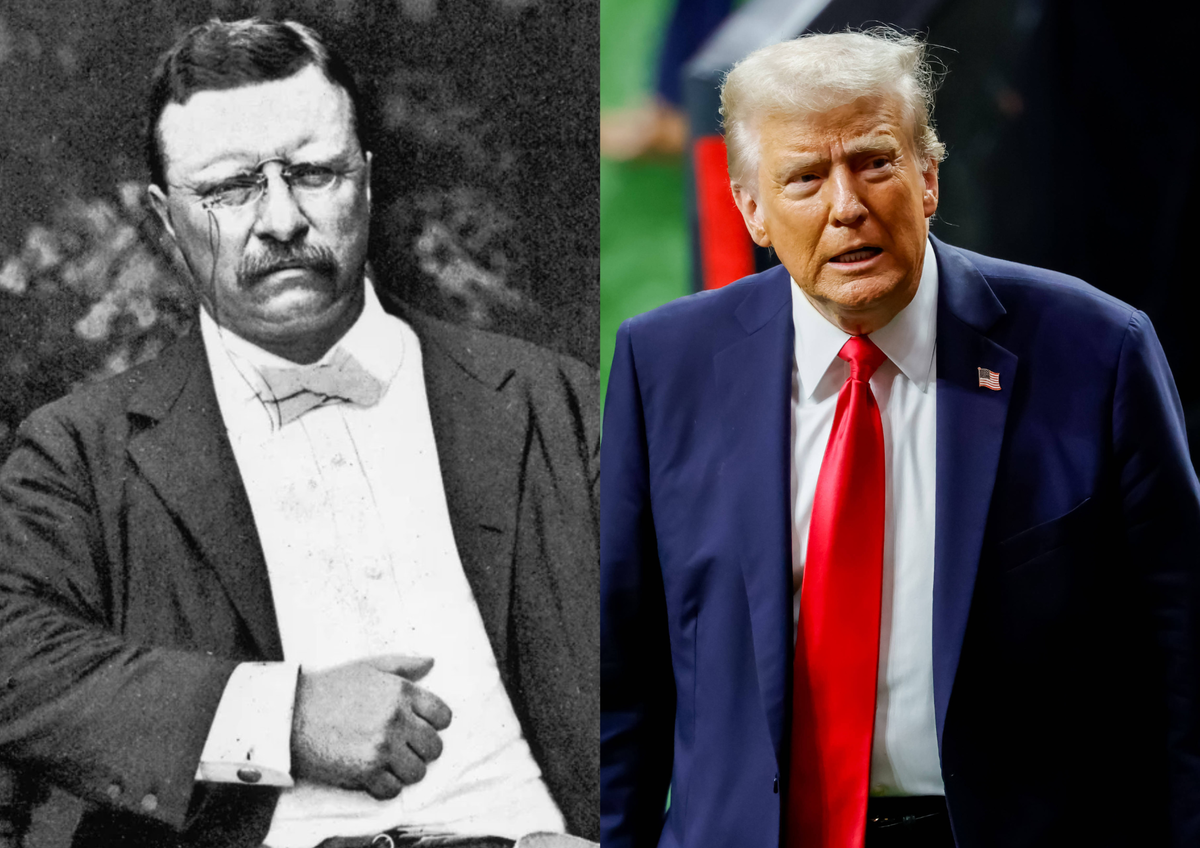
Dozens died every year playing football. In 1904 alone, there were 159 major injuries and 18 deaths. So, in 1905, the 26th U.S. President, Theodore Roosevelt, an avid follower of the game, finally took a stand. Influenced by a personal reason, he made it safer and brought it closer to the American Football we know today. And amid their plans to make America great again, Donald Trump’s administration is not forgetting those efforts that once prevented the NFL from going extinct.
“I’d say keep it a secret. Keep your fingers crossed. But I think we’re going to see Theodore Roosevelt inducted into the Pro Football Hall of Fame,” Interior Secretary Doug Burgum said on Thursday at the National Portrait Gallery, praising the former president’s work to make the game safer.
Roosevelt liked football’s rough nature. “I believe in outdoor games, and I do not mind in the least that they are rough games, or that those who take part in them are occasionally injured,” he said back then. But then, some things changed.
An October 15, 1905, post by The Washington Post mentioned that at least 45 players died from 1900 to October 1905 due to internal injuries ranging from broken necks, concussions, or broken backs, all caused by the unnecessary roughness on the field. Many schools started believing that football was some form of barbaric sport.
Columbia, Northwestern, Duke, Stanford, and Caltech switched from football to rugby as part of the prohibition movement. Roosevelt saw the game losing its footing in America, something he couldn’t allow.
He urgently summoned coaches and athletic advisers from Harvard University, Yale University, and Princeton University to the White House in October. The agenda included improving the game of football “especially by reducing the element of brutality in play,” The Post wrote.
Then something even more personal, ironically, opened his eyes.

Senior Trump official pushing for Teddy Roosevelt's induction into Football Hall of Fame: 'Saved football' trib.al/bgUNsRY

His son, Theodore Jr., who was a freshman at Harvard, got injured. He profusely bled out of a cut above his eye. Roosevelt did not take long to take action.
Roosevelt called the same coaches and officials to the White House in December that year “with a view to such modifications of the rules as would eliminate its brutal features,” The Post wrote then.
“Believing Radical Gridiron Reforms Necessary, Mr. Roosevelt Calls College Athletic Advisers to White House to Start Movement for Reform,” The Washington Post reported back in 1905. “Another summit followed weeks later, with Roosevelt and his deputies remaining closely involved in rule changes intended to curb injuries.”
While his efforts may just be the beginning of a reform that continues to change what football looks like, it helped reduce dangerous plays and the survival of the game today. Now, more than a century later, President Donald Trump’s administration believes that effort deserves Roosevelt’s induction into the Pro Football Hall of Fame.
When will Theodore Roosevelt be inducted into the Pro Football Hall of Fame?
During his interview with the New York Post, Doug Burgum suggested that Theodore Roosevelt’s Presidential library is scheduled to open when the nation marks its 250th anniversary on July 4th. The official announcement for the induction will have to wait for another year.
“The draft for the NFL is being held on the Mall a year from now (and) the Capitol will be in the background. It’s going to be announced on the Mall when Roger Goodell is conducting the draft,” Burgum said.
For now, neither the Pro Football Hall of Fame nor the NFL has officially responded to questions about the Trump administration’s push for Roosevelt’s induction. But officials at the White House and the Interior Department framed the effort as part of Donald Trump’s larger plans with college sports.
“Much like President Roosevelt saved American football, President Trump is committed to saving college sports from the threats they face today,” White House spokeswoman Taylor Rogers mentioned in a statement. “As we celebrate America’s 250th birthday, the Administration is reflecting on the incredible men and women that made our country great.”
Traditionally, the Pro Football Hall of Fame honors players, coaches, and other figures directly tied to the sport. No U.S. president has ever been enshrined in the Pro Football Hall of Fame. So, if Roosevelt eventually receives that honor, he would become the first, all because of his efforts to keep football surviving to date.
Roosevelt’s football fascination led to the sport’s development
Back in the late 1800s, Roosevelt openly supported football because he believed it strengthened character and encouraged what he called the “strenuous life.” While he was serving as New York City’s police commissioner, Roosevelt also helped revive the annual Harvard–Yale football series after it was canceled due to the fatal injuries in 1984.
“I believe in rough games and in rough, manly sports,” President Roosevelt said to an audience back in 1903. “I do not feel any particular sympathy for the person who gets battered about a good deal so long as it is not fatal.”
Roosevelt never played for his college varsity team, but he still recognized the dangers of playing football. In 1905, his son Theodore Jr. played for the Harvard freshman team, giving the president a personal stake in making football safer.
Those White House meetings eventually led to the formation of the Intercollegiate Athletic Association of the United States, which later became the NCAA.
Before the 1906 season, the Intercollegiate Conference implemented radical reforms, such as banning dangerous mass formations, like the flying wedge, and legalizing the forward pass. Those changes did not eliminate the risks, but Roosevelt’s intervention laid the foundation of the modern football game and its growth into a multibillion-dollar industry.
College football first adopted helmets as protective gear, followed by the NFL. To date, the sport is defined by its physicality, but because of Roosevelt, it is much safer than it used to be.