
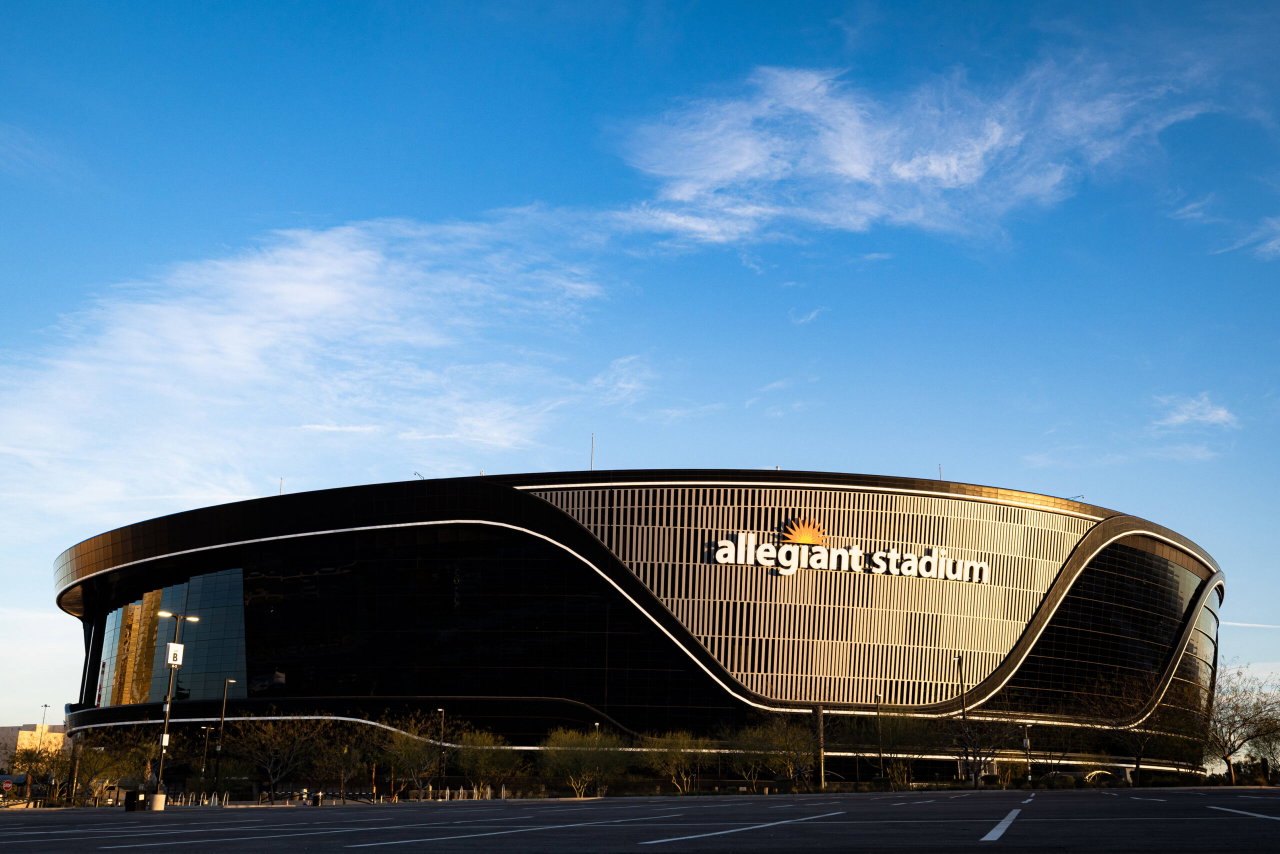
The Las Vegas Raiders should have thought about this before. Sure, they want to elevate the fan experience now, but a six-year-old, roughly $2 billion stadium shouldn’t already need another $158 million project this early. However, the Raiders aren’t thinking from a purely games perspective and there is evidence that the current arrangement is genuinely strained.
Watch What’s Trending Now!
More than 20,000 people use the Hacienda Avenue bridge to travel between the Strip and the stadium for Raiders games and major events. But with the latest renovations that comes in partnership with Waymo, reaching the stadium could be more straightforward, and even more enjoyable with VIP upgrades for a select few. It’s just that there is going to be another price tag on it.
The Raiders are prepared to put up $83 million themselves, but want the Las Vegas Stadium Authority to cover the remaining $75 million through an existing public fund. As per what Adam Schefter posted on X, the North Plaza Project would overhaul the north entrance to create an elevated pedestrian connection from the Hacienda Avenue bridge toward Allegiant Stadium ahead of Super Bowl LXIII in 2029.
That $75 million comes with another question: why should the public help foot the bill when the Raiders are now valued at roughly $11 billion?
The answer starts with the kind of money sitting behind the Las Vegas Stadium Authority. The Raiders are not asking for a new tax on residents. The $75 million would come from surplus hotel-room tax revenue held in the Authority’s Waterfall Residual Fund, a pool created as part of the financing structure for Allegiant Stadium. The money is what remains after the required obligations tied to the stadium’s financing are covered.
That makes the proposal easier to defend on one hand: no new levy is being imposed to fund the project, and the Raiders themselves are putting up $83 million. But it also explains the scrutiny. That surplus is still public money generated through hotel-room taxes, and it has previously served as a financial cushion for the stadium system.
That cushion matters because Las Vegas has already seen what happens when tourism suddenly dries up. During the COVID-19 downturn, the stadium financing structure faced a debt-service shortfall and had to rely on its reserves. With hotel-room tax revenue also running below the previous year’s levels in most months of fiscal 2026, critics have questioned whether a surplus that can protect the system in another downturn should instead be committed to a new capital project.
The Raiders, however, have a case for why the spending is needed. Allegiant Stadium is not simply handling Raiders games. It has become a year-round venue for UNLV football, concerts and major sporting events, while the 2027 College Football Playoff National Championship, 2028 Final Four and Super Bowl LXIII are all adding to its event calendar. The north side, according to Raiders President Sandra Douglass Morgan, has become a pressure point, with its existing infrastructure “stretched to capacity.”
However, with the proposed redesign project, an elevated platform will be constructed above the Parking Lot C, extending from Dean Martin Drive to Polaris Avenue, complete with a public plaza, event space, and a relocated hub for ride-hailing pickups and drop-offs. It would also eventually connect to a planned Boring Co. Vegas Loop station. Stadium Authority chairman Steve Hill broke down the logic behind it.
“Right now, you have to walk all the way down to Hacienda, into the road, into the stadium,” he said. “This will allow you access to a good portion of Hacienda, so you don’t have to walk all the way down (to Allegiant Stadium Way)… And it’ll be a gathering point; it’ll be a pretty significant size.”
As for the timeline, the construction will not begin until after the current Raiders season ends, with its completion expected by late 2028, just before the 2029 Super Bowl at Allegiant. Raiders President Sandra Douglass Morgan made it clear that this is no pipe dream.
“Those are not aspirational goals,” she told the Authority. “They’re based on some educated conversations that our tech and design teams have had.”
The public’s share would again come from surplus hotel room tax revenue. This is drawn from the waterfall residual account, which was initially established to help repay the debt of the stadium’s initial $750 million public investment in 2020.
Nothing was finalized at Thursday’s meeting. The real vote is expected at a special session tentatively scheduled for September 2.