
Imago
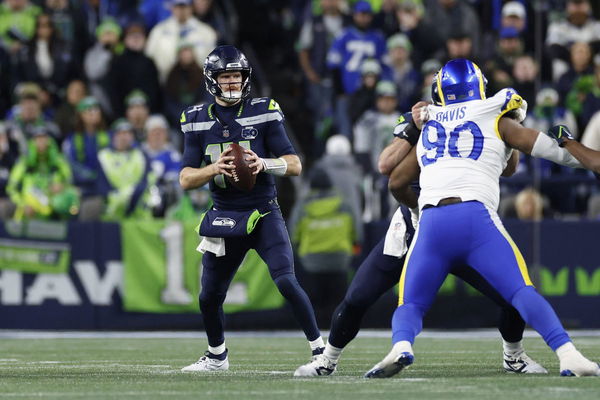
INGLEWOOD, CA – JANUARY 05: Los Angeles Rams head coach Sean Mcvay calls an timeout during an NFL, American Football Herren, USA game between the Seattle Seahawks and Los Angeles Rams on January 05, 2025, at SoFi Stadium in Inglewood, CA. Photo by Jordon Kelly/Icon Sportswire NFL: JAN 05 Seahawks at Rams EDITORIAL USE ONLY Icon250105787
Imago
INGLEWOOD, CA – JANUARY 05: Los Angeles Rams head coach Sean Mcvay calls an timeout during an NFL, American Football Herren, USA game between the Seattle Seahawks and Los Angeles Rams on January 05, 2025, at SoFi Stadium in Inglewood, CA. Photo by Jordon Kelly/Icon Sportswire NFL: JAN 05 Seahawks at Rams EDITORIAL USE ONLY Icon250105787
Essentials Inside The Story
- What started as a heated controversy for the Los Angeles Rams has taken an unexpected turn
- A chaotic sequence left players, coaches, and even fans questioning how the game is interpreted in its biggest moments
- Was this a strategic retreat or a sign that some battles with the league just aren't worth fighting?
Just when it seemed like last year’s controversial call would bring a genuine change, Sean McVay has backed off. In December 2025, the Los Angeles Rams walked off the field in utter confusion. They were debating a bizarre two-point play against the Seattle Seahawks that pushed the Week 16 contest into overtime. The Rams eventually decided to push for rule changes through two proposals. But the franchise has now withdrawn entirely.


“Per source, the Rams withdrew their proposals arising from the crazy two-point play in the Week 16 game at Seattle,” ProFootballTalk wrote on X.
Watch What’s Trending Now!
The controversy erupted in the Week 16 game between the Rams and the Seahawks last year. Sean McVay’s team was holding a 16-point lead in the last quarter before Seattle started scoring consecutive touchdowns. As a result, they cut the score to 30-28 with 6:23 left on the clock. On the next play, Seattle quarterback Sam Darnold went for a two-point conversion and attempted a pass. However, Rams defender Jared Verse touched the ball mid-air, and it eventually hit the ground.
The officials initially ruled it as an incomplete pass, meaning the conversion failed. But as the Seahawks players lined up for the kickoff, officials took another look and concluded that Darnold’s pass was backward. They treated it as a live ball that Seattle running back Zach Charbonnet had recovered in the end zone.
Soon, the referees overturned their original call. Seattle got those two points, which helped them tie the score at 30-30 and eventually pushed the game into overtime. This wild sequence led the Rams to propose two rule changes:
- They first focused on the exact situation they faced: where a backward pass beyond the line of scrimmage creates a live ball. They suggested the league treat such plays as fumbles in specific moments, including on fourth down, during the final two minutes, or on conversion attempts.
- The team’s second proposal was about replay timing.
During the game in focus, referee Brad Allen took over 100 seconds to announce the final decision. Since timely decisions are crucial in such situations, Los Angeles wanted a stricter 40-second window to start replay reviews to avoid confusion and delays.
Per source, the Rams withdrew their proposals arising from the crazy two-point play in the Week 16 game at Seattle. https://t.co/zMkPyGBhUq
— ProFootballTalk (@ProFootballTalk) March 18, 2026
Had Sean McVay’s team not pulled the proposals, they would have been discussed at the NFL’s annual meetings in Phoenix from March 29 to April 1. Also, they would have required 24 votes out of 32 for the league to pass the changes. Is that why the Rams shelved them before they could pop up in discussion? That is the probable reason. While this situation had a major impact on that game’s outcome, such instances are still rare.
Whatever the case, the ruling left McVay and the Rams livid at the time. And they didn’t mince words while venting their frustrations.
Sean McVay and the Rams left frustrated after a controversial call
The 38-37 loss to the Seahawks in Week 16 weighed heavily on the Rams for two major reasons. Firstly, it was crazy to see Seattle flip the script on them by overcoming a 16-point deficit. Sure, the ruling helped them survive the fourth quarter, but it was their back-to-back touchdowns that helped them get to that stage. The other factor was how the loss hurt their standing.
The win would have brought them closer to potentially winning the NFC West title and earning the No. 1 seed. After the game, the Rams’ coaches and players couldn’t wrap their heads around the fourth-quarter decision. While speaking during the post-game conference, Sean McVay called the situation “very interesting.” Still, he admitted to not getting a clear explanation of the rule at the time because the game wasn’t over yet.
“I’ve never seen anything or never been a part of anything like that,” he said. “And I’ve grown up around this game. I’m not making excuses. We don’t do that. I don’t believe in that. It doesn’t move us forward, but we do want clarity and an understanding of the things that we can do to minimize that when we rejected the two-point conversion.”
Similarly, the controversial reversal enraged many notable players on the team, including Puka Nacua and Matthew Stafford.
“Appreciate you stripes for your contribution. Lol,” Nacua wrote on X.
But when asked about his tweet, he toned things down and admitted to not capitalizing on the chances they had. He also believed the Rams shouldn’t have let the game reach a situation where the outcome rested in the hands of the officials. Ultimately, he identified the two-point conversion as one of those key situations.
Meanwhile, quarterback Matthew Stafford, who had a massive game through the air, questioned the ruling itself. He thought the players weren’t allowed to advance a fumble in such a scenario. The rule ultimately changed the course of the game for Los Angeles. On the other hand, Seattle rose to 12-3 and eventually won the divisional title and Super Bowl LX.
Written by

Edited by

Bhwya Sriya