
Essentials Inside The Story
- A shift in game night at sports bars was already visible over a decade ago.
- The NFL is aggressively shifting towards streaming services to monetize USA's favorite pastime.
- This shift may be strategic for the league but is affecting the sports bar business.
About a decade ago, the then-31-year-old Mike Clancy revealed that a sports bar Sunday ritual used to be a thing for him. There was something about walking into an establishment that is decorated with your favorite team and being around hundreds of fans vested in every play of the game. Until, as Clancy confessed, “it got old and pricey.” He bought DirecTV NFL Sunday Ticket and watched the game at home, and that may have been the first time eyebrows were raised on the future of game nights at sports bars.
Watch What’s Trending Now!
The NFL listened to many such fans and moved the Sunday Ticket to its co-owned streaming-only service run by EverPass Media. But while the league simplified things for a specific group of fans and improved its profits, it forgot a long line of business that depended on the game day crowd– the sports bars and local restaurants. As such, they have come together, appealing to Congress to act.
“For nearly three decades, NFL Sunday Ticket was delivered to commercial establishments via satellite, a system well-suited for multi-screen environments,” Iowa Restaurant Association CEO Jessica Dunker and Wisconsin Restaurant Association CEO Kristine Hillmer wrote. “That model is being replaced at the benefits of Everpass Media, a joint venture between the NFL and RedBird Capital, which holds exclusive commercial distribution rights and is requiring businesses to adopt its proprietary streaming-only platform.
“This transition is being imposed without adequate consideration of the operational realities facing small businesses.”
The Iowa Restaurant Association communicated its message in a letter to Senate Judiciary Committee Chairman Chuck Grassley. Meanwhile, the Wisconsin Restaurant Association sent a letter to Rep. Scott Fitzgerald, who chairs the House Judiciary Subcommittee on Antitrust. Each of these associations represents thousands of independent restaurant and bar owners in their respective states.
“The Sports Broadcasting Act of 1961 was created to extend a limited antitrust exemption so that leagues could negotiate carriage with broadcasters,” they wrote, urging Grassley, Fitzgerald and their colleagues to consider “transition protections,” “accountability standards,” and “Congressional oversight of the NFL and its affiliated distribution entities to ensure compliance with antitrust law and fair treatment of small businesses that rely on this content to sustain their operations.”
The Sports Broadcasting Act of 1961 is a U.S. federal law that grants professional sports leagues an antitrust exemption to pool their television broadcasting rights and sell them as a collective package to networks. DirecTV, as a distributor, had exclusive control over the NFL Sunday Ticket for nearly three decades.
While the shift may sound simple in theory, it creates serious technical and financial challenges for small businesses:
- These businesses operate multiple screens simultaneously, and streaming services have a limited bandwidth allowance. They may have to buy multiple accounts for their weekly viewing.
- Synchronization is also an issue. Satellite systems handle this with consistency, but streaming services risk buffering.
- Smaller establishments may lack the infrastructure to support this model without costly upgrades.
- They may also have to incur additional expenses for new hardware and expanded broadband capacity to support Everpass.
Imago
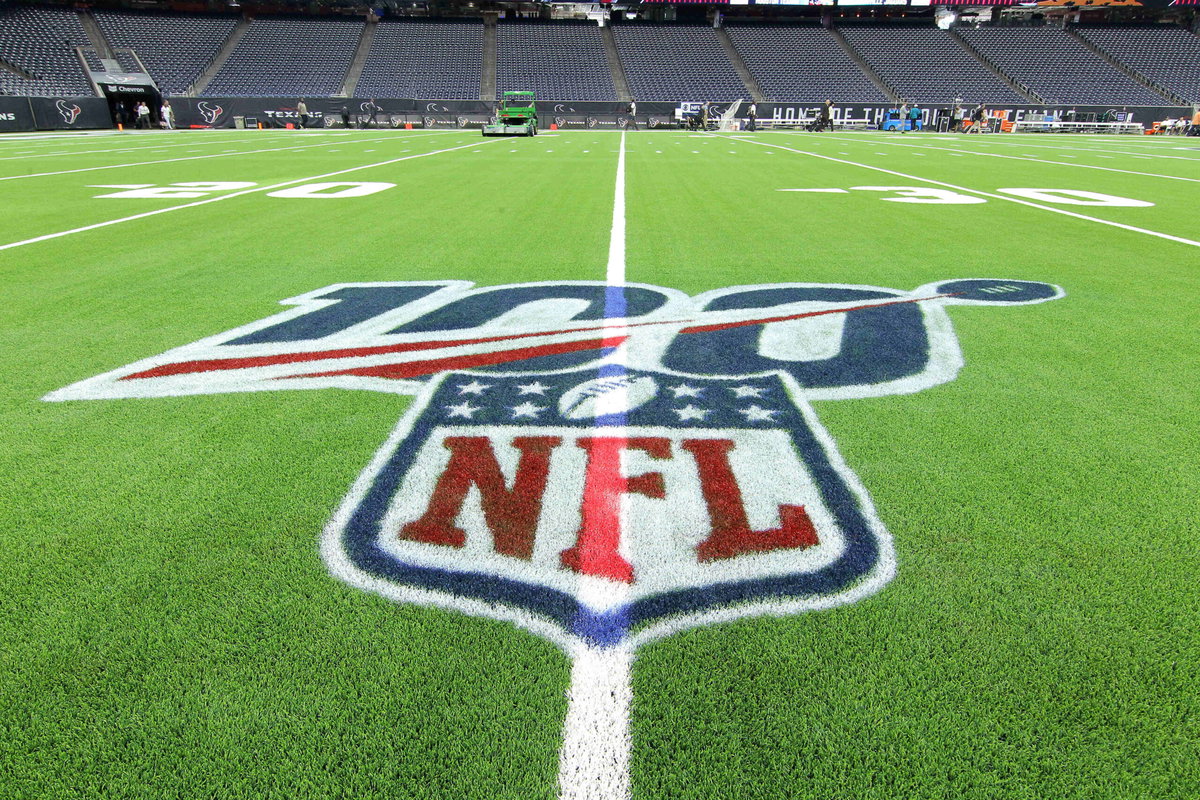
July 16, 2020: Over 70 NFL, American Football Herren, USA players have tested positive for the novel coronavirus, according to the Player s Association. FILE PICTURE: September 15, 2019, Houston, Texas, USA: A general view of the field decorated with the NFL 100th anniversary logo prior to the NFL regular season game between the Houston Texans and the Jacksonville Jaguars from NRG Stadium. Houston USA – ZUMAw137 20190915_zap_w137_002 Copyright: xErikxWilliamsx
Using a satellite television setup became a cornerstone of the experience in American restaurants, with dozens of screens, packed crowds, and full-day customer traffic every Sunday during football season. But that system will now have to undergo a major change.
“Sunday football is not merely entertainment — it is an essential economic driver for restaurants and bars … We urge you to stand with small business owners who are being placed at a disadvantage by this abrupt and costly transition,” the associations wrote.
The NFL co-owns EverPass Media with RedBird Capital Partners. Through this platform, the leading football league aims to give commercial businesses access to Sunday Ticket instead of traditional broadcasting distributors.
This change is causing concern not only for restaurant owners but also for the broader industry.
The NFL’s move to streaming services is causing trouble for a broader industry
FOX Sports owner Rupert Murdoch has raised questions about the NFL’s rapid move toward exclusive streaming platforms. He feels the inclusion of Netflix and Amazon poses a serious threat to traditional broadcast television. While restaurant owners approached Congress with their concerns, Murdoch indirectly started a federal investigation with the U.S. Department of Justice.
Wisconsin’s Senator Tammy Baldwin even passed the For the Fans Act bill. The Green Bay Packers have a prime-time road game against the Los Angeles Rams on November 25 at 8 p.m. E.T. on Thanksgiving Eve. But the game can be streamed exclusively on Netflix. Baldwin is trying to give a voice to a larger group that will need to pay for multiple services to watch their teams’ games.
Meanwhile, for the NFL and EverPass Media, the push seems quite beneficial. By making EverPass Media the exclusive digital distributor, the NFL bypasses traditional brokers. With this move, the league would also be technically paying itself, since it is the co-owner of the platform.
Not just that, EverPass has a full streaming framework that will collect precise data on its consumers’ viewing habits. Meanwhile, satellite broadcasts are a one-way street. As such, traditional distributors like DirecTV could not easily track which specific TV in a bar was showing which game, or how many people were watching it. So, these stand as the benefits behind the NFL’s move to replace satellite with streaming models.
To what extent has the NFL’s new streaming push created complications for restaurants?
According to many restaurant owners, streaming live sports across many televisions requires far more than a basic internet connection. High-bandwidth streaming can cause buffering, lag, and network overload, directly affecting the consumer experience in their businesses. In top-tier cities, it is still adjustable, but in rural communities, where internet infrastructure remains limited, this move may have a negative impact.
In simple terms, business owners also appeared hesitant to invest in high-tech streaming equipment. Now, this does not come without a reason. Over the years, the restaurants have already invested thousands of dollars in satellite equipment designed specifically for sports broadcasting. So, for them, the concern goes beyond technology.
NFL Sundays are among the most profitable business days of the year for many restaurants. Customers often stay for hours, ordering food and drinks while watching multiple games. Industry leaders warn that even small disruptions in the viewing experience could reduce customer traffic and revenue.
Not just that, the restaurant owners also feel that the transition is moving faster than many small businesses can realistically adapt. Only time will tell how the businesses will cope with this change pushed by the NFL through EverPass Media.