
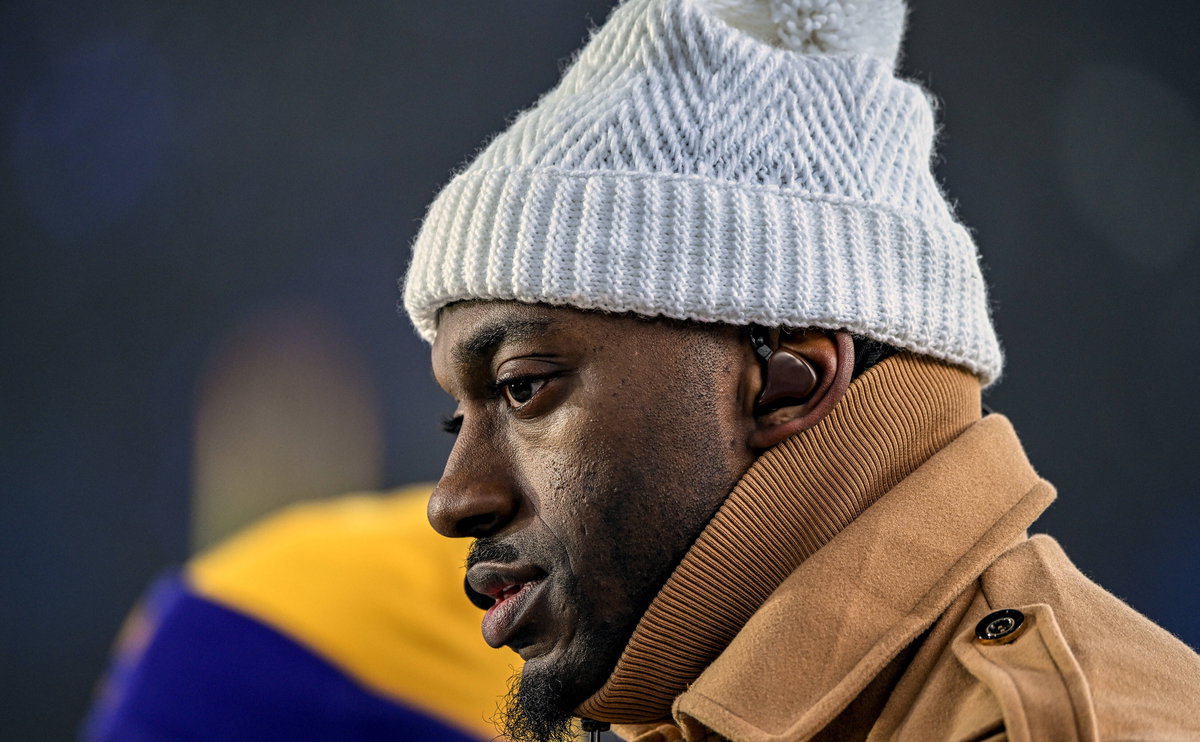
On July 1, 2021, the NCAA shattered its long-standing rulebook, officially allowing student-athletes to profit from Name, Image, and Likeness. Before this became a norm, compensation was strictly limited to institutional aid and official allowances. Yet new allegations suggest Stanford University was secretly pushing those boundaries long before NIL became legal. Former Heisman winner Robert Griffin III exposed the program for impermissible payments, drawing immediate fire from Stanford alum Richard Sherman. When Sherman labeled the claims “pure lies,” fellow Stanford alum and CFB analyst Rod Gilmore piled on. Griffin’s response was immediate, and this time, with evidence…
Watch What’s Trending Now!
“Love ya, Rod. But the facts are the facts,” Griffin responded on X, presenting a screenshot of a Stanford Daily article covering the incident. “Stanford violated NCAA rules in football and softball. No made-up stories. No clout chasing. Just real facts.”
The evidence RGIII pointed to dates back to September 14, 2016, when the NCAA officially confirmed two level II violations against Stanford Athletics. Up until that moment, the University had only ever dealt with minor Level III and IV hiccups, making these the first major infractions in Stanford history. The incidents, self-reported by the school in 2014, resulted in self-imposed penalties and a $5000 NCAA fine. The headline penalty centered on the football program: impermissible benefits provided to former star wide receiver Devon Cajuste during the summer of 2014.
Two Stanford boosters gave Cajuste nearly $3,500 in extra benefits, which included free use of a vehicle, food, and use of a vacation home. Cajuste used to live with the booster for a while as part of a housing program, which was used to help students find accommodation in the summer. The benefits also included movie tickets, use of a vacation home, and a loan to purchase a bicycle. The non-loan benefits were valued at less than $400, while the bicycle loan had already been repaid. Cajuste said he unknowingly accepted the benefits.
“I unknowingly accepted impermissible benefits from my summer landlord,” Cajuste said. “I look forward to moving on from this incident and to supporting my alma mater for many years to come. I will have no further comment on this matter.”
Stanford declared him ineligible, and his reinstatement required a one-game suspension and a charitable payment equal to the value of the benefits. The NCAA later reinstated him. Stanford also ended the housing arrangement and moved football players into campus housing.
Beyond football, Stanford’s softball program was nailed for mandatory practice hours exceeding the NCAA’s 20-hour weekly limit. The level II finding sparked an internal overhaul, forcing former head coach John Rittman’s resignation alongside his entire staff.
Personal benefits are still a violation in college athletics. However, according to a report by On3’s Pete Nakos, teenage recruits are leveraging their commitments for staggering perks. Beyond multimillion-dollar deals, private jets, and luxury rides, one prospect even demanded a custom home sauna built at his parent’s house, just to avoid a 30-minute drive. Development and earning your stripes are no longer part of the pitch. Today, if a program wants top-tier talent at “money” positions like quarterback, edge rusher, tackle, or cornerback, the rule is simple: pay the toll or get outbid.
Moreover, the punishments for receiving benefits can be serious. USC Trojans star Reggie Bush was accused of receiving impermissible gifts, and his agent, Lloyd Lake, sued the former running back and his family in 2007 to get back $291,600 in cash and gifts. Bush voluntarily gave up his 2005 Heisman Trophy amid all the backlash. USC, however, received perhaps one of the harshest punishments in NCAA history.
The Trojans had to vacate all wins of the 2005 season, and two from their National Championship-winning 2004 campaign. They were also banned from the postseason for 2010 and 2011. Interestingly, Bush’s Heisman was reinstated in 2021, when NIL had become the norm. But the damage was already done.
“It was tough for me, but being labeled a cheater was the toughest part,” Bush said on All the Smoke podcast. “Going through that and also having to go through different stadiums in my career and hearing people chanting ‘cheater’ and ‘liar’ and all of these things. And in my head I couldn’t believe it.
“I’ve never failed a drug test in my life,” he added. “So it’s just crazy to me that I was somehow labeled a cheater when I never cheated.”
But now, the money is open business. College football players now have the chance to earn more than what they would make as a rookie in the NFL. Miami Hurricanes quarterback Darian Mensah was reportedly offered a $10 million package (you can read that number again), and Ole Miss star Trinidad Chambliss is expected to make 5-6 million dollars this year.
This season, at least four college quarterbacks are projected to pull in over $4 million through NIL deals alone. To put that in perspective, only two rookie quarterbacks in the entire NFL draft class, Fernando Mendoza and Ty Simpson, will make more than that base figure ($4.62M) in their first year.
Stanford’s case came at a time when even relatively small benefits could create a problem. Millions of dollars are now changing hands through NIL deals, something that would have been impossible under the rules governing college athletes back then.