
The NFL’s stage has not always been off-limits to controversy. Earlier this year, Ye (Kanye West) performed at both SoFi Stadium and Raymond James Stadium despite his controversial statements. Now, Macklemore finds himself on the other side of that door. Few artists in recent memory have kicked up a firestorm around the NFL quite like him, yet when it comes to getting that same opportunity, Macklemore found the doors closed!
Watch What’s Trending Now!
Here’s the thing: the rapper has never been good at staying out of controversy. He has repeatedly turned stages into platforms for his political and social views, even when that puts him on a collision course with sponsors, venues, and powerful figures. This time, that bluntness has run straight into one of the NFL’s most influential owners. Robert Kraft.
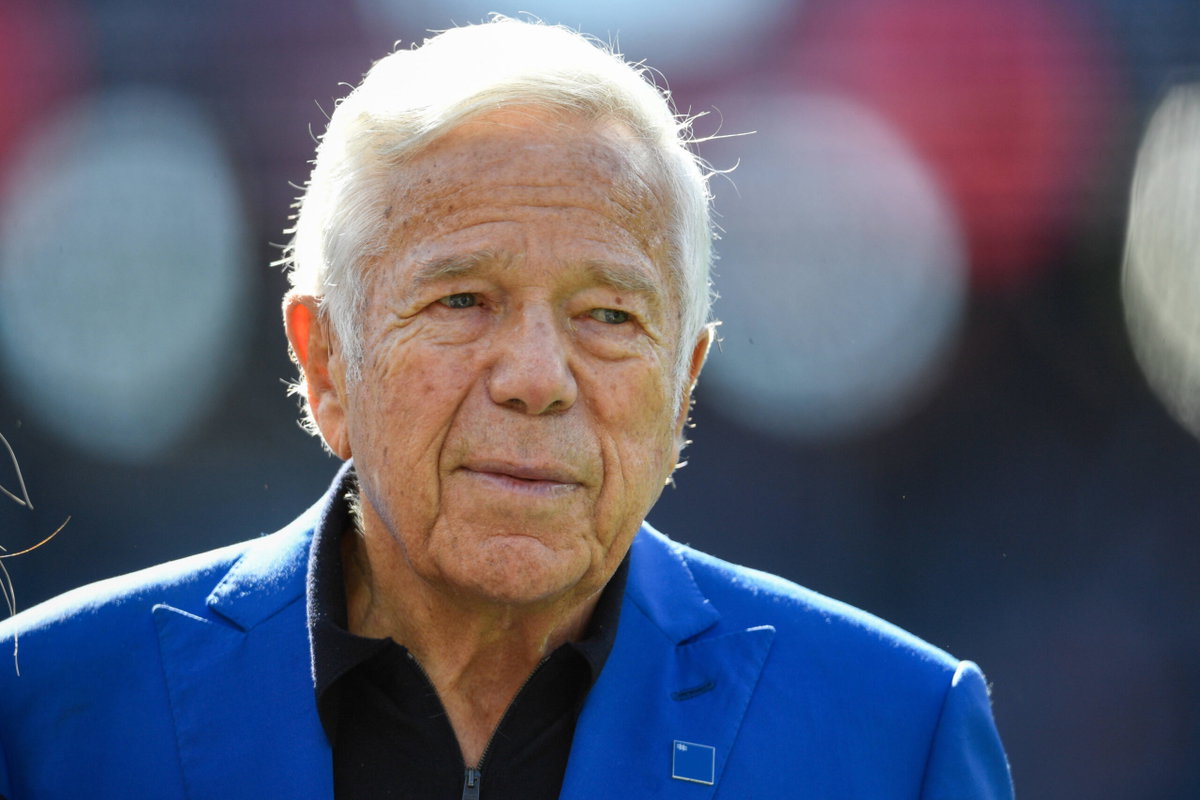
New England Patriots owner Robert Kraft, who also owns Gillette Stadium, confirmed Monday that he had the rapper removed as an opening act for Ed Sheeran’s two Massachusetts shows.
“Based on Macklemore’s recent actions, material shared from the stage during Ed Sheeran’s shows in New Jersey, and a broader history of antisemitic rhetoric and imagery that we believe has been deeply offensive and hurtful to the Jewish community, we determined that his participation in the September 25th and 26th concerts at Gillette Stadium would cross that line,” said Kraft.
“Gillette Stadium has a longstanding commitment to providing a welcoming environment for all guests and ensuring that events held at our venue do not provide a platform for hate speech.”
Ed Sheeran’s Loop Tour is heading to Gillette Stadium on September 25 and 26, but as things stand, Macklemore will not be there.
This ban comes after the rapper chanted ‘Free Palestine’ at two concerts.
However, Kraft said his decision was based on what he saw as a broader pattern rather than one isolated incident. He also tried to separate that decision from the larger political debate, arguing that his concern was about what Gillette Stadium should allow on its stage.
“This decision is not about diminishing the suffering of innocent Palestinians or denying anyone the right to advocate on their behalf. Their pain and loss are real.”
And legally, Kraft has considerable room to make that call. Gillette Stadium is privately controlled, and there is no apparent NFL rule forcing a stadium owner to accept every scheduled performer.
Massachusetts law does restrict discrimination at public venues like Gillette, but political viewpoint is not among the protected categories, making Macklemore’s removal harder to challenge as a straightforward discrimination case. Macklemore, however, saw the situation very differently.
In a lengthy social media post Monday, he said Sheeran personally told him that Kraft’s objection had gone well beyond Gillette Stadium.
“Ed also told me that Kraft had rallied some of the other stadium owners, and collectively they gave him an ultimatum. If Macklemore stays on the tour, you will not be able to play in our venues.
“[Sheeran’s] typical apolitical stance was being challenged in a way it never had been before. He told me that the words ‘Free Palestine’ and the image of the Palestine flag were hurtful to a lot of people he spoke with.”
That claim gained more weight when Messina Touring Group, the promoter behind Sheeran’s U.S. tour, confirmed that multiple upcoming venues had refused to host concerts with Macklemore on the lineup. The company said keeping him on the tour could have forced cancellations affecting fans.
The venues reportedly included Lincoln Financial Field in Philadelphia, Mercedes-Benz Stadium in Atlanta, Lucas Oil Stadium in Indianapolis, Bank of America Stadium in Charlotte, AT&T Stadium in Arlington and Raymond James Stadium in Tampa.
Macklemore’s past controversy adds fuel to Kraft’s decision
Kraft’s reference to a “broader history” points back at least a decade. In May 2014, Macklemore drew national criticism after appearing at a Seattle performance in a black suit, dark wig, fake beard, and large prosthetic nose. The Anti-Defamation League and other groups said the look resembled antisemitic caricatures, while Macklemore insisted the resemblance was unintentional.
Even so, Kraft stopped short of closing the door completely. He said he would be willing to speak with Macklemore directly about the dispute.
“I would welcome the opportunity to sit down with Macklemore and discuss the facts, because ultimately our goal is the same: peace for all people, an end to suffering, and an end to all hate.”
Macklemore rejected Kraft’s characterization of his remarks as hate speech and made clear he was not prepared to walk them back just to remain on the tour. He also acknowledged that Sheeran had been put in a difficult position by the pressure from stadium owners.
With the Gillette Stadium shows approaching, the dispute has grown far beyond a simple lineup change. It has become a fight over how much control private stadium owners can exercise when an artist’s political speech clashes with the standards they want enforced inside their venues.