
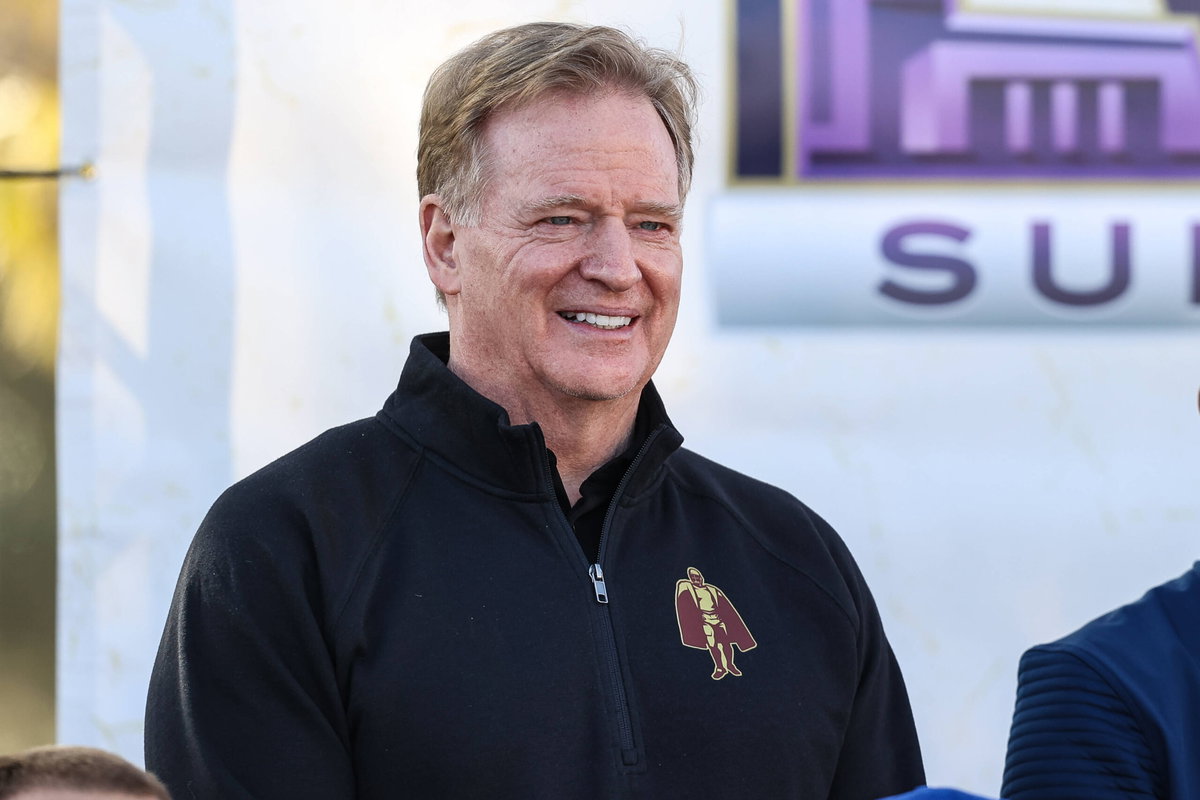
October 2024: Owners unanimously vote for Atlanta. Falcon’s owner Arthur Blank is celebrating. Roger Goodell stands beside him. The city immediately begins planning. The logo is unveiled. The Host Committee starts operating. Everything looks normal. Except… there’s no date.
Watch What’s Trending Now!
For a city preparing to host the Super Bowl LXII, the calendar is where everything begins. Yet as Atlanta’s preparations gathered pace, another surprise came. The NFL moved ahead with future Super Bowls, awarding Las Vegas the 2029 game and Nashville the 2030 edition, while Atlanta was still waiting. It wasn’t even a scheduling oversight. The league deliberately kept the calendar flexible as discussions around a possible 18-game regular season lingered in the background, since adding another game would have pushed the entire postseason back by a week. That uncertainty finally disappeared on Friday.
Super Bowl LXII will take place in Atlanta at Mercedes-Benz Stadium on February 13, 2028, according to Adam Schefter of ESPN. That effectively keeps the NFL on its current 17-game regular-season format through the 2027 campaign.
Even Roger Goodell gave hints back in April addressing the possibility of an 18-game season on The Pat McAfee Show.
“One, safety has to be the primary concern, right?” Goodell said. “If you can’t do it safely for our players, we’re not gonna do it. And that’s why I would say it’s not inevitable. Second, I think this is the same issue when we went from 16 [regular-season games] and four [preseason games] to 17 and 3; we did it successfully because we did it with the players. We had taken out a lot of initiatives to make our game safer, and I think we did.”
Goodell’s choice of words mattered because, even while several owners openly backed an 18-game schedule, he consistently stopped short of calling it inevitable. Behind the scenes, the league also avoided locking itself into a Super Bowl date, preserving the flexibility it would have needed had the regular season eventually expanded. That flexibility stretched far longer than Atlanta expected.
The city had already been awarded Super Bowl LXII in October 2024, the fourth Super Bowl in Atlanta and the second at Mercedes-Benz Stadium after Super Bowl LIII in 2019, but the one detail every host city typically receives years in advance never arrived. According to multiple reports, local officials and hospitality executives had grown increasingly frustrated because planning for the league’s biggest event, along with its surrounding conventions, sponsor activations and hotel inventory, became significantly harder without a confirmed game weekend.
Now that the NFL has officially settled on February 13, 2028, that uncertainty has ended. While the league has never publicly said the delayed announcement was solely tied to the 18-game discussion, fixing the Super Bowl on its traditional calendar effectively removes the extra week an expanded 2027 regular season would have required.
The timing also comes as the NFL prepares for another round of major business negotiations. Beyond future media-rights discussions, any move to an 18-game schedule would also require agreement from the NFL Players Association under the current collective bargaining agreement.
Many NFL team owners still want an 18-game regular season. One of the biggest supporters is New England Patriots owner Robert Kraft, who believes one more game would help the NFL earn more money and expand its international footprint. “I think it’s an inevitability,” Kraft said earlier this year, while arguing that replacing another preseason game with a regular-season contest would ultimately benefit the league’s long-term growth. However, the NFL Players Association (NFLPA) has continued to push back, arguing that another regular-season game would increase players’ physical workload and injury risk.
The NFLPA is also adjusting to new leadership after JC Tretter was appointed executive director in March. Formal negotiations over an 18-game season have yet to begin, meaning any expansion would still require agreement from both sides before it could become reality.
For now, though, one of the league’s longest-running scheduling questions has finally been answered, not through a major announcement about the regular season as you’d typically expect, but through a date on the Super Bowl calendar.