Imago
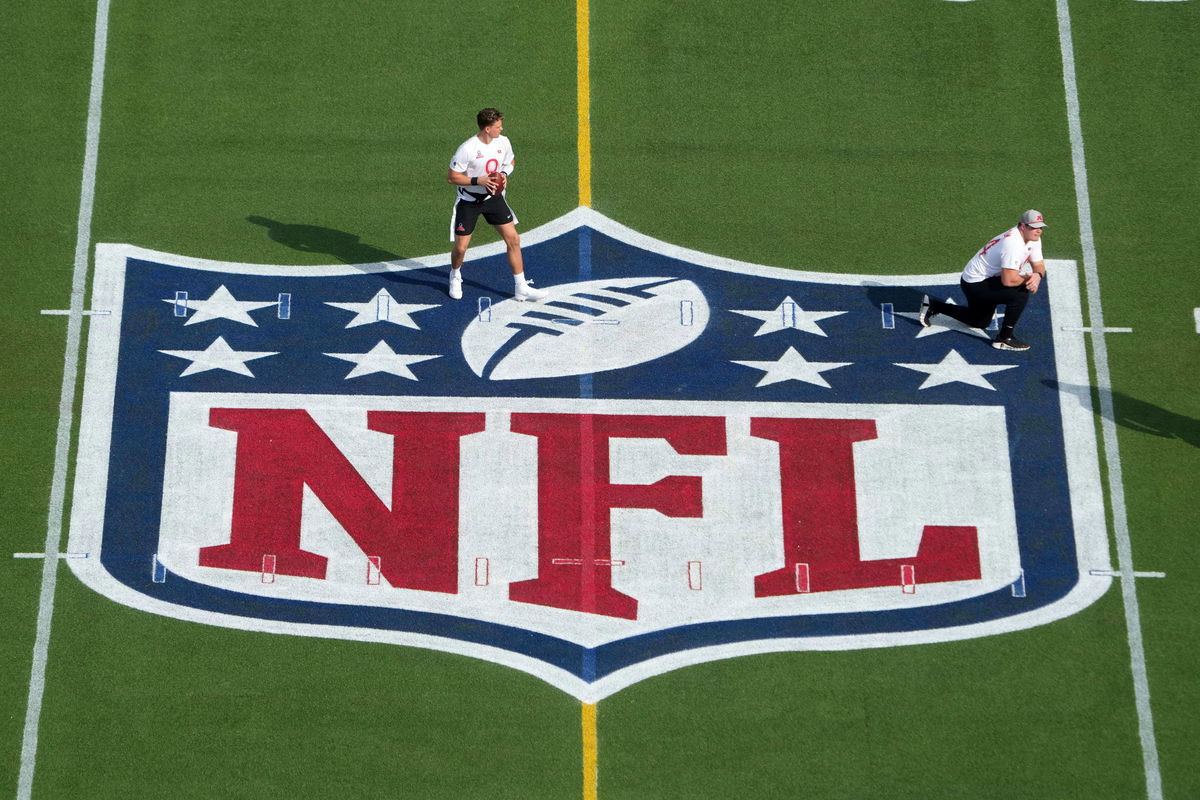
NFL, American Football Herren, USA Pro Bowl Championship-AFC at NFC Feb 2, 2025 Orlando, FL, USA AFC quarterback Joe Burrow of the Cincinnati Bengals 9 throws the ball on the NFL shield logo during the 2025 Pro Bowl Games at Camping World Stadium. Orlando Camping World Stadium Florida United States, EDITORIAL USE ONLY PUBLICATIONxINxGERxSUIxAUTxONLY Copyright: xKirbyxLeex 20250202_tcs_al2_171
Imago
NFL, American Football Herren, USA Pro Bowl Championship-AFC at NFC Feb 2, 2025 Orlando, FL, USA AFC quarterback Joe Burrow of the Cincinnati Bengals 9 throws the ball on the NFL shield logo during the 2025 Pro Bowl Games at Camping World Stadium. Orlando Camping World Stadium Florida United States, EDITORIAL USE ONLY PUBLICATIONxINxGERxSUIxAUTxONLY Copyright: xKirbyxLeex 20250202_tcs_al2_171
Essentials Inside The Story
- Multiple controversial calls went against Seattle during Super Bowl XL
- Franchises like the Bills and Saints have suffered long-term damages due to these calls
- The NFL is known for frequently rewriting the rulebook following major errors
Thanksgiving Day, 1998, the Pittsburgh Steelers vs. the Detroit Lions in overtime. Steelers’ legendary running back Jerome Bettis walked to midfield for the coin toss and called tails, audibly, clearly, on broadcast audio that every viewer at home could hear. The coin landed tails. Referee Phil Luckett awarded possession to Detroit anyway, claiming Bettis had said heads. The Lions scored on the first possession, and Pittsburgh lost. That’s when the NFL quietly changed its coin toss procedure the following offseason.


If the league can get the coin toss wrong, it should tell you something about what’s possible when the stakes are even higher. The NFL has a trust problem that predates social media, built call by call over decades. Several of those calls forced rule changes, the league’s closest equivalent to admitting fault. Here are seven of those calls that still sting.
Watch What’s Trending Now!
1. The worst no-call in NFL history
In the 2018 NFC Championship game between the New Orleans Saints and the Los Angeles Rams, the Saints trailed by three with under two minutes left. Wide receiver Tommylee Lewis ran into the flat, and Rams DB Nickell Robey-Coleman launched helmet-first into his head, well before the ball arrived.
That play had two penalties in one action: pass interference and helmet-to-helmet/illegal hit. But no flags were thrown, even when Robey-Coleman looked around him, expecting a flag after the play. The Saints lost in overtime and never got another window like that one.
No PI call saints vs rams 2018 nfc championship pic.twitter.com/tfdwUpuK2e
— DracoVelli (@Draco__88) December 17, 2025
Saints fans sued the NFL and subsequently amended its replay policy to cover pass interference, a direct response to one missed call. The rule was later scaled back after inconsistent application, but the damage was already done. The league admitted its mistake in public and rewrote its own playbook because of one play.
2. Tom Brady’s uncalled fumble
In the 2002 AFC Wild Card matchup between the New England Patriots and the Oakland Raiders, Tom Brady got away with something the Raiders hate to this day. With 1:47 left and Oakland leading 13-10, Raiders safety/cornerback Charles Woodson’s strip-sack appeared to produce a clean Brady fumble recovered by Oakland.
The game was effectively over until officials applied the Tuck Rule, ruling Brady’s arm was still in a forward throwing motion, making the play an incomplete pass instead of a fumble. New England retained possession, tied the game, and won it in overtime. The Raiders’ best shot at a Super Bowl was gone because of a rule most hadn’t even heard of.
Imago
NFL, American Football Herren, USA Washington Commanders at Los Angeles Chargers Oct 5, 2025 Inglewood, California, USA Tom Brady looks on before the game between the Los Angeles Chargers and the Washington Commanders at SoFi Stadium. Inglewood SoFi Stadium California USA, EDITORIAL USE ONLY PUBLICATIONxINxGERxSUIxAUTxONLY Copyright: xJaynexKamin-Onceax 20251005_lbm_aj4_061
Tom Brady had later admitted on camera that he had indeed fumbled the ball. The NFL scrapped the Tuck Rule by a 29-1 vote at its 2013 Annual Meeting in Phoenix, eleven years after the call that defined it. Notably, the New England Patriots abstained from voting, and when the ruling was passed, the Raiders tweeted: “Adios, Tuck Rule.” The Patriots launched their dynasty on the back of that call, and the Raiders have been searching for relevance ever since.
3. Dez really caught it
It was the 2014 NFC Divisional playoffs between the Dallas Cowboys and the Green Bay Packers. Down 26-21 in the fourth quarter with 4:42 left, Cowboys wide receiver Dez Bryant hauled in a spectacular 4th-and-2 grab from quarterback Tony Romo at the Packers’ 1-yard line. But Green Bay head coach Mike McCarthy challenged the play.
Officials reversed the call under the “surviving the ground” standard, ruling that Bryant lost control as he lunged for the end zone. Dallas turned the ball over on downs, and the Packers ran out the clock. But what stings the most is that the Cowboys’ season died on a call the NFL later couldn’t defend.
Still thinking about that controversial Dez Bryant “no catch”… 😬pic.twitter.com/71etvXvnnh https://t.co/qMgTvMb8PK
— Nosebleed Gridiron (@NosebleedGI) March 17, 2026
The NFL Competition Committee formally confirmed three years later that Bryant had made a legal catch, and promised to tweak the rule. It stands as one of the few instances where the league had explicitly gone on record acknowledging that a playoff outcome was decided incorrectly.
4. The Fail Mary
The 2021 NFL referee lockout had been running since June, after the NFL and the NFL Referees Association failed to reach a new collective bargaining agreement. Through the entire preseason and the first three weeks of the regular season, replacement officials, drawn from lower-level college conferences, had been managing NFL games. The errors were already visible and cumulative, and then came September 24, Week 3, on Monday Night Football.
In that matchup between the Green Bay Packers and the Seattle Seahawks, Green Bay held a 12-7 lead with less than a minute left on the clock. On a final Hail Mary, Seattle’s quarterback Russell Wilson aimed for wide receiver Golden Tate near the end zone. But Green Bay’s safety M.D. Jennings also leapt up and appeared to catch simultaneously.
Throwback: ‘Fail Mary’ #Packers get robbed on National TV, and the #NFL got rid of the replacement refs.pic.twitter.com/7VcNYhTfwr
— Dov Kleiman (@NFL_DovKleiman) June 5, 2024
Tate, who had shoved cornerback Sam Shields to the ground seconds earlier, got his arms underneath Jennings as the ball arrived. The NFL later acknowledged the shove alone should have negated the play. The touchdown stood anyway, and Seattle won 14-12.
The NFL reached an agreement with the Referees Association exactly two days later, on September 26. NFL Commissioner Roger Goodell himself acknowledged the game had pushed negotiations forward.
5. The lateral that traveled forward
Let’s go back to January 8, 2000, to the AFC WildCard round between the Buffalo Bills and the Tennessee Titans. Trailing 16-15 with just 16 seconds left, Tennessee tight end Frank Wycheck received a kickoff and threw across the field to wide receiver Kevin Dyson. Dyson returned the ball 75 yards for the game-winning score. But a forward pass on a kickoff return is illegal.
Officials took some time to review the play and concluded that Wycheck’s throw was a legal lateral and upheld the call. The Titans advanced 22-16, Buffalo went home, and the NFL community dubbed that game the ‘Music City Miracle.’
“🎶 THE MUSIC CITY MIRACLE 🎶”#Titans and #Bills
The 1999 AFC Wild Card
January 8, 2000 pic.twitter.com/1muhiMDryI— Kevin Gallagher (@KevG163) January 8, 2026
Slow-motion replays show the ball appeared to travel forward from Wycheck’s release point, not laterally. But no definitive resolution has ever been issued. As for Buffalo, it was the opening entry on a franchise ledger of officiating grievances that has only grown longer since.
6. A Super Bowl decided in stripes
The Seattle Seahawks didn’t lose Super Bowl XL; they were officiated out of it. In the first quarter, Seahawks wide receiver Darrell Jackson caught what appeared to be a go-ahead touchdown, but an offensive pass interference flag on Jackson wiped it out. In the fourth quarter, a holding call on right tackle Sean Locklear erased an 18-yard gain to Pittsburgh’s 1-yard line.
In the game matchup, a QB sneak near the end of the first half by Pittsburgh’s Ben Roethlisberger looked like it had stopped short of the goal line. But it was ruled a touchdown after a slight hesitation from the ref. A roughing-the-passer penalty called on Seattle quarterback Matt Hasselbeck during an interception was also deemed incorrect. The Steelers won 21-10, but that wasn’t all.
Today marks 20 years since the Steelers won Super Bowl XL versus the Seahawks. Where were you on this day? #Steelers #NFL pic.twitter.com/3ELJnjUHc9
— Steelers Depot 7⃣ (@Steelersdepot) February 5, 2026
Four years after the final whistle, referee Bill Leavy walked into a Seattle training camp session in 2010 and brought up Super Bowl XL.
“I kicked two calls in the fourth quarter, and I impacted the game, and as an official, you never want to do that,” Leavy had said.
No formal league review, no official correction, just one referee’s conscience, four years too late. But Seattle head coach Mike Holmgren didn’t wait four years. At a civic gathering the day after the game, he told the crowd exactly how he felt.
“I knew it was going to be tough going up against the Pittsburgh Steelers,” Holmgren said. “I didn’t know we were going to have to play the guys in the striped shirts, as well.”
These six controversial calls belong to history now; studied, catalogued, and argued annually. But then January 2026 arrived and reminded the league that its accountability gap is a structural one.
7. Buffalo’s bill comes due
On paper, the 2025 season was Buffalo Bills quarterback Josh Allen’s year to win it all. The usual playoff suspects like the Kansas City Chiefs and the Philadelphia Eagles were nowhere to be seen, and Buffalo was heading to Mile High for their AFC Divisional Round against the Denver Broncos on January 17, 2026.
Tied 30-30 in overtime, Allen threw deep to wide receiver Brandin Cooks on third-and-11. Cooks appeared to make a clean catch with his knee down before Denver’s cornerback Ja’Quan McMillian stripped the ball free. Officials ruled an interception on the spot, handing the Broncos the field position they converted into a game-winning field goal. Buffalo’s season ended on a play that the league’s own replay system existed to cross-check.
Referee Carl Cheffers explained the controversial interception call, saying Brandin Cooks simply didn’t complete the catch as he went to the ground and lost control.
He added that Ja’Quan McMillian gained possession, so it was ruled an interception.
Fans are still debating it,… pic.twitter.com/c7Z3BFnwQu
— Preme Football (@premefootball) January 18, 2026
Referee Carl Cheffers explained later that Cooks failed to complete the process of the catch. But every replay suggested otherwise. Head coach Sean McDermott watched the tape multiple times in his locker and came to a single conclusion: it was a catch. In his post-game presser, McDermott demanded accountability from the league, and in a pool report after the presser, he doubled down.
“That play is not even close,” McDermott said. “That’s a catch all the way. I sat in my locker, and I looked at it probably 20 times, and nobody can convince me that that ball is not caught and in possession of Buffalo. I just have no idea how the NFL handled it, in particular, the way that they did. I think the players and the fans deserve an explanation.”
McDermott was notably fired by Bills owner Terry Pegula in the locker room that same night. He publicly defended his players, the tape backed him up, and he was out of a job within hours of the final whistle. The NFL moved on, Buffalo still hasn’t.
The NFL has never confirmed a rigged game and probably never will. But every call on this list forced a rule change, a legal acknowledgement, or an official explanation. But what’s absent is a consequence proportional to the stakes. These franchises, fanbases, and coaching staff absorbed the cost; the officiating structure did not. The fact that the NFL community is still asking for accountability across nearly three decades and seven separate incidents is the biggest controversial flag of them all.
Written by

Edited by

Antra Koul