
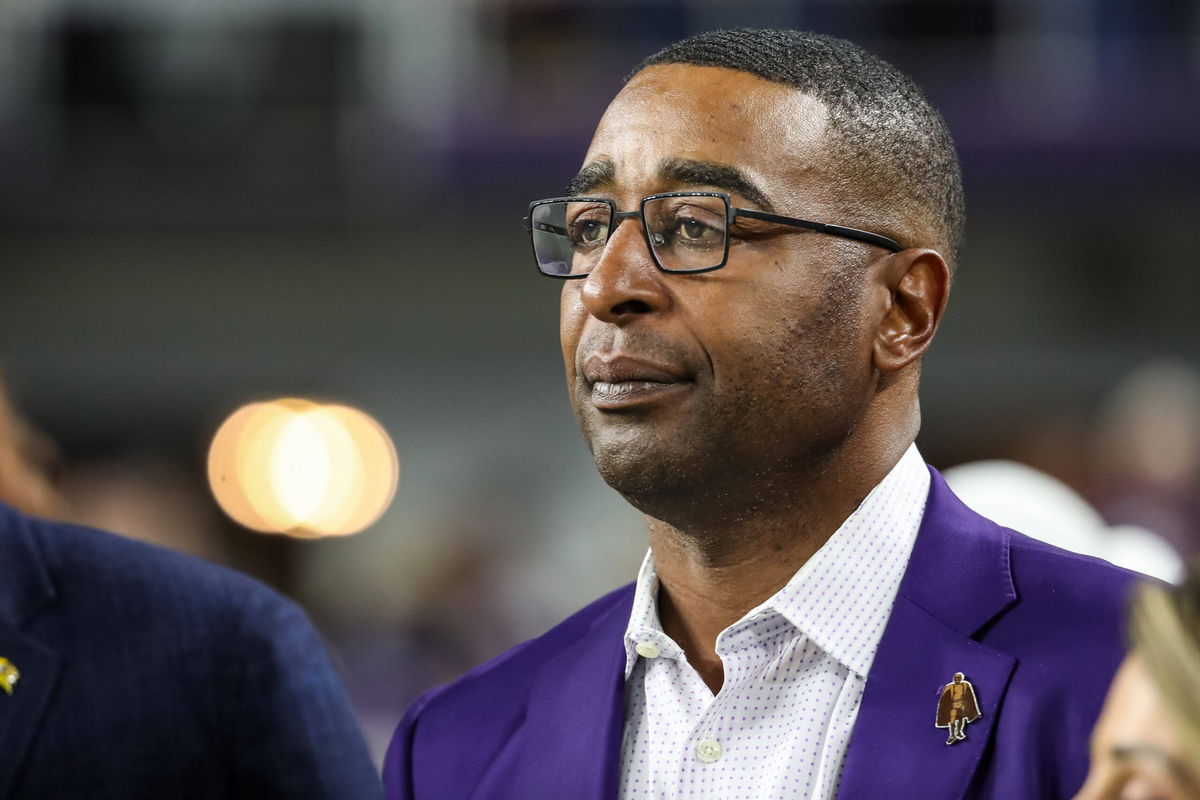
Coaching young players can be challenging, especially when some try to put up a tough front. Minnesota Vikings legend Cris Carter has a rather unconventional approach to handling such situations and keeping young football players in check.
Watch What’s Trending Now!
“I think every boy by the age of 8 to 10 should be punched in the face for doing something stupid,” Carter said during an episode of his Fully Loaded podcast, with a clip shared on Instagram. “I think that, like, ‘Is the stove hot?’ If you say something stupid and you offend someone and you go out of your way to do it, I think if we did that, I think by the time when they grow up, they don’t try to act so studio tough and everything or microphone tough.”
Carter argues that performative toughness disrupts team strategy and coach authority on the field. He suggested a physical consequence for acting tough and rude to others, reflecting the idea that “something offensive can have a direct, physical response,” as stated in the captions of the official post.
The goal that Carter aimed for with this idea is to produce more grounded adults and teach humility to the young players from the early days of their careers. Carter sought to teach the youngsters what he has followed throughout his career. He has long backed a tough, demanding approach to coaching, shaped by his own experiences and the mentors he had during his career.
He has also defended coaches such as Tom Izzo, arguing that high-pressure environments can push players to meet higher standards while teaching discipline and accountability.
Carter’s views on discipline are also tied to his time with former Philadelphia Eagles coach Buddy Ryan. Ryan cut Carter early in his career in the late 1980s over off-field concerns, a decision Carter has since described as a major turning point that forced him to change his path. He credits that experience with helping him get his life back on track and shaping the way he views discipline today.
Carter was drafted by the Philadelphia Eagles in the fourth round of the 1987 Supplemental Draft and played three seasons there. But his most successful run came with the Vikings, where he played from 1993 to 2000, got a staggering eight Pro Bowl selections, and was a two-time first-team All-Pro as well. His accolades didn’t finish there, as he won the 1999 NFL Walter Payton Man of the Year Award.
But his most important moment came when he was inducted into the Hall of Fame in 2013, and he didn’t forget to thank his high school coach, Bill Conley, during his enshrinement speech, who he also credited with pushing him to play football instead of basketball, and said that he “idolize” him and “try to coach” like Conley. He further spoke about how he didn’t even “dream” about being in Canton as part of a Hall of Fame class ever.
“Every minute that I stepped on that field from the time that I warmed up, I was trying to put on a show for those people,” Carter said. “So they would be proud. I come from some humble beginnings, and I just believed that when people pay their money, hard-earned money, that they deserve a certain level of performance.”
With the above statement, it became clear that Carter’s approach was to play for the fans, which showcases how grounded he was during his achievement-filled career. Carter also appeared on The Rich Eisen Show in mid-August and said that becoming a Hall of Famer was the only time he could see what all his sacrifices led to, and that it made sense to struggle early in his career.
Carter has been active in the football world even after his retirement, working with various publications and shows such as HBO’s Inside the NFL, ESPN’s Sunday NFL Countdown and Monday Night Countdown, and is a renowned analyst. He has also co-hosted First Things First on Fox Sports.
While he is a celebrated Vikings legend, his latest opinion about “punching” young boys could stir controversy in the football world. But his intent is clear: discipline young players early to build character.