

Essentials Inside The Story
- The NFL is steadily increasing its hold on everyone's lives by taking over annual holidays.
- The numbers, sadly, work in the league's favor.
- Fans, players, and even politicians now, are raising their voices against the holiday schedule.
Usually, Sundays belong to church, and holidays belong to family and traditions. Personally, I’d rather spend my Sunday near the sea than write about football. Yet here we are, because football has overtaken as America’s favorite pastime. Millions across the country tune in to watch the games as the NFL season starts, no matter who’s playing. So much so that today, sitting on the couch and watching our teams hopefully win has become a family tradition of its own.
Watch What’s Trending Now!
It all began in 1934 when the Detroit Lions were a brand-new franchise struggling to sell tickets. At that time, the team’s founding owner, George Richards, came up with a clever solution: host a Thanksgiving game and air it nationwide through his radio network. So, on November 29, 1934, the Lions faced the Chicago Bears, and two weeks before kickoff, all 26,000 tickets at the University of Detroit Stadium sold out.
Another 25,000 fans were turned away from outside the venue. Given that popularity, despite the Lions losing 19-16 to the Bears, the tradition stuck with Detroit. But it didn’t end there.
In 1966, the Dallas Cowboys wanted in on the Thanksgiving tradition. At that time, the Cowboys’ general manager, Tex Schramm, pushed for a Thanksgiving game to help build the “America’s Team.” The plan worked like a charm. The Cowboys defeated the Cleveland Browns 26-14 in front of 80,000 people on Thanksgiving Day. After that, except for a brief pause during the 1970s, a game in Dallas became a Thanksgiving staple.
Over time, Thanksgiving football included turkey legs, turducken, halftime shows, and family arguments over pass interference calls. But somewhere along the way, the NFL stopped joining the holiday table and decided it wanted to own the whole feast.
Now, the NFL even seems determined to squeeze every last dollar out of all those sentiments attached to the holiday tradition.
In the 2026 NFL schedule, the league did not hold back on exploiting the holiday season. Thanksgiving week alone features games on Monday, Wednesday, Thursday, Friday, and Sunday. Christmas week isn’t much different either, with a Christmas Eve game, three Christmas Day games, a packed Sunday slate, and Monday Night Football immediately afterward.
The NFL earned over $23 billion in annual revenue last year, but clearly that wasn’t enough – the league needed to capitalize on what is the most sacred time for you and your extended family. But they wouldn’t take the credit for this planning.
“We’re probably stretched about as thinly as we can go that week,” NFL VP of broadcasting planning Mike North said in an interview last week. “We’re making a conscious decision to stay strong, be big in those windows. Fans vote with their remotes. They’ve shown us an interest in watching NFL games on Christmas.”
“The fans VOTE with their remotes…” NFL VP of NFL Broadcast Planning Mike North discusses the large quantity of exciting matchups on Thanksgiving & Christmas this season:


Mike North & Max St. John Interview! @RossTuckerNFL is joined by the NFL's Vice President of NFL Broadcast Planning & Scheduling Mike North and Manager of Scheduling Max St. John to break down what changed this year, why they made a commitment to eliminate

The NFL does have the numbers to back up that confidence. Last season, NFL broadcasts averaged 18.7 million viewers per game, marking a 10% ratings jump and the second-highest average since 1988. So, obviously, the NFL executives saw dollar signs and pushed the limits of traditional scheduling.
How holidays became the NFL’s gold mine
The NFL first embraced holiday football through Thanksgiving, but the Christmas matchups began years later. In 1971, Christmas landed on a Saturday, and the league scheduled its first Christmas Day games during the divisional playoffs. The Cowboys faced the Minnesota Vikings in the first-ever NFL Christmas game, winning 20-12 before eventually capturing the Super Bowl that season.
That same Christmas evening, the Miami Dolphins faced off against the Kansas City Chiefs and delivered a thriller. Miami won 27-24 in double overtime during the matchup that lasted 82 minutes and 40 seconds, which is the longest game in NFL history.
Christmas football felt like a novelty back then. Scarcity gave those games charm. That changed quickly once ratings exploded.
Three years ago, the Baltimore Ravens vs. San Francisco 49ers Christmas matchup averaged 27.6 million viewers across ABC, ESPN+, and ESPN Deportes. The audience peaked at 31.4 million viewers, making it the second most-watched Monday Night Football game in 27 years. The NFL saw those numbers and immediately smelled opportunity.
“That belief we have that football brings people together – that’s even truer on these big holidays,” NFL VP of media distribution Hans Schroeder said in an interview back in 2024.
During the 2024 season, the league then scheduled Christmas Day games on a Wednesday. The midweek holiday game sounded bizarre then. It now feels inevitable. And that’s how the NFL started infiltrating sacred family time. Indirectly, or not, forcing families to reorganize holiday plans around the NFL schedule.
The NFL says fans want this, but do they really?
In an EssentiallySports Newsletter poll, we asked fans, “Do you think streaming platforms are stealing the essence of the sport?” The results showed 48.6% fans answered yes, while another 22.8% remained undecided. So, for some NFL fans, this shift to streaming platforms clearly feels ominous. But, you see, there is also the growing broadcasting inaccessibility.
The league keeps shifting these holiday matchups onto streaming services, with Netflix now emerging as a major streaming partner. As such, Christmas games, Thanksgiving games, and exclusive NFL game broadcasts now sit behind paywalls. But they keep adding to it.
Just take this year’s Christmas Day schedule. Three teams will be playing in the Week 16 game, but what makes it stand out is that each of those will feature a playoff rematch:
- Chicago Bears vs. Green Bay Packers, 1 p.m. ET, Netflix
- Denver Broncos vs. Buffalo Bills, 4:30 p.m. ET, Netflix
- Seattle Seahawks vs. Los Angeles Rams, 8:15 p.m. ET, FOX
Three of those two are on Netflix‘s streaming services, but NFL commissioner Roger Goodell insists that network broadcasting is not losing out.
“88 percent of our games, roughly, are on broadcast television,” Goodell said in an interview earlier this month. “The other 12 percent are on platforms that are incredibly widely distributed, and people are already there. Netflix is not a small distribution. In fact, you can make an argument that it’s bigger than some of the networks.”

Imago
Trump Announces DC Will Host the 2027 NFL Draft Roger Goodell, Commissioner, National Football League NFL listens to United States President Donald J Trump announce DC will host the 2027 NFL draft in the Oval Office of the White House in Washington, DC USA, 05 May 2025. The move comes after the Washington Commanders announced they planned to return to DC in a new stadium built on the site of Robert F Kennedy Stadium.. Credit: Jim LoScalzo / Pool via CNP/AdMedia Washington District of Columbia United States of America EDITORIAL USE ONLY PUBLICATIONxNOTxINxUKxAUS Copyright: xx JJL21646-5370474 CNP/AdMediax admphotostwo930275
Despite those percentages, the reality is that since the NFL keeps moving major games to streaming platforms, fans are forced to spend more on subscriptions. Instead of flipping on the TV as they did for decades, NFL fans now juggle passwords, subscriptions, apps, and streaming menus. Younger NFL fans may adapt quickly, but what about the older ones? The ones who actually laid or carried the foundation of the NFL in many homes?
Imagine trying to explain to your old uncle why he suddenly needs Netflix just to watch his favorite team on Thanksgiving. Nothing says “holiday spirit” quite like troubleshooting Wi-Fi before kickoff, eh? But hey, given that he is 67 now, maybe Goodell doesn’t quite understand these problems yet.
Fans aren’t the only ones paying the price
Holiday games also affect concessions crews, first responders, hospitality workers, military members, retail employees, and stadium staff who must stay on the job while everyone else celebrates. Then there are the NFL players themselves, who have to sacrifice their rest on holidays while most of us are nursing eggnog hangovers at home.
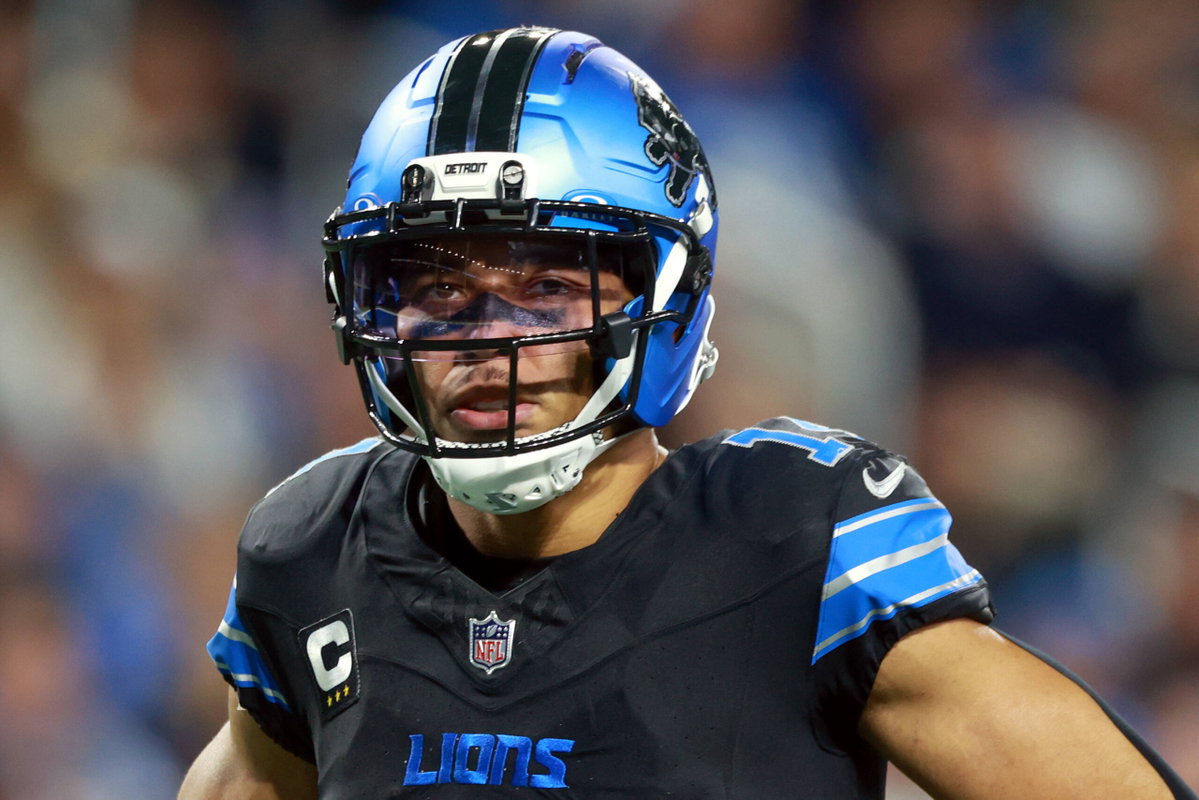
Playing on both Thanksgiving and Christmas can be especially tough for those fathers who want to be around their children and families. Last year, even Lions wide receiver Amon-Ra St. Brown was pissed at the NFL for making him play on the holidays.
“The two biggest holidays, I feel like in the United States, we played on both of them,” Amon-Ra said while talking to his brother on the St. Brown podcast last year. “And I don’t even have kids yet.
“If I had kids, I’d be even more pissed. Like, you can’t be spending it with your family, get to see your kids open gifts. I feel like that’s something that a lot of parents love to see and can’t wait for.”
Imago
Chicago Bears vs Detroit Lions DETROIT,MICHIGAN-October 20: Wide receiver Amon-Ra St. Brown 14 of the Detroit Lions waits on the field between plays during an NFL, American Football Herren, USA football game between the Tampa Bay Buccaneers and the Detroit Lions in Detroit, Michigan USA, on Monday, October 20, 2025. Detroit Michigan United States PUBLICATIONxNOTxINxFRA Copyright: xAmyxLemusx originalFilename:lemus-chicagob251020_npZ0x.jpg
Another issue is that the NFL keeps recycling the same divisional Thanksgiving matchups. Over the last 15 years, the Lions have faced their NFC North opponents in eleven Thanksgiving games. In the 2026 season, the Lions are set to play against the Bears for the 21st time on Thanksgiving.
Familiarity may breed rivalry, and it is good for the game. But at this point, I’m sure that Lions and Bears players and fans are sick of it, too. Let me add another reason why the players don’t exactly prefer to play on holidays…
This year, to make a Thanksgiving Eve game possible, the NFL needed both teams to be coming off bye weeks since the collective bargaining agreement requires at least three days between games. Typically, NFL teams receive around 13 days between games after a bye. But in their Thanksgiving Eve game against the Green Bay Packers during the next season, the Los Angeles Rams will only get a 9-day bye week.
You see, for better or worse, the Rams gained popularity last season with the reigning NFL MVP on their roster. So, the league wants the Rams to have more prime time slots, especially one on a holiday. And this is evidence enough that the NFL wants to grab all the cash before its turn in the spotlight is over.
The NFL risks going too far in its quest for more
The NFL clearly believes its popularity can sustain endless expansion. But every empire eventually discovers the danger of overplaying its hand. With the constant exploitation of the holidays, the NFL risks fan fatigue, poor game quality, oversaturation, and growing frustration over accessibility. NFL fans may still watch the games, but that doesn’t mean they approve of what they see. The NFL’s media dominance has even sparked political scrutiny.
The U.S. Department of Justice is reportedly examining the NFL’s broadcasting practices in an antitrust investigation. Even President Donald Trump has criticized the rising costs tied to streaming football games.
Wisconsin Senator Tammy Baldwin took measures tied to the NFL’s market control. Last month, she introduced legislation around the Packers’ Thanksgiving Eve game against the Rams, which will stream exclusively on Netflix.
“As the cost of just about everything continues to rise, the NFL is once again asking Wisconsinites to spend their hard-earned money on another streaming service. Enough is enough,” Baldwin noted in a statement.
“My For the Fans Act would stop this exact scenario and prevent Wisconsin families from being forced to pay for Netflix just to watch the Packers play this Thanksgiving.”
The NFL is pushing so aggressively for growth that it risks damaging the traditions, accessibility, and emotional connection that made holiday football special in the first place. Now, don’t get me wrong, football can still bring families together. But for that, the NFL needs to complement holidays with games rather than treating them like inventory.