
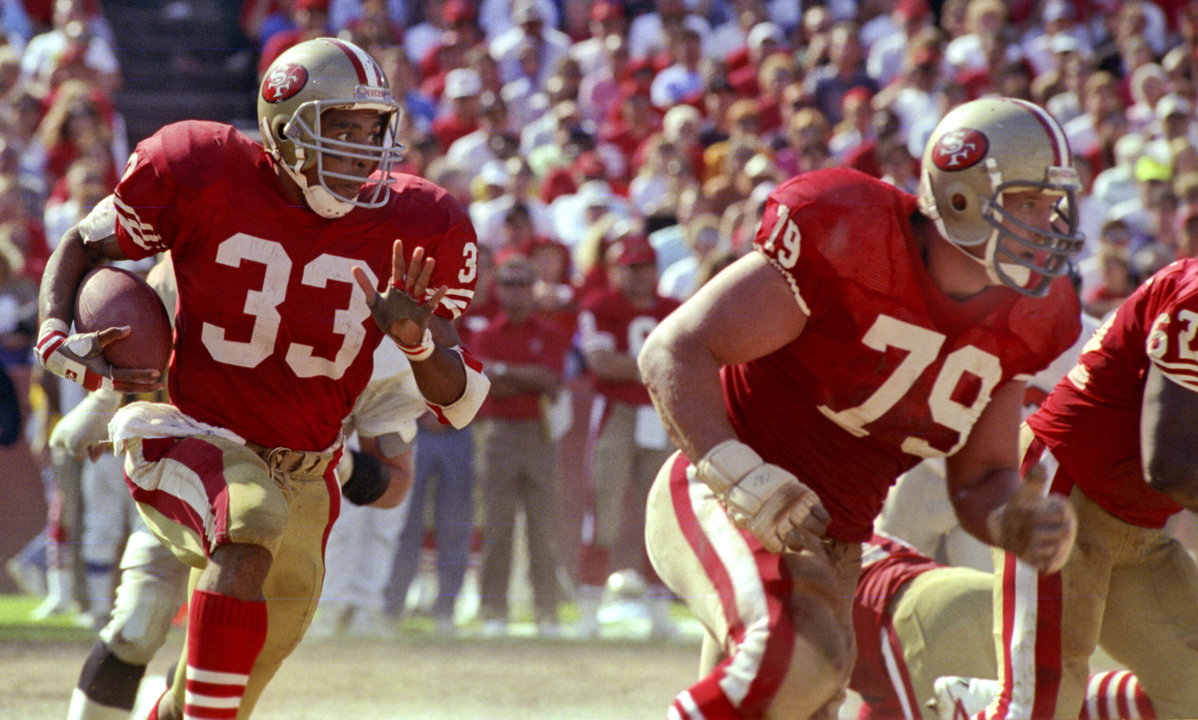
Roger Craig was a trailblazer for the running back position. In the early days of the NFL, running backs were largely used as north-to-south runners to pick up a few yards at a time. As time went on, RBs got more athletic and were able to do more things, such as catching the football, but Craig was the first one to really put up massive receiving numbers as an RB.
Watch What’s Trending Now!
The former San Francisco 49er totaled over 8,000 yards on the ground and 4,900 yards through the air during his 11-year career, where he won three Super Bowls, was named the Offensive Player of the Year, was named a First-Team All-Pro, and was a four-time Pro Bowler. Now, after a 28-year-long wait, he’s finally entering the Pro Football Hall of Fame in August.
Over the past month, we’ve highlighted the careers of the 2026 HOF inductees. We started with Drew Brees before hitting on Luke Kuechly, Larry Fitzgerald, and Adam Vinatieri, so now it’s time for the old timer, Roger Craig.
Here are the moments that helped Craig reach the pinnacle of American football.
First 1,000-1,000 Season
Imago
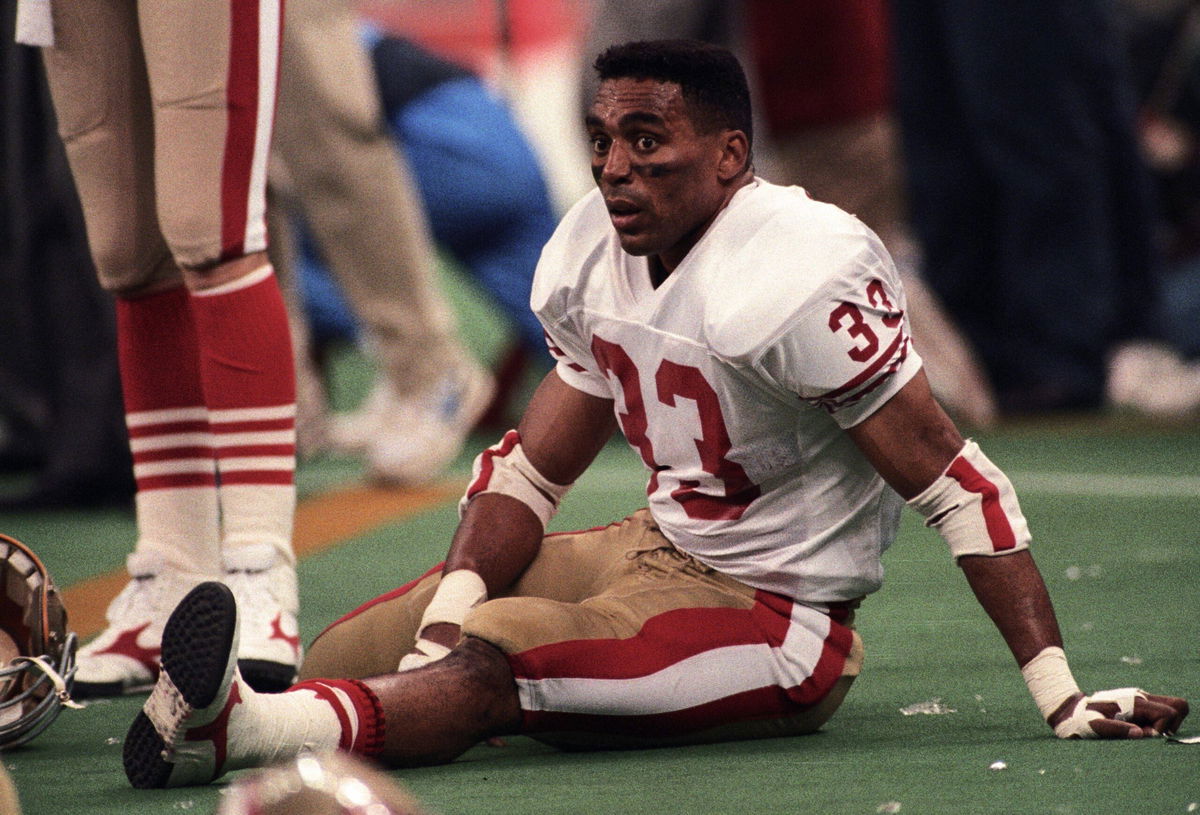
NFL, American Football Herren, USA Super Bowl XXIV Jan 28, 1990 New Orleans, LA, USA FILE PHOTO San Francisco 49ers running back Roger Craig 33 on the field prior to Super Bowl XXIV against the Denver Broncos at the Superdome. The 49ers defeated the Broncos 55-10. New Orleans Louisiana UNITED STATES, EDITORIAL USE ONLY PUBLICATIONxINxGERxSUIxAUTxONLY Copyright: xRobertxHanashirox 8986330
In 1985, his third year in the NFL, Roger Craig did something that no other running back in NFL history had ever done: he eclipsed the 1,000-yard mark in both rushing and receiving.
Craig, who carried the ball just 214 times and averaged 4.9 yards per carry, rushed for 1,054 yards and nine touchdowns that season. It was his first time going over 1,000 yards on the ground – something he’d only accomplish two more times in his career – but that was far from his most impressive feat that season.
During his first two years, Craig was a great receiver, but he never had more than 675 receiving yards in a season. But in 1985, he became the first running back to break the 1,000-yard mark, catching a league-leading 92 passes for 1,016 yards and six touchdowns. He became the fifth and last running back to ever lead the league in receptions while finishing 11th in receiving yards, ahead of guys like Jerry Rice, John Stallworth, and Mark Clayton.
It took 14 more years for another player to hit 1,000 yards rushing and receiving in a single season. Marshall Faulk did it in 1999 with 1,381 rushing yards and 1,048 receiving yards, and Christian McCaffrey did it again 20 years later with 1,387 rushing yards and 1,005 receiving yards.
Roger Craig was far ahead of his time when it came to catching the football out of the backfield, but he paved the way for guys like Faulk and McCaffrey to be so dynamic.
Super Bowl XIX
Imago
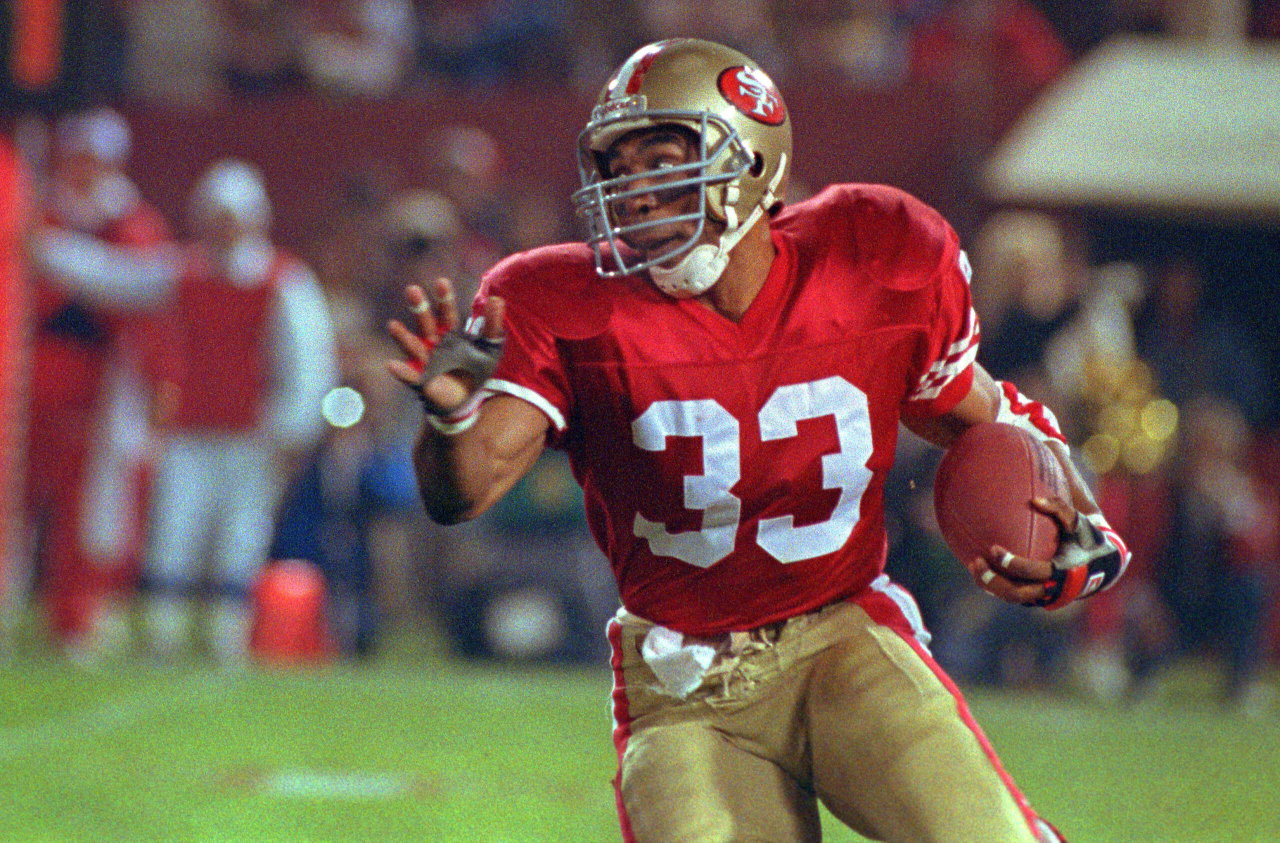
December 3, 1990 – San Francisco, California, U.S – San Francisco 49ers vs New York Giants at Candlestick Park Monday, December 3, 1990. 49ers beat Giants 7-3. 49er running back Roger Craig Copyright: xAlxGolubx
Later that year, the San Francisco 49ers reached their second Super Bowl in franchise history. They were three years removed from their first ever Super Bowl victory, but this time they had to face a red-hot Miami Dolphins team with legendary quarterback Dan Marino at the helm.
That wasn’t much of an issue for the 49ers, though. They cruised to victory, taking down Marino’s Dolphins 38-16 behind a monster game from Roger Craig, who rushed for 58 yards and a touchdown while catching seven passes for 77 yards and two touchdowns. He was responsible for 21 of San Fran’s 38 points as he helped bring home the franchise’s second Lombardi Trophy.
Remarkably, Craig did not win Super Bowl MVP despite his three-touchdown performance. Instead, the trophy went to Joe Montana, who threw for 331 yards and three touchdowns. It’s hard to argue against those numbers, but I personally think it should’ve gone to Craig.
Craig set the Super Bowl record for most touchdowns in a game by a non-quarterback. He still holds the record to this day, but five other players – Jerry Rice, Terrell Davis, James White, Timmy Smith, and Ricky Waters – have now joined him.
Super Bowl XIX was one that Craig will never forget. It was one of the best individual performances by a running back we’ve ever seen in the Big Game.
1988 Offensive Player of the Year
Imago
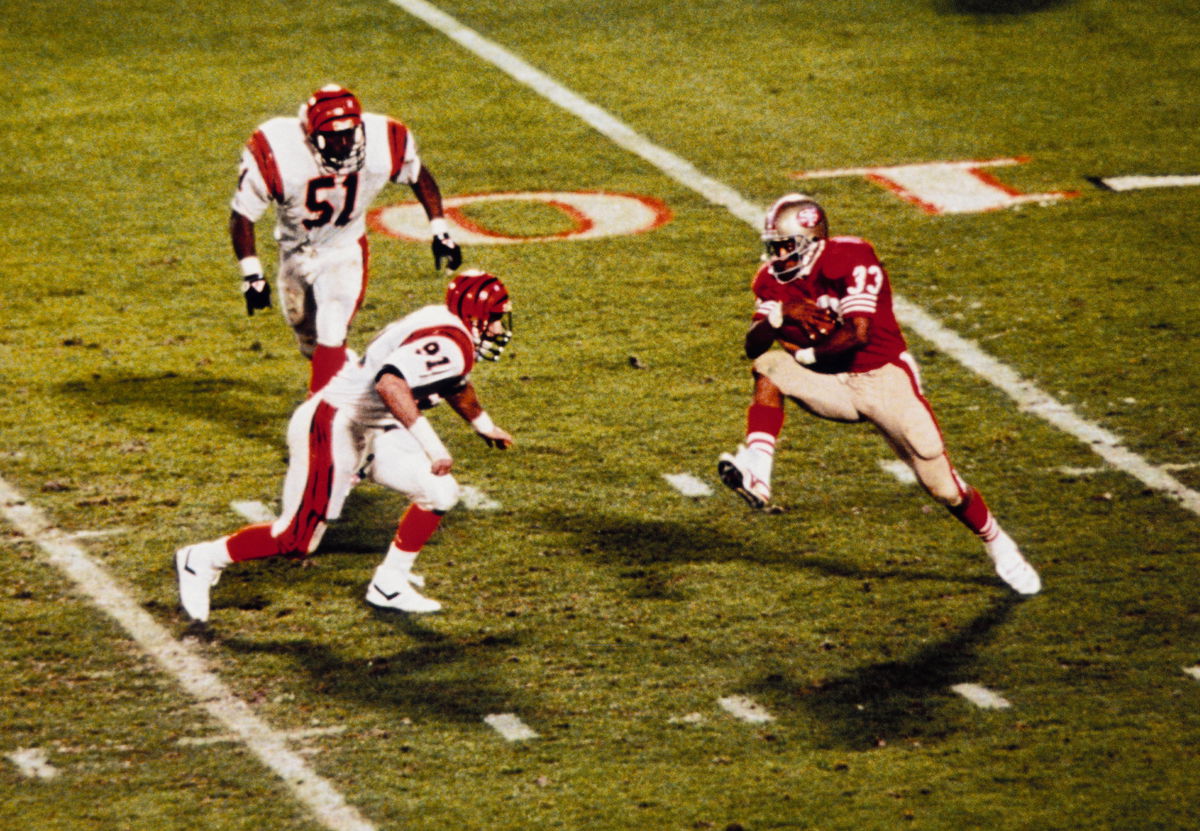
NFL, American Football Herren, USA Super Bowl XXIII Jan 22, 1989 Miami, FL, USA FILE PHOTO San Francisco 49ers running back Roger Craig 33 carries the ball against Cincinnati Bengals linebackers Carl Zander 91 and Leon White 51 during Super Bowl XXIII at Joe Robbie Stadium. The 49ers defeated the Bengals 20-16. Miami Florida UNITED STATES, EDITORIAL USE ONLY PUBLICATIONxINxGERxSUIxAUTxONLY Copyright: xHerbxWeitmanx 8886959
Shockingly, during Craig’s 1,000-1,000 season in 1985, he did not win Offensive Player of the Year and wasn’t even named a First-Team All-Pro. Instead, Marcus Allen won OPOY after rushing for 1,759 yards with 555 receiving yards and 14 total touchdowns. Allen was also named a First-Team All-Pro alongside Walter Payton, who totaled 2,034 yards and 11 touchdowns.
However, Craig would eventually earn the title of the best offensive player in the league in 1988. Just a few years after his record-setting season, Craig rushed for a career-high 1,502 yards (nearly 500 yards more than he had in any other season) and nine touchdowns while adding 534 yards and a score through the air.
Craig narrowly beat out Cincinnati Bengals QB Boomer Esiason, who threw for 3,572 yards and 28 touchdowns, for the OPOY award. Craig received 32 votes (41 percent) while Esiason received 29 votes (37.2 percent). Randall Cunningham, Eddie Brown, Dan Marino, and Herschel Walker were also in the running, but all received fewer than seven percent of the votes.
Craig was robbed of the OPOY award in 1985, but fortunately, he still got one before he called it a career in 1993.