
NFL fans want to focus on who their team took in the early rounds, but it is in the later rounds that depth and value are usually uncovered. While it may take time for mid-round picks to find the field, when some do, they dominate, and we all wonder why they weren’t picked earlier. Some players include Marques Colston, Terrell Davis, and, of course, Tom Brady. While everyone focuses on the overall winners and draft grades, let’s go over a couple of late-round picks who have a real path to starting roles for teams in 2026.
Watch What’s Trending Now!
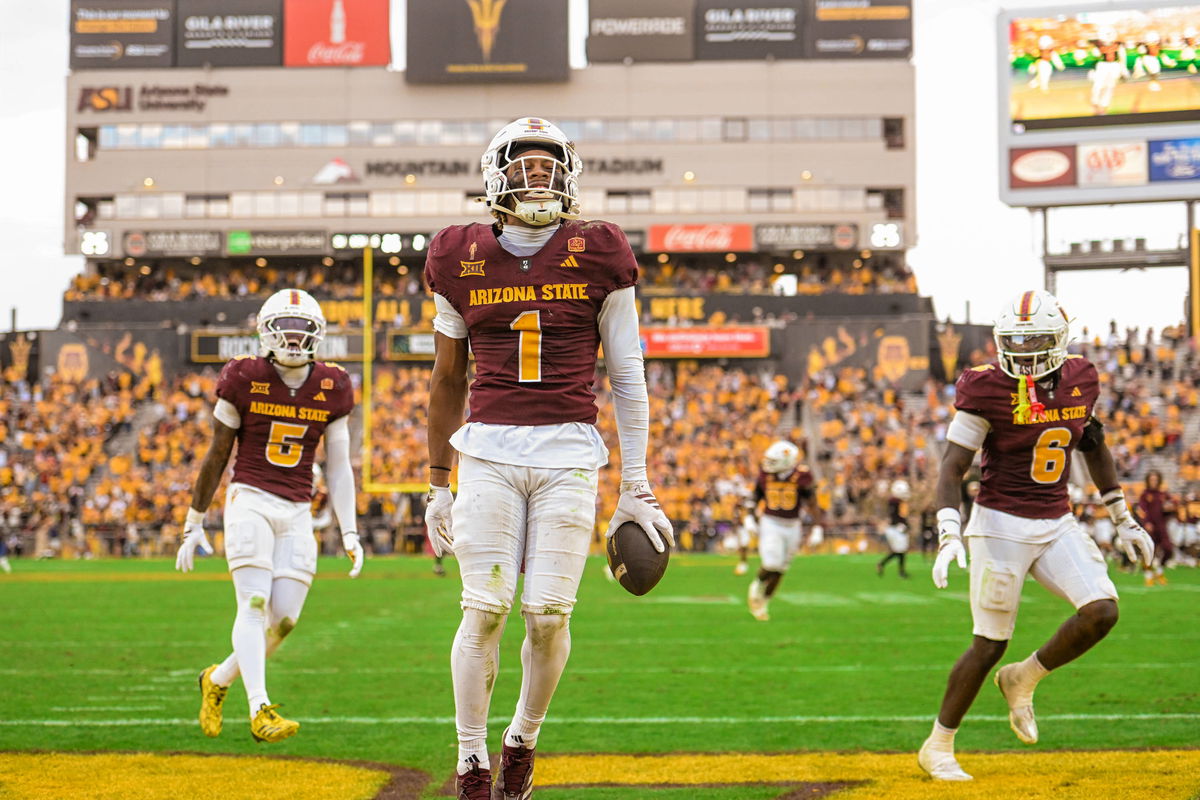
Dalton Johnson, SAF, Arizona
Johnson went to the Las Vegas Raiders in the fifth round, pairing up with his teammate Treydan Stukes, who was taken by the team in the second round. Johnson is a smaller, more bulky safety who just flies around the field, finding the ball. He’ll fit more into the box, as opposed to playing in deep zones, and he thrives by coming downhill. That role already showed up clearly on tape at Arizona, where he functioned as a trigger player near the line of scrimmage and finished his final season with 97 tackles, four interceptions, and seven pass breakups while earning First Team All-Big 12 honors. He had 11 passes deflected with four interceptions for Arizona this past season and made First Team All-Big 12. Across his college career, he also forced seven fumbles and consistently played as a tone-setting presence in run support, which is typically the fastest pathway for Day-3 safeties to carve out snaps early in the NFL.
In terms of how he’ll fit into the Raiders, this team just needs secondary talent. The two starting safeties are Jeremy Chinn and Isaia Pola-Mao, but Johnson can easily find a role. Las Vegas didn’t just add him for depth either, they traded into the No. 150 spot to make the selection, which usually signals a defined projection rather than a stash-and-develop pick. Chinn’s contract is up this season, and Johnson can slowly start to take his spot throughout the season as the box-type safety. Even if that transition doesn’t happen immediately, Johnson’s downhill profile fits cleanly into sub-package usage, particularly in nickel looks where the Raiders have leaned on hybrid safety bodies rather than true deep-field specialists.
The Raiders may run more nickel and dime this season, and if they do, Johnson could fit into that role as well. He finds the ball. It’s that simple. Players with that kind of production profile and short-area trigger speed don’t usually stay buried on depth charts for long, especially on secondaries still searching for reliable rotational answers.
Keith Abney II, CB, Arizona State
Abney took a surprising slide in this year’s draft, going in the fifth round at 157th overall. I had a late second, early third-round grade on him, but the Detroit Lions still got someone who could start for them on day one. That slide stands out even more considering Abney finished the 2025 season without allowing a touchdown in coverage while consistently matching up against top receivers in the Big 12, which usually keeps corners from falling into Day-3 territory. Abney gets a little handsy in coverage and will get penalized, but man, he comes downhill and breaks up routes in an instant. His burst out of his backpedal is special, and he’ll thrive if the Lions let him play more zone coverage. That downhill trigger ability fits especially well in Detroit’s match-zone structure, where corners are asked to drive on underneath routes rather than live purely in vertical man assignments.
The team’s current starting corners are Terrion Arnold, D.J. Reed, and Roger McCreary, and I’m not saying Abney will immediately take over, but I can see him slowly taking over the nickel role from McCreary. Detroit has leaned heavily on competitive, aggressive nickel defenders in recent seasons, and Abney’s willingness to attack routes instead of playing passively at the catch point mirrors that preference. The Lions aren’t scared to have those smaller corners, as they just recently had Amik Robertson on the roster. Abney is a similar size, but has more explosion and burst in his game.
Emmett Johnson, RB, Nebraska
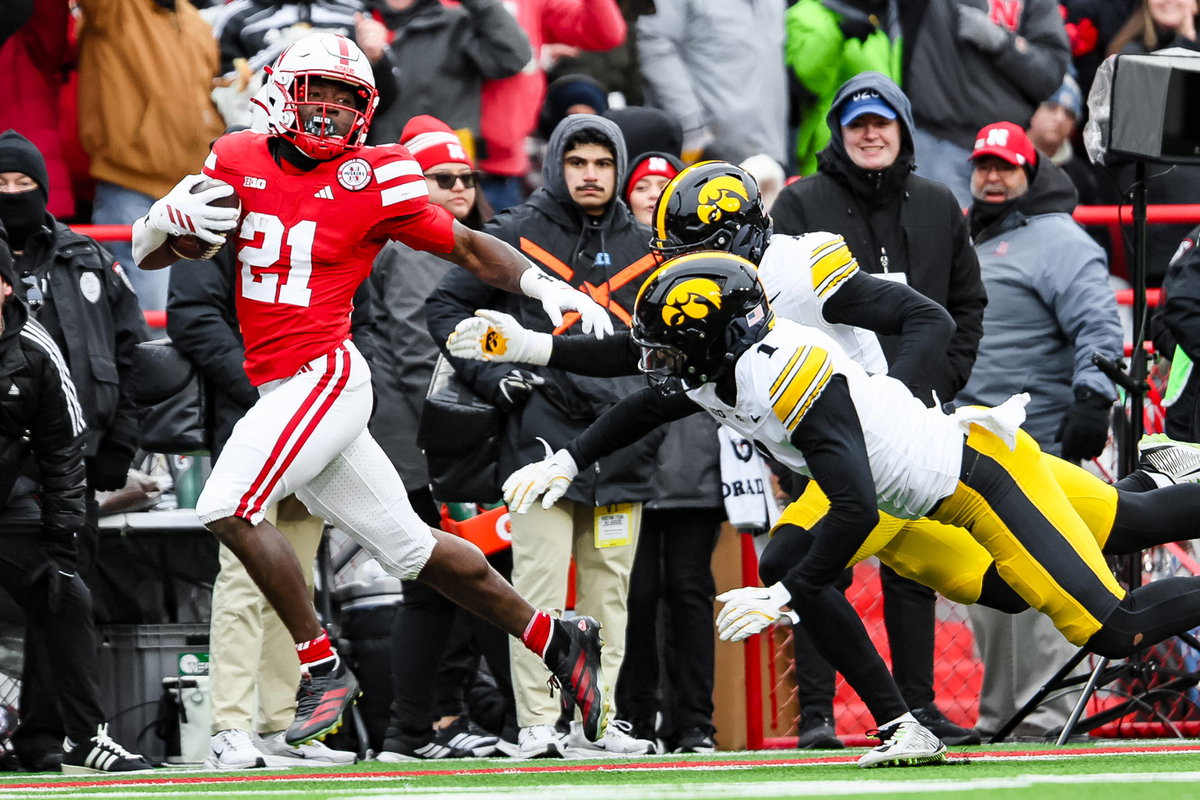
One of my favorites backs in this class, and I’m not surprised he went in the fifth round at 161st overall, but I’m surprised some other backs went over him. Johnson’s value comes less from long speed and more from how complete his profile already looks as a passing-down option, which tends to translate faster than early-down runners at the NFL level. He’s not the fastest straight-line runner and won’t beat defenders with pure speed, but man, does he have good agility to make guys miss. He offers three-down back potential with his pass-catching and pass-pro ability. At Nebraska, he consistently handled receiving responsibilities out of the backfield while showing reliable blitz pickup technique, two traits that coaching staffs prioritize when deciding which rookie backs earn snaps early.
Imago
November 28, 2025 Lincoln, NE. U.S. – Nebraska Cornhuskers running back Emmett Johnson 21 breaks free for a long run down the sideline as Iowa Hawkeyes defensive back Xavier Nwankpa 1 dives to tackle in action during a NCAA, College League, USA Division 1 football game between Iowa Hawkeyes and the Nebraska Cornhuskers at Memorial Stadium in Lincoln, NE..Iowa won 40-16.Attendance: 86410.410th consecutive sellout. /Cal Media Lincoln United States of America – ZUMAc04_ 20251128_zma_c04_410 Copyright: xMichaelxSpomerx
The Kansas City Chiefs signed Kenneth Walker III in free agency, but don’t have a solid running back two. It wouldn’t surprise me in a couple of months if Johnson has won the role primarily as the third-down back out of the backfield catching passes. Kansas City’s offense has historically leaned on backs who can function as check-down outlets and protection stabilizers rather than pure volume runners, which strengthens Johnson’s case for carving out a defined situational role sooner rather than later.
Cyrus Allen, WR, Cincinnati
Before the draft, EssentiallySports asked us to list our favorite draft prospects in this class, and Allen made my list. He wasn’t given a combine invite, which is absurd to me, but he was Cincinnati’s slot receiver this past season and has tremendous skills at separating in his routes. Even without the combine platform, Allen still produced one of the more efficient touchdown seasons among slot-leaning receivers in this class, finishing with 13 receiving touchdowns and consistently creating space at the top of his routes. A lot of burst mixed with agility makes him hard to guard, and he even stood out at the Senior Bowl, which is another reason I’m surprised he didn’t get a combine invite. That Senior Bowl showing helped confirm what showed up on tape, that his release quickness and short-area acceleration translate cleanly against higher-level defensive backs.
The Kansas City Chiefs need receiver help, and a lot of people anticipated them getting one earlier in the draft, but Allen was the only one. He has real upside to take over that starting slot receiver role for the Chiefs with his speed and burst. Kansas City’s offense has leaned heavily on separation-based slot targets in recent seasons, and Allen’s route pacing and underneath explosiveness match the type of receiver the system has historically trusted in high-leverage situations. Kansas City got two real weapons on day three in Allen and Johnson, who can be key contributors this season. For a Day-3 receiver stepping into a depth chart still searching for reliable interior targets, that pathway to early snaps is unusually realistic.
Demond Claiborne, RB, Wake Forest
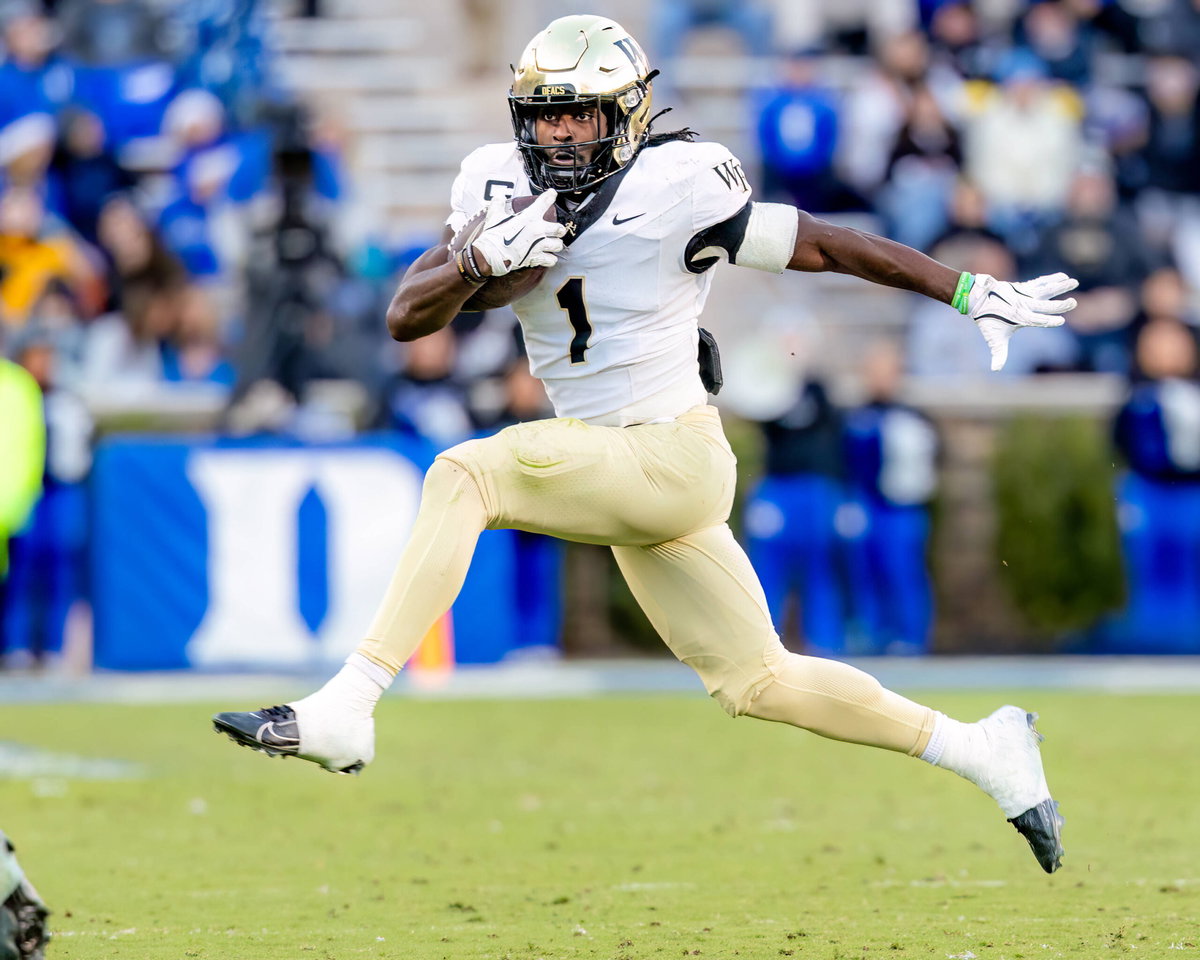
Claiborne had to wait for his name to be called until the 198th pick in the draft, and man, what a steal. He’s a change-of-pace type back who knows how to stretch the field, and every time he gets the ball, there’s just a real burst in his game. That burst showed up consistently across his Wake Forest career, where he produced more than 2,500 rushing yards and 25 total touchdowns while operating heavily in space-oriented run concepts rather than strictly between-the-tackles volume usage. He struggles between the tackles and fumbles a lot, but is a good enough athlete to be productive on the field. That tradeoff profile is typical for rotational speed backs who enter the league with a defined complementary role instead of needing an early-down workload to justify snaps.
Imago
November 29, 2025, Durham, North Carolina, USA: DEMOND CLAIBORNE 1 runs the ball for a gain. Duke University Blue Devils hosted Wake Forest Demon Deacons football at Wade Wallace Stadium in Durham, N.C. Durham USA – ZUMAj177 20251129_zsp_j177_064 Copyright: xJasonxJacksonx
The Minnesota Vikings took him in the sixth round, and he’ll be a perfect complement to what they currently have in the backfield. Aaron Jones and Jordan Mason don’t have the real speed Claiborne has, which is a reason head coach Kevin O’Connell must love this pick. Minnesota’s offense has leaned toward outside-zone and space-creation runs under O’Connell, which increases the value of backs who can threaten edges rather than purely grind inside carries. Vikings didn’t have much to their offense this offseason, but Claiborne is a great addition on that short list. For a Day-3 runner entering a rotation that already has established early-down options, that type of change-of-pace role is exactly where immediate snaps usually appear first.
Skyer Gill-Howard, DT, Texas Tech
Everyone was hyped up about his teammate, Lee Hunter, and for good reason, but I felt like Gill-Howard showed some flashes on tape that generated a little more excitement going in. The ankle injury is a big reason why, mixed with the shorter arms, but when you watch him on the field, you see burst, quickness, and explosion up the field. That first-step quickness is what kept him on draft boards despite the limited 2025 production, because interior defenders who consistently threaten gaps early in reps tend to translate better into rotational pass-rush roles than their raw stat lines suggest. He didn’t have the best production in 2025, but the ability to one-gap and shoot up the field are reasons why I love this pick for the Detroit Lions.
Detroit took him at 205th overall, and while he may not start with guys like Tyleik Williams and Alim McNeill above him, he has a real opportunity to come in on passing downs and make his athleticism felt. Detroit’s defensive front has leaned heavily on interior rotation depth in recent seasons, which creates opportunities for quick-penetration tackles to earn situational snaps even without early-down responsibilities. Don’t be surprised if he’s able to get a couple of sacks this year for the Lions. For a sixth-round defensive tackle entering a pressure-oriented rotation, that kind of early situational impact is a realistic pathway rather than an aggressive projection.
Andre Fuller, CB, Toledo
We might as well call Toledo DBU at this point for the number of defensive backs they’ve gotten to the NFL. He’s got good size at 6-foot-1 and 200 pounds and had 12 passes defensed in 2025. That production continued a trend Toledo corners have built over the last several draft cycles: long, physical defensive backs who arrive in the league already comfortable playing press techniques at the line of scrimmage. Knows how to mirror in man coverage and get physical at the line of scrimmage. Just gets a little too handsy and doesn’t have the best top-end speed when trailing in coverage, but as a second-round pick, it was the right range for him.
The reason I feel he can make a big impact this season is where he landed, with the Seattle Seahawks. It’s a great situation to find yourself in, and the corner depth behind Devon Witherspoon, Josh Jobe, and Nick Emmanwori (nickel) isn’t the best. Seattle has consistently relied on long boundary corners within its coverage structure, which makes Fuller’s size profile particularly relevant even if he begins the season in a rotational role. I could see Fuller potentially getting a starting spot despite injuries and carving out a role for himself, or at least having flashes in the 2026 season.
Will he start? Probably not, but he can make a good play here or there with his physicality. For a defensive back entering a depth chart still settling its outside corner rotation behind an established CB1, those flashes are often the first indicator of a larger role developing later in the season.
Red Murdock, LB, Buffalo
Mr. Irrelevant is on this list? Let’s go! That’s some exciting stuff, but overall, Murdock just flies around the field and knows how to get to the football. He had 142 tackles for Buffalo this past season and is strong enough to disrupt blockers at a good enough level. That level of tackle production reflects how frequently he was used as a high-volume pursuit linebacker rather than a protected rotational piece, which often translates well to special teams and depth roles early in an NFL career. The problem is the instincts, and he puts himself into tough situations from time to time. That inconsistency is typically what pushes productive college linebackers toward the final picks of the draft rather than earlier Day-3 selections.
The landing spot is the main reason I feel he can make an impact in 2026. The Denver Broncos took him with the 257th pick, and they were a team that needed some linebacker depth going into this offseason. The two starters are Justin Strnad and Alex Singleton. Denver’s linebacker rotation has leaned heavily on effort-based second-level defenders in recent seasons, which makes Murdock’s motor and pursuit style a natural schematic fit even if he begins primarily on special teams.
The mindset Murdock plays with and the overall thoughts, some good reps in training camp, I could see him making an impact for the Brnocs if one of the starting backers goes down at some point throughout the season. For a Mr. Irrelevant selection, that kind of pathway through special teams into rotational defensive snaps is exactly how early-career impact usually develops.