
Essentials Inside The Story
- Rookie salaries are determined by slot values based on draft position
- Fernando Mendoza is set to earn $57.3 million over four years
- All drafted rookies sign four-year contracts
Even in the NIL era, draft night still changes lives overnight. For many prospects, it’s the first time they’re signing a six-figure, or far more often, eight-figure, contract, which is why the emotions you see on stage seem so raw. What rarely gets talked about, though, is how structured that moment actually is.
Watch What’s Trending Now!
Rookie contracts aren’t negotiated the way most fans think. They’re largely predetermined by a league-wide slot system that assigns each pick a fixed value before the draft even begins. That’s part of why quarterbacks, edge rushers, and offensive tackles come off the board early so consistently: it’s cost efficiency. At the top of the draft, teams are maximizing the value of one of the most controlled financial windows in the NFL.
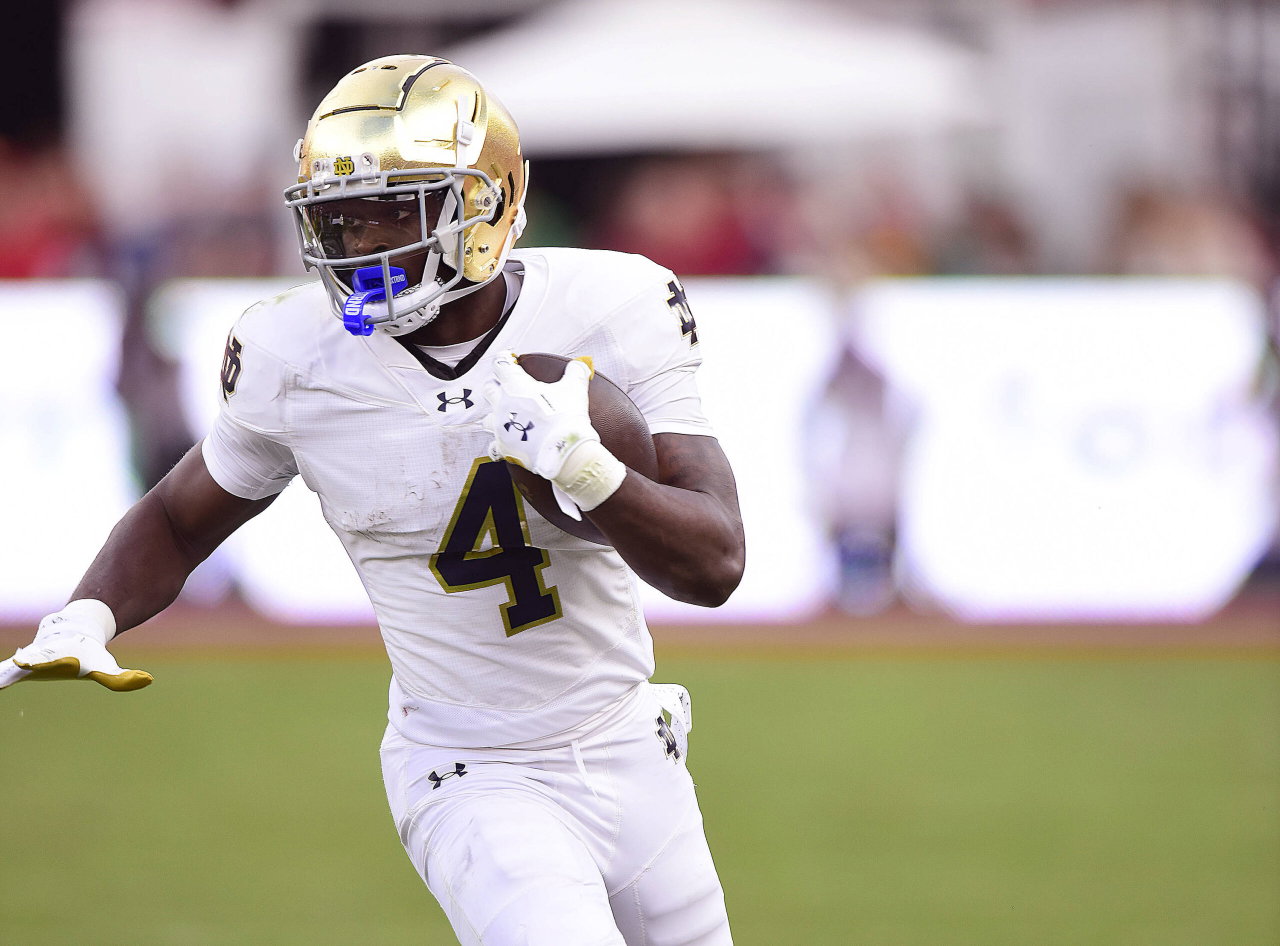
For example, Jeremiyah Love was the No. 3 pick in the draft this year, and he’s set to earn about $53 million over the first four years of his career. He is the seventh-highest paid RB in the league and has the most guarantees of any RB by nearly $20 million. If the Arizona Cardinals had selected an edge rusher, they would be the 35th-highest-paid edge and have the 18th-highest guarantees.
There are so many little things built into rookie deals that the average fan doesn’t know, so today, I’ve built the beginner’s guide to rookie contracts so you can have a better understanding of what it all means, and why some players might even want to go undrafted.
What is the Basic Structure of a Rookie Contract?
No matter what round you’re selected in, you’re going to get a four-year rookie contract. Whether you’re the first overall pick or Mr. Irrelevant, it doesn’t matter. Everyone gets a four-year deal, but not everyone gets the same guarantees and options. That structure is the result of the NFL’s 2011 Collective Bargaining Agreement, introducing the rookie wage scale specifically to prevent teams from overspending on unproven prospects while still preserving draft-slot hierarchy.
The only players to receive a fully guaranteed contract are first-round draft picks. This means that no matter what happens, they could get injured and never play football again in a year, they will see every single cent from their rookie contract. That guarantee protection is exactly why first-round picks carry dramatically more financial leverage than any other draft tier before they ever take an NFL snap. On top of that, first-rounders also have a fifth-year option built into their contract, but we’ll dive more into that here shortly
Imago
2026 NFL, American Football Herren, USA DRAFT PREVIEW: FILE PHOTOS APR 19 FILE PHOTOS former Notre Dame fighting irish running back 4 Jeremiyah Love here he is pictured on November 30, 2024 win versus the USC Trojans, at the Los Angeles Memorial Coliseum, the NFL Draft will be held in Pittsburgh, Pennsylvania on April 23-25, 2026. Mandatory Credit: Jose / MarinMedia.org Absolute Complete photographer, and credits required FILE PHOTOS former Notre Dame fighting irish running back 4 Jeremiyah Love here he is pictured on November 30, 2024 win versus the USC Trojans, at the Los Angeles Memorial Coliseum, the NFL Draft will be held in Pittsburgh, Pennsylvania on April 23-25, 2026. Mandatory Credit: Jose / MarinMedia.org Absolute Complete photographer, and credits required Pittsburgh Acrisure Stadium PA United States of America Copyright: xJosex/xMarinMedia.orgx/xIMAGOx
Players drafted in rounds two through seven are not guaranteed to receive a fully guaranteed rookie deal, but last year, that changed a bit. The Houston Texans opted to give WR Jayden Higgins, who was selected with the second pick of the second round, a fully guaranteed deal. This caused a ripple effect across the league, and every player drafted in the first 40 picks ended up receiving fully guaranteed contracts, but it took all the way until late July, almost three months after the draft, to get some of them done. That delay happened because second-round negotiations became a pressure point league-wide because Higgins’ deal challenged a decade of precedent about where guarantees were supposed to stop.
We’ll see if that continues this year or if it’s just a one-off, but one thing is for certain: every second-round pick’s agent is going to fight for that fully guaranteed deal. Agents now treat the early second round as the league’s newest financial battleground, not a settled tier.
This is why second-rounders are typically the last ones to sign their rookie contracts. They’re obviously the closest to being a first-round pick, so they still feel they deserve a fully guaranteed contract, or at least close to it. Teams are always going to push back on giving out big guarantees, so the negotiation process can take a while. Under the current wage-scale system, guarantees are one of the only meaningful levers still negotiable, which is exactly why they become the sticking point every summer.
Basically, all you need to know is that first-rounders receive a four-year, fully guaranteed contract, while second through seventh rounders receive four-year deals, but they have to negotiate their own guarantees.
As for undrafted free agents, they are locked into a three-year contract, but are able to negotiate everything from overall contract value to guarantees, so there’s a lot more freedom there. That flexibility is limited financially but powerful strategically, especially for players choosing roster fit over slot value.
What is a Fifth-Year Option?
So what is a fifth-year option? Well, it’s exactly what it sounds like. First-rounders have an option built into their contract that allows the team that drafted them to extend their rookie deal one extra year without the player having to agree on the terms, but it is for a significantly higher price than what they made over the first four years of their career. Importantly, teams must decide whether to exercise that option after the player’s third season, which effectively turns Year 4 into a decision window rather than a negotiation window.
Let’s take Bryce Young, for example. The first overall pick in the 2023 NFL Draft made an average of $9.5 million per year over the first four years of his deal. The Carolina Panthers opted to exercise his fifth-year option, so in 2027, Young is set to make $25.9 million, which is almost as much as his entire rookie contract was worth. That jump reflects how aggressively the option scales with position markets rather than rookie-slot expectations.
So how are these fifth-year options calculated? Well, it’s complicated, so bear with me.
Imago
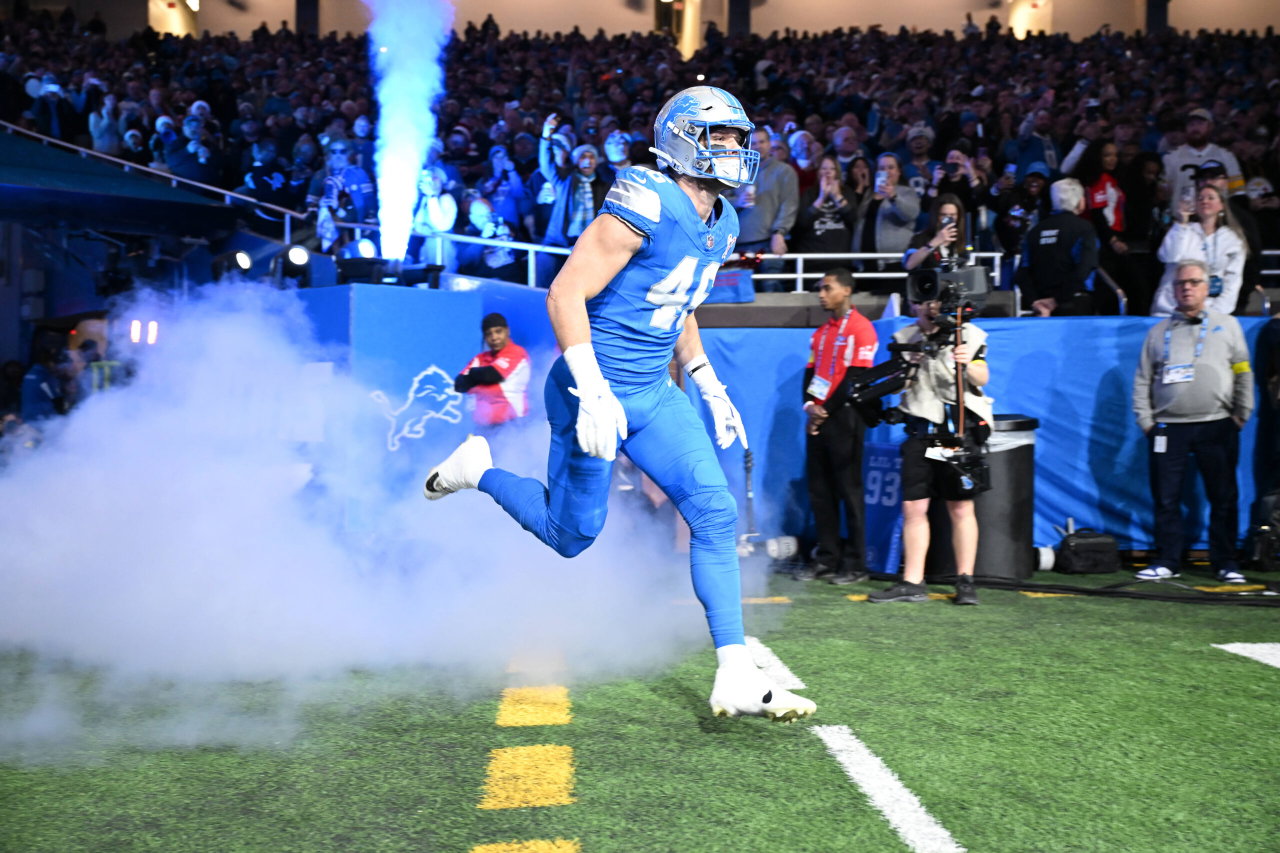
DETROIT, MI – DECEMBER 21: Detroit Lions linebacker Jack Campbell 46 during pregame introductions prior to the Detroit Lions versus the Pittsburgh Steelers game on Sunday December 21, 2025 at Ford Field in Detroit, MI. Photo by Steven King/Icon Sportswire NFL, American Football Herren, USA DEC 21 Steelers at Lions EDITORIAL USE ONLY Icon2582025122101622
If a player makes two or more Pro Bowls during the first three years of their rookie contract, their fifth-year option would be worth the same as the franchise tag for their position. The franchise tag number is calculated by averaging the top-five cap hits at their respective position.
If a player makes one Pro Bowl during the first three years of their rookie contract, their fifth-year option would equal the cost of the transition tag for their position. The transition tag is calculated by taking the average of the top-10 highest-paid players at the position.
If a player doesn’t make the Pro Bowl, but has been on the field for 75 percent of their team’s offensive or defensive snaps for two of their first three seasons, played 50 percent of snaps in each of their first three seasons or averaged 75 percent of snaps over the first three years, they would earn the average of the 3rd to 20th highest-paid players at their position.
And if a player doesn’t meet any of that criteria, they would receive the average of the 3rd to 25th highest-paid players at their position. But if you’re in that boat, you’re not likely to get your fifth-year option exercised. These four tiers, multiple Pro Bowls, one Pro Bowl, playtime threshold, or baseline, were formalized under the current CBA specifically to tie option value to production instead of draft position alone.
Teams also don’t have to exercise a first-rounder’s fifth-year option. Instead, they can let their contract run out and either let them walk in free agency after four seasons or try to re-sign them to a long-term deal.
There is a unique scenario playing out right now that I want to talk about. Jack Campbell was a first-round pick for the Detroit Lions in 2023, and he has been everything the Lions could’ve wanted and more, but they declined his fifth-year option. So why would they do that?
When calculating the fifth-year option amounts, the NFL groups outside and inside linebackers together. Outside linebackers typically make significantly more than inside linebackers, so his fifth-year option would’ve paid him over $20 million per year and made him the highest-paid linebacker in the league. He’s great, but he’s not worth that much in Detroit’s eyes. That positional grouping quirk quietly creates one of the strangest distortions in the rookie-option system; elite off-ball linebackers can price themselves out of their own option year.
You can start to see why rookie contracts are so intriguing. Teams love having the fifth-year option on a player, especially a quarterback, because it means they can avoid paying them top dollar for an extra year. For front offices, the option year is less about savings in absolute terms and more about delaying market-reset negotiations by twelve months.
How Much Do Rookies Get Paid?
I’m not sure anybody truly knows how the rookie contract scale is calculated, but to put it in simple terms, as the NFL’s salary cap increases, so do rookie contracts. Outside of the 2021 season, which was right after COVID took over, rookie contracts have gone up every single year, and in 2026, they’re earning more than ever. That upward movement is built directly into the wage-scale formula, which adjusts slot values annually alongside league revenue growth and cap expansion.
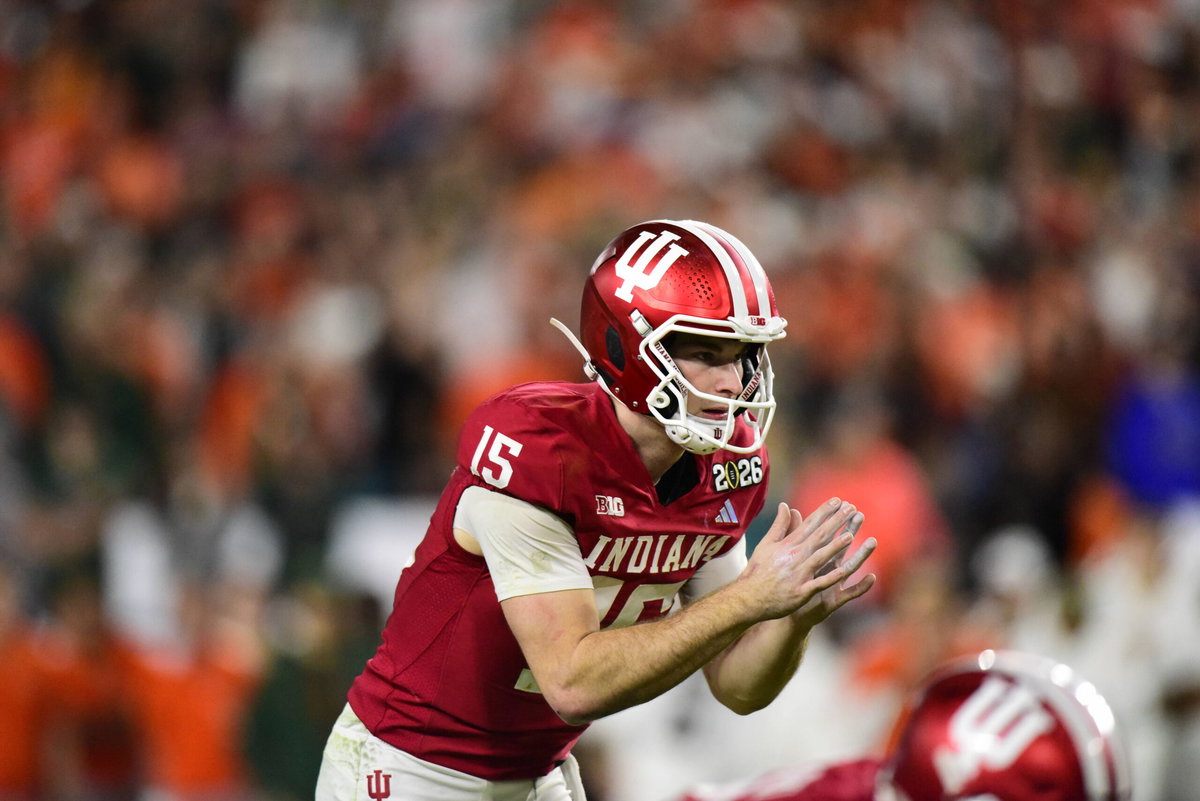
The No. 1 overall pick in the draft, Fernando Mendoza, is set to make $57.3 million over the first four seasons of his career. That is insane money for a rookie, but the money drops off fast. Just take a look at how much the salaries vary from picks No. 1 through No. 10.
Imago
2026 NFL, American Football Herren, USA DRAFT PREVIEW: FILE PHOTOS APR 19 FILE PHOTOS former Indiana Hoosiers quarterback 15 Fernando Mendoza who is projected to be the top pick in the 2026 NFL Draft, here he is pictured on January 20, 2026 versus the Miami Hurricanes, in the 2026 National Championship, the NFL Draft will be held in Pittsburgh, Pennsylvania on April 23-25, 2026. Mandatory Credit: Jose / MarinMedia.org Absolute Complete photographer, and credits required FILE PHOTOS former Indiana Hoosiers quarterback 15 Fernando Mendoza who is projected to be the top pick in the 2026 NFL Draft, here he is pictured on January 20, 2026 versus the Miami Hurricanes, in the 2026 National Championship, the NFL Draft will be held in Pittsburgh, Pennsylvania on April 23-25, 2026. Mandatory Credit: Jose / MarinMedia.org Absolute Complete photographer, and credits required Pittsburgh Acrisure Stadium PA United States of America Copyright: xJosex/xMarinMedia.orgx/xIMAGOx
From the No. 1 pick to the No. 10 pick, there is a $26.3 million difference. That’s almost the same difference from the No. 10 pick in the draft to the last pick in the draft ($26.6 million difference). That symmetry is a direct reflection of how aggressively the wage scale front-loads value at the very top of Round 1 before flattening across later picks.
| Fernando Mendoza | $57.3 million |
| David Bailey | $54.7 million |
| Jeremiyah Love | $53.0 million |
| Carnell Tate | $51.1 million |
| Arvell Reese | $47.8 million |
| Mansoor Delane | $41.9 million |
| Sonny Styles | $37.2 million |
| Jordyn Tyson | $32.5 million |
| Spencer Fano | $32.3 million |
| Francis Mauigoa | $31.0 million |
Look, I’m never going to feel bad for a guy making millions of dollars a year, but this shows just how much someone falling in the draft could cost them. Arvell Reese, who many thought could go second overall, lost about $7 million from sliding to fifth. Francis Mauigoa, who some had going third overall in their mocks, missed out on $21 million by sliding to tenth. The biggest loser was probably Rueben Bain Jr., who at one point was talked about as a top-three pick, but ended up going 15th and earning $23.7 million over four years instead of $50+ million. Under the rookie scale, draft night volatility is one of the few moments in an NFL career where tens of millions can realistically disappear in real time.
There are also massive winners from this as well. Not many people had Carnell Tate going earlier than seventh overall, so he made at least $14 million more than expected. Same with Mansoor Delane, who many had going in the 10-12 range, but ended up going sixth and making an extra $10+ million. Ty Simpson was viewed as a second-rounder by most and could’ve made $13 million (not all of which would’ve been guaranteed) if he were taken at the top of the second round, but now he’ll make a fully guaranteed $25.4 million. That jump from early Round 2 projection to late Round 1 reality is often the single biggest financial swing available to a non-quarterback prospect entering the league.
If you want to see the full rookie scale for all 257 picks, check out Spotrac’s NFL Rookie Scale page.
Why Being a Second-Rounder Can Be Advantageous
If players had the choice between being a late first-rounder or an early second-rounder, some would choose being an early second-rounder.
As a first-rounder, you get the fully guaranteed contract, but you also have the fifth-year option built in. That just puts you one year further away from earning your second contract, which is where all the money is made in the NFL. And in a league where the second contract is typically the only truly market-value deal a player receives before age-related decline becomes a negotiating factor, that extra year matters more than it sounds.
If you’re an early second-rounder, you may not get a fully guaranteed deal (though after last year, it could become the norm for top-40 or top-50 picks to get fully guaranteed deals), but you don’t have that fifth-year option keeping you from making big money.
Let’s take Lamar Jackson, for example.

Imago
November 8, 2025, West Lafayette, Indiana, USA: Ohio State defensive tackle KAYDEN MCDONALD 98 reflects during the NCAA, College League, USA football game between the Ohio State Buckeyes and the Purdue Boilermakers, Saturday, Nov. 8, 2025, at Ross Ade Stadium in West Lafayette, Ind. Ohio State won 34-10 West Lafayette USA – ZUMAw145 20251108_zsp_w145_008 Copyright: xDavidxWegielx
Had Jackson slipped into the second round, his rookie contract would’ve been up at the end of 2021, and even if the Ravens franchised tagged him in 2022, he would’ve gotten to his second contract a year earlier. And that may not sound like a big deal, but instead of being 32 heading into his third contract, he’d be 31, which may not seem like a big difference, but once you hit your 30s, teams can get a bit hesitant to hand out big contracts.
Someone like Kayden McDonald, who probably should’ve gone in round one, could end up being very happy he was a second-rounder. But there is always the risk that, if you’re not very good, you will have a few million less in your bank account and no guarantee that it will be a fully guaranteed deal.
The Benefits of Being a UDFA
There’s also a real benefit to being an undrafted free agent over a seventh-round or even sixth-round pick. As a late-rounder, your slot value is locked in around $4 million, your guarantees typically aren’t super high, and you don’t have your choice of which team you go to. As a UDFA, you have a lot more freedom and negotiation power.
As a UDFA, especially a highly sought-after one, you get to pick between multiple teams that want you, which not only lets you go to the team that gives you the best chance to make the roster, but it also allows you to drive up your price. On top of that, a lot of top UDFAs receive higher guarantees than late-round picks, due to them having so much interest with other teams. In practice, competitive UDFA bidding wars can quietly outperform the guarantee packages attached to the final 20–30 draft selections.
Imago
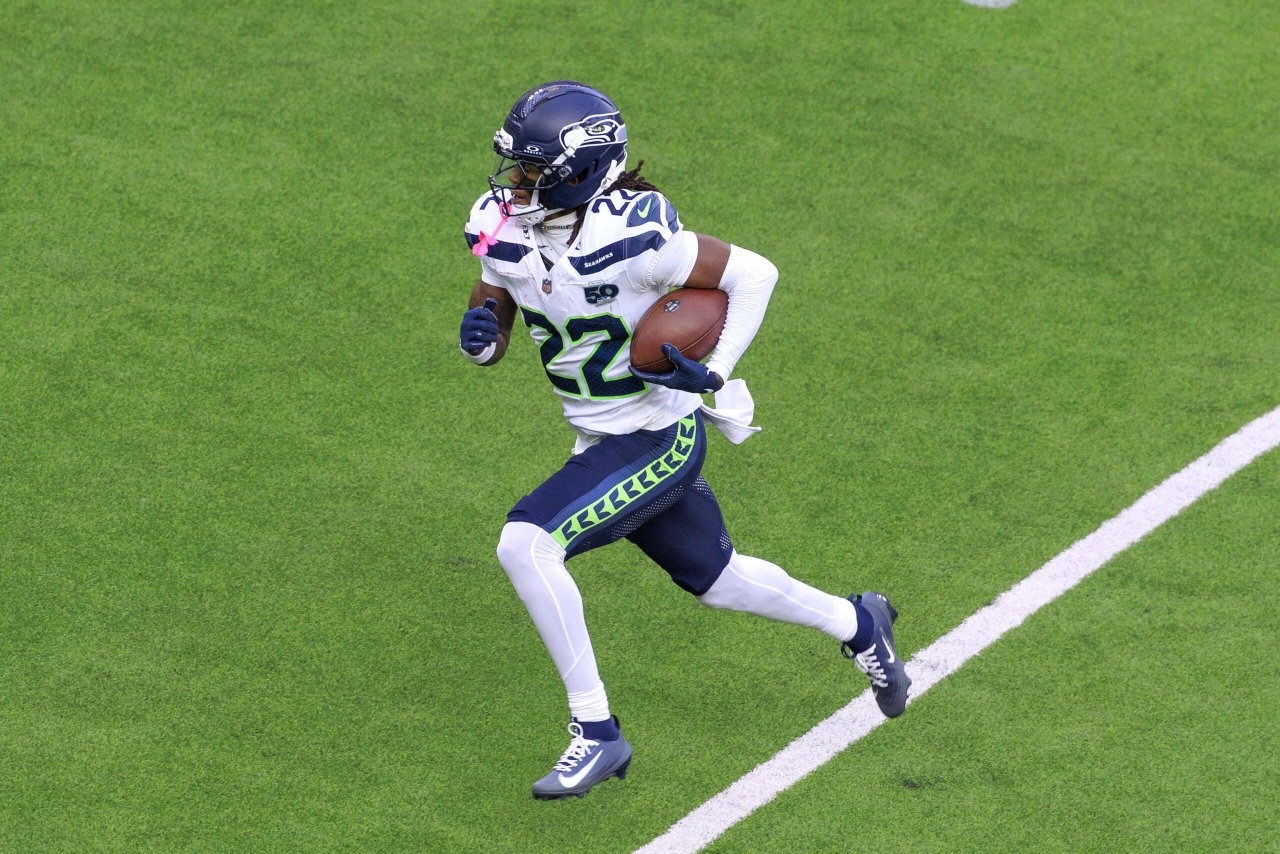
November 16, 2025, Inglewood, California, USA: 22 Rashid Shaheed, WR of the Seattle Seahawks with the ball during their regular season NFL, American Football Herren, USA game against the Los Angeles Rams on Sunday November 16, 2025 at SoFi Stadium in Inglewood, California. Rams defeat Seahawks, 21-19. JAVIER ROJAS/PI Inglewood USA – ZUMAp124 20251116_zaa_p124_036 Copyright: xJavierxRojasx
You might get a few hundred thousand more dollars as a seventh-round pick, but UDFAs get the flexibility to choose their destination and typically have higher guarantees.
Just take Isaiah Bond, for example. He fell out of the draft last year, but still ended up with a fully guaranteed $3 million deal with the Cleveland Browns. He was a bit of an outlier, but he got to pick his team, and I’m sure he had plenty of suitors to drive up his price.