
Essentials Inside The Story
- There's a theory that the Vikings could be up for sale.
- If true, the franchise could be sold for $8 to $9 billion.
- The Wilf family acquired the team in 2005 from the late Red McCombs for $600 million.
For two straight offseasons, 2024 and 2025, the Minnesota Vikings spent like a contender, stacking talent and chasing momentum. Then 2026 hit, and things… changed. The checkbook snapped shut, the focus shifted to resetting the cap, and suddenly the big-picture questions crept in. That’s where Charley Walters of the Pioneer Press stirred things up, floating a theory that the franchise could be up for sale.
Watch What’s Trending Now!
While Walters interpreted Minnesota’s dialing back in free agency as a sign that ownership was gearing up for a sale, here’s the thing: when a team goes all-in for a couple of years, the bill comes due, and the reset follows. That reset is happening right now, in real time. And new reports about the sale theory have emerged.
“A @PioneerPress column speculated that the Wilfs may be looking to sell the Vikings. A source with knowledge of the situation says that’s not the case,” ProFootballTalk‘s Mike Florio reported.
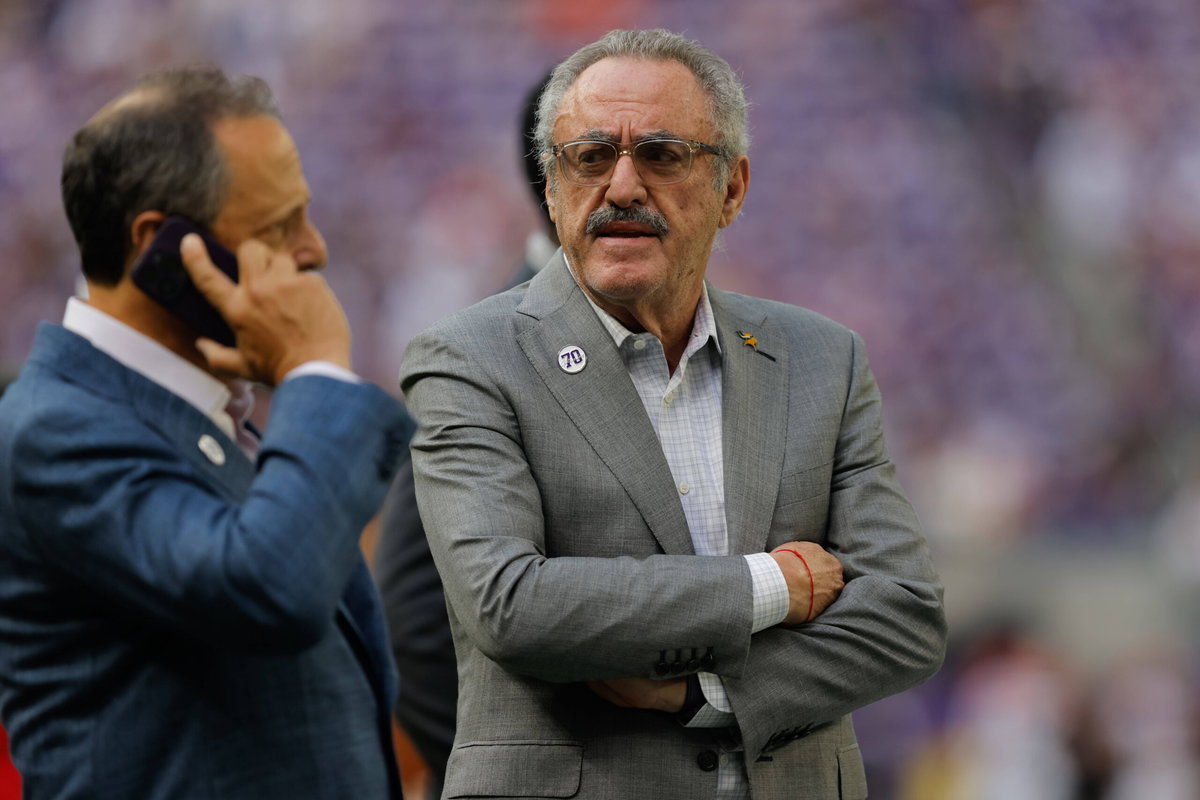
Multiple sources have confirmed that the owners of the Vikings, Zygi and Mark Wilf, have no intentions of selling the team anytime soon. The idea doesn’t really add up, especially with the team’s strong push to host the 2028 NFL Draft.
The sharp drop in payroll for the Minnesota Vikings, from a league-high $350 million in 2025 to $226 million in 2026, largely comes down to a major shift in strategy. After going all-in on a Super Bowl run that didn’t pan out, the organization appears to be stepping back, reassessing, and taking a more measured approach moving forward. Put simply, the Vikings pushed all their chips in from a cash perspective last year. And now they need to scale things back to get their salary cap back under control.
The Wilf family acquired the team in 2005 from the late Red McCombs for $600 million, and any sale today would likely fetch at least ten times that figure.
That said, even if the Wilfs or any current owner were thinking about selling, the NFL would likely prefer they hold off until after the Seattle Seahawks are sold. It’s rare to see two franchises on the market at the same time. From the league’s perspective, keeping supply limited helps maintain that sense of exclusivity, which in turn drives valuations even higher.

A @PioneerPress column speculated that the Wilfs may be looking to sell the Vikings. A source with knowledge of the situation says that's not the case. nbcsports.com/nfl/profootbal…
Meanwhile, even Ben Goessling of the Star Tribune reported details that make it clear the team isn’t on the market—and that the Wilfs are in this for the long haul.
“A source close to the Wilfs said there’s ‘zero truth‘ to the notion the Vikings owners are thinking about selling the team,“ Goessling wrote on May 3 on X. “They’ve long talked about the team staying in the family for multiple generations, and both Mark and Zygi Wilf’s kids have taken on larger roles with the team in recent years.”
Even so, the rumors didn’t start out of nowhere.
What are the Vikings up to?
The recent sale talks around the Minnesota Vikings started after a column by Charley Walters asked a direct question about whether the Wilf family could be preparing to sell. That headline, “Are the Wilfs getting ready to sell the Vikings?” got people talking, but it did not include firm proof. The column mostly connects dots but does not confirm anything. Reportedly, the Wilf family could potentially land $8 to $9 billion for the franchise. That is a huge jump from the $600 million they paid to Red McCombs back in 2005.
However, the Wilfs showed signs of stability by starting a careful search for a new general manager after the 2026 NFL Draft.
“With the conclusion of the 2026 NFL Draft, our search for the next general manager of the Minnesota Vikings is underway,” the Vikings owners Zygi and Mark Wilf mentioned in a statement last week. “This will be a thorough and deliberate process led by ownership, with support from a small internal advisory committee of senior leaders. We have also engaged respected firm TurnkeyZRG to assist in conducting a wide-ranging search that includes experienced football executives, emerging candidates, and individuals with diverse professional backgrounds.”
Right now, there’s no concrete evidence that a sale is on the horizon. What’s really going on is much simpler; the Minnesota Vikings are just trying to get their financial situation back under control.
The Vikings won’t be as aggressive this time
While Minnesota spent big last season, J.J. McCarthy fell short of the high hopes in his first year as a starter, and the offense unraveled beyond repair. At that point, a full reset became unavoidable.
By moving on from pricey veterans like defensive tackles Jonathan Allen and Javon Hargrave, the franchise created room to draft Caleb Banks in the first round and Domonique Orange in the third. The result: a defensive front that’s younger, more athletic, and far more cost-effective up the middle.
However, there is another wrinkle that casts doubt on the sale chatter: the Vikings exercised Jordan Addison’s fifth-year option, locking in an $18 million salary for 2025. Moves like that usually point toward a long-term plan, and keeping him beyond that could push his next deal north of $30 million per year. That’s hardly trimming the budget, and it likely helps explain why the Minnesota Vikings moved on from edge rusher Jonathan Greenard instead of handing out a new deal.
With the NFL’s salary cap in play and Minnesota already tight against it after last year’s spending spree, adding a richer extension for Greenard would’ve only made things tougher starting in 2027 and beyond. If the front office believes Dallas Turner, their 2024 first-round pick, can step in and fill that role, then the decision lines up.
So, as of now, there is no evidence to believe that the Vikings are up for sale. Now, breathe a sigh of relief, Minnesota fans!