Imago
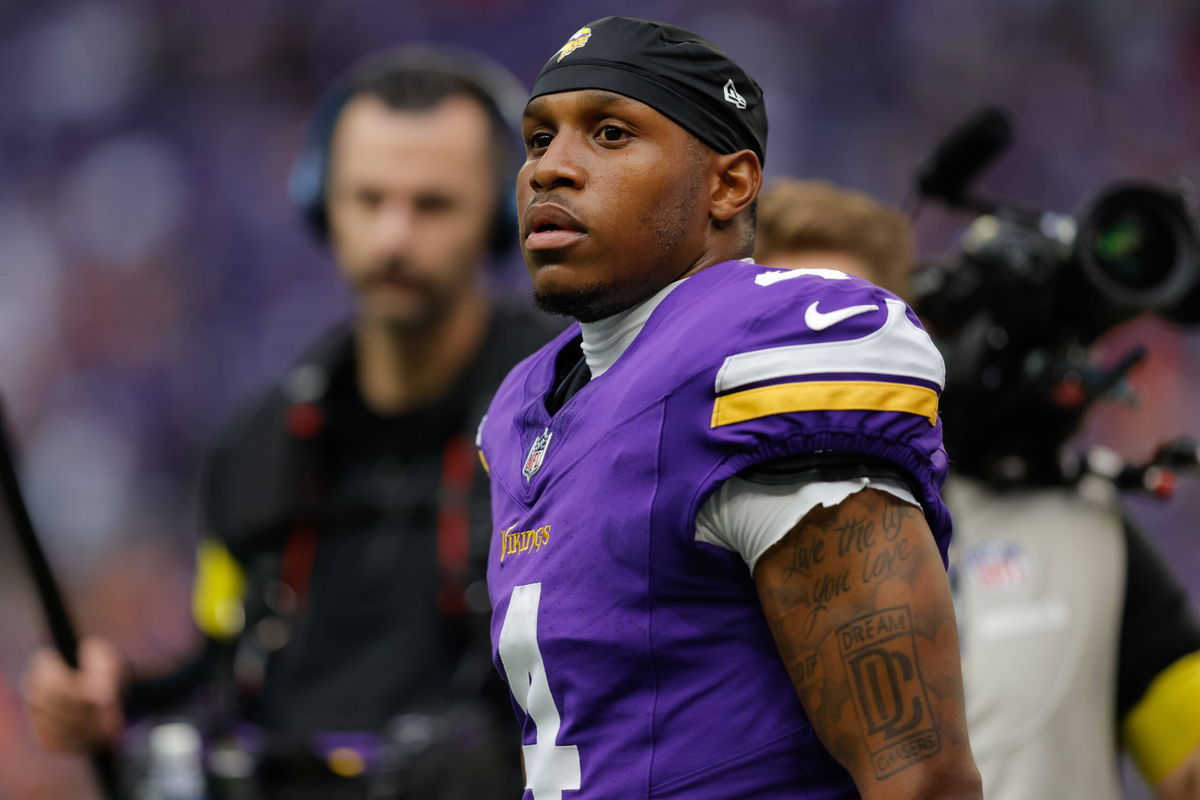
MINNEAPOLIS, MN – SEPTEMBER 21: DUPLICATE***Minnesota Vikings wide receiver Rondale Moore 4***Minnesota Vikings wide receiver Myles Price 4 looks on before the NFL, American Football Herren, USA game between the Cincinnati Bengals and the Minnesota Vikings on September 21st, 2025, at U.S. Bank Stadium in Minneapolis, MN. Photo by Bailey Hillesheim/Icon Sportswire NFL: SEP 21 Bengals at Vikings EDITORIAL USE ONLY Icon250921113
Imago
MINNEAPOLIS, MN – SEPTEMBER 21: DUPLICATE***Minnesota Vikings wide receiver Rondale Moore 4***Minnesota Vikings wide receiver Myles Price 4 looks on before the NFL, American Football Herren, USA game between the Cincinnati Bengals and the Minnesota Vikings on September 21st, 2025, at U.S. Bank Stadium in Minneapolis, MN. Photo by Bailey Hillesheim/Icon Sportswire NFL: SEP 21 Bengals at Vikings EDITORIAL USE ONLY Icon250921113
Essentials Inside The Story
- Rondale Moore was a former second-round pick known for his speed
- Moore's career was derailed by major knee injuries in both 2024 and 2025
- Police confirmed Moore died of a self-inflicted gunshot wound
A program, a church, and just a handful of teammates. That’s what it took for Kyle Pitts to snap.
Watch What’s Trending Now!
On March 6, 2026, Minnesota Vikings wide receiver Rondale Moore was laid to rest at Northside Christian Church in New Albany, Indiana. He was 25. When Pitts looked around that church, he didn’t see a league-wide tribute. And that didn’t sit well with him. The Atlanta Falcons tight end, who shared a locker room with Moore in 2024, posted his funeral program on his Instagram story and didn’t hold back.
“Crazy how only about 6 maybe 7 of your teammates in the NFL showed up for you smfh,” Pitts wrote on his story. “All that talk and fake emotion and nobody want to show up to lay you to rest.. Just at a loss of words.”
“Be woke on who your ‘Brothers’ really are, who really rock with you in all areas of life not just in front of cameras or the public!” PItts continued. “Folks just want to throw up a post and not mean it but we ball vb as Kur said, ‘it might hurt a little’ but we Ball.”
— NFL Gossips (@GossipsNFL) March 7, 2026
The Vikings notably issued statements after Rondale Moore’s death. “We are deeply saddened by the passing of Rondale Moore.” The NFL team said, adding, “While we are working to understand the facts, we have spoken with Rondale’s family to offer our condolences and the full support of the Minnesota Vikings.”
“We have also been in communication with our players, coaches, and staff, and will make counseling and emotional support resources available to anyone in need.”
Head coach Kevin O’Connell called Moore “a humble, soft-spoken, and respectful young man who was proud of his Indiana roots. As a player, he was disciplined, dedicated and resilient despite facing adversity multiple times as injuries sidelined him throughout his career.” The HC further wrote that the team was “heartbroken.”
Imago
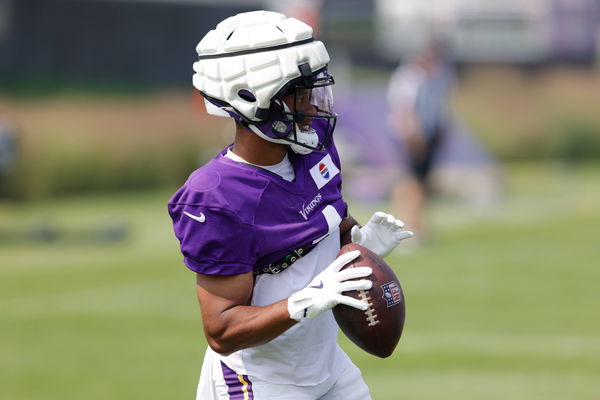
EAGAN, MN – AUGUST 02: Minnesota Vikings wide receiver Rondale Moore 4 looks on during Minnesota Vikings Training Camp at TCO Performance Center on August 2, 2025 in Eagan, Minnesota. Photo by Bailey Hillesheim/Icon Sportswire NFL, American Football Herren, USA AUG 02 Minnesota Vikings Training Camp EDITORIAL USE ONLY Icon250802034
But Pitts wasn’t measuring grief in press releases. For him, what really matters is who shows up.
The connection between Kyle Pitts and Rondale Moore ran deeper than their Atlanta overlap. Just hours before Moore’s death, the two had spoken, a detail Pitts had shared on his Instagram. Moore was in rehab for the two preseason injuries he had faced in the last two years. Pitts understood that grind intimately, and their bond had survived every roster move.
Moore arrived in the NFL as a second-round pick out of Purdue in 2021 and became a wiry, electric return specialist. His college coach, Jeff Brohm, called him “an ultimate competitor that wouldn’t back down from any challenge.” Three teams in four years told a harder story: a career repeatedly derailed, and a player searching for football stability.
Now, the near-empty church represented more than just a failure to show up. For Kyle Pitts, it reflected a deeper issue within the league that is facing increased scrutiny over player mental health.
When the pads come off
New Albany Police Chief Todd Bailey confirmed that Rondale Moore died of a self-inflicted g****ot wound on Feb 21.
His passing, alongside that of Dallas Cowboys defensive end Marshawn Kneeland, who had sent farewell messages to family before his death, has forced a mental health conversation in the league.
After being traded to the Atlanta Falcons in 2024, Moore dislocated his right knee during training camp in August and was sidelined for the entire season.
Then, in 2025, after being traded to the Minnesota Vikings, Moore suffered a season-ending ACL injury during the 2025 preseason. This marked his second consecutive year missing an entire season due to the injury.
Imago
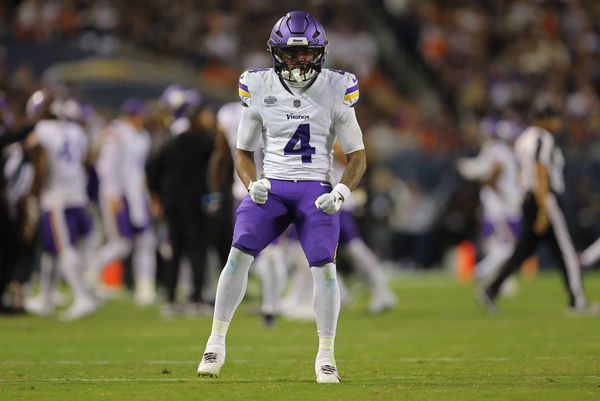
CHICAGO, IL – SEPTEMBER 08: Rondale Moore 4 of the Minnesota Vikings celebrates after a play during the second half against the Chicago Bears on September 8, 2025 at Solider Field in Chicago, Illinois. Photo by Melissa Tamez/Icon Sportswire NFL, American Football Herren, USA SEP 08 Vikings at Bears EDITORIAL USE ONLY Icon250908030
A Harvard University Football Players Health Study noted that sui***e rates among NFL players who hung up their cleats after 2011 were much higher than those in other sports like MLB and the NBA. Senior research scientist Rachel Grashow made the stakes clear with a statement.
“We found that belief in having CTE was associated with greatest psychological distress,” Grashow noted. “Many of the symptoms players worry about may actually be caused by treatable conditions, which makes early mental health care even more important.”
Former NFL star Breiden Fehoko went further on X, calling out the league on how they approach mental health.
“These NFL teams come out here and post these mental health awareness posts talking about they care about players, ‘don’t be afraid to reach out’ etc.” Fehoko fired off on X. “All they care about is what you bring to the table when it’s game day.”
“Most players don’t wanna get help inside the building of an NFL organization because they know you’ll get looked at differently,” Fehoko added.
Veteran safety Jamal Adams also posted a statement on X, calling out media and fans for labeling a player injury prone without realizing how it can worsen someone’s mental health.
“I’m not jumping to conclusions, but let me say this. Fans and media be quick to label a player ‘injury prone’ [when] we don’t choose to get hurt,” he wrote. “Y’all don’t see the rehab, the pain, the mental drain it causes. The process can make you lose yourself. This s*** is real. No matter how support you get, you still gotta fight that battle alone.”
I’m not jumping to conclusions, but let me say this. Fans and media be quick to label a player “injury prone” We don’t choose to get hurt… sometimes shit just happens. Y’all don’t see the rehab, the pain, the mental drain it causes. That process can make you lose yourself. This… https://t.co/RBhIcNBwyh
— Jamal Adams (@Prez) February 22, 2026
Rondale Moore was 25 and running out of chances with mounting injuries when the game closed its doors on him. But between a press release and a packed pew lies a gap the NFL has yet to close. Kyle Pitts saw that at the church. What the league does with that silence will define how it remembers Moore.