
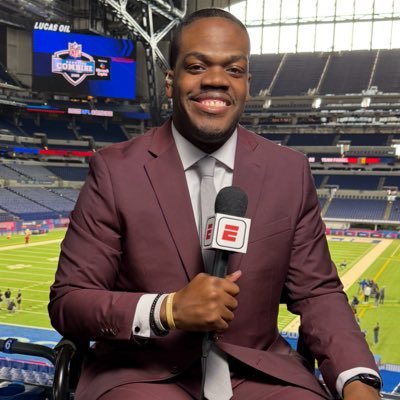
Jordan Reid has built his reputation through detailed NFL Draft analysis and deep insight into college football prospects. Known for his scouting reports and evaluations, he focuses on breaking down player performance, potential, and fit at the professional level.
Watch What’s Trending Now!
While his work keeps him in the spotlight, he shares relatively little about his personal background. That’s why questions around his ethnicity continue to surface, even as he keeps the focus firmly on his analysis.
Where is Jordan Reid from, and what is Jordan Reid’s Nationality?
Jordan Reid was born on June 13, 1991, in High Point, North Carolina, United States, a place that played a key role in shaping both his personality and passion for football. Growing up in High Point, Reid was immersed in a sports-driven environment from a young age, where discipline, competition, and community support helped mold his early ambitions.
Now in his early 30s, Reid’s journey reflects the classic rise of an American football player, starting from local school systems and working his way up through dedication and consistent performance. He attended high school in his hometown, where he began to stand out for his athletic ability, laying the groundwork for his future in the sport.
Reid went on to pursue both academics and football at North Carolina Central University, a respected HBCU known for developing talented athletes. During his time there, he not only sharpened his skills on the field but also became part of a larger legacy tied to HBCU excellence and exposure.
Proudly American by nationality, Reid’s story is rooted in perseverance, hometown pride, and a steady climb through the ranks of competitive football.
What is Jordan Reid’s Ethnicity?
Jordan Reid has not publicly disclosed specific details about his ethnicity, and there is no official record confirming it in available university or media sources. His verified background primarily highlights his roots in High Point, North Carolina, and his journey through American football rather than personal demographic details.
What is clear, however, is his strong connection to the HBCU football ecosystem through his time at North Carolina Central University. NCCU is part of a long-standing network of Historically Black Colleges and Universities that have played a major role in developing football talent and creating opportunities for athletes who might otherwise go unnoticed on bigger stages.
Reid’s work within this space, both as a player and later as a football analyst focused on HBCU prospects, places him in close alignment with the broader African American collegiate sports tradition. However, it is important to separate context from confirmation; his ethnicity itself is not officially stated in public records.
Rather than relying on assumptions, his story is best understood through his career path: a North Carolina native who rose through the American football system and built a reputation closely tied to HBCU visibility and player development.
Is Jordan Reid Christian?
Jordan Reid has not publicly spoken about his religious beliefs, and there is no verified information in official profiles or media coverage that confirms whether he follows Christianity or any other faith. His available biographies mainly focus on his football journey, his development as a player, and his connection to North Carolina Central University.
Because of this, his religion remains private and unconfirmed. Like many athletes, Reid appears to keep his personal beliefs out of public discussion, choosing instead to highlight his professional work in football and his role in promoting HBCU talent.
It’s also important not to assume religion based on cultural or institutional background. While HBCUs often exist within communities where faith plays an important role socially and culturally, that does not automatically reflect an individual athlete’s personal beliefs.
In Reid’s case, what stands out most is not his private life but his contribution to football, both as a player and later as someone involved in showcasing HBCU prospects. His story is better understood through his career path than through speculation about his personal faith.