Imago
Seattle Seahawks strong safety Kam Chancellor (31) celebrates a hit on St. Louis Rams’ Stedman Bailey in the first half of an NFL football game, Sunday, Dec. 29, 2013, in Seattle. (AP Photo/John Froschauer)
Imago
Seattle Seahawks strong safety Kam Chancellor (31) celebrates a hit on St. Louis Rams’ Stedman Bailey in the first half of an NFL football game, Sunday, Dec. 29, 2013, in Seattle. (AP Photo/John Froschauer)
The Seattle Seahawks have officially won the Super Bowl, thanks to their dominant defense and their impressive roster building.


On this week’s episode of the ES Draftcast with Tony Pauline, NFL Draft Expert Tony Pauline and ES’ NFL Editor-in-Chief Tim Wood broke down the construction of Seattle’s roster and how it was built to win.
Watch What’s Trending Now!
Pauline commented on the importance of a good head coach and roster building.
“Coaching in the day and age of unfettered free agency with the salary cap is as important as anything, if not more important than talent, Pauline said. “Because you’re trying to fill positions with inexpensive players since you’re paying your stars so much and have to stay under the salary cap. That was proven by the Seattle Seahawks.”

Where Does Seahawks Still Lack Elite Talent?
Let Tony do the scouting, you just make the pick.
Pick your positions. Get Tony’s top 5:
The Seattle roster has its stars. Jaxon Smith-Njigba earned Offensive Player of the Year honors, and Leonard Williams has been dominating the league for years. But it was also the quantity of non-stars who contributed to the win.
Kenneth Walker III joined an elite club of running backs to win Super Bowl MVP despite barely passing 1,000 rushing yards in the regular season, and Sam Darnold was serviceable as a starting quarterback, but not the passer you’d expect to head a Super Bowl team.
The Seahawks are built on having a high quantity of high-level starters rather than cashing out on superstars. From big impact draft picks to budget-free agency deals, it was a combination of scheming, budgeting, and coaching that led to Seattle’s second Super Bowl win.
2000 Baltimore Ravens
Imago
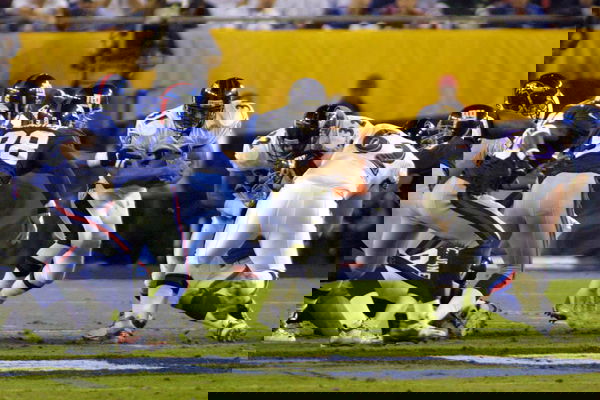
Bildnummer: 00288871 Datum: 28.01.2001 Copyright: imago/Ed Cornejo. Running Back Jamal Lewis (Ravens, mit Ei) bricht durch; New York Giants – Baltimore Ravens 7:34. XXXV. Super Bowl, Superbowl, Endspiel, Finale Tampa / Florida Raymond James Stadium Dynamik, American Football Herren Mannschaft USA Gruppenbild Aktion Personen
Pauline name-drops the 2000 Baltimore Ravens Super Bowl-winning roster. This Ravens team had a historic defense, allowing an incredible 10.3 points per game.
Similar to the Seahawks, the Ravens won games off the back of their defense. They dominated teams defensively and relied on their running backs to control the game on offense. Baltimore logged 2,199 rushing yards and 9 touchdowns on the ground.
Quarterback Trent Dilfer wasn’t asked to do much. He took over halfway through the season, appearing in 11 games and starting in eight. He ended the season with just 1,502 passing yards and 12 touchdowns. Dilfer led the Ravens offense to 20.8 points per game.
The Ravens did, however, have stars. Hall of Fame linebacker Ray Lewis was on his second contract with Baltimore, and legendary tight end Shannon Sharpe, despite being 32 years old, was still playing at a high level.
This Ravens team is best known for the legendary defense, often being referred to as the greatest of all time. While they have differences in roster construction, similarities like a top-ranked defense, serviceable quarterback play, and a focus on the run game make these teams similar.
The 2000 Ravens defeated the New York Giants 34-7 in Super Bowl XXXV.
2013 Seattle Seahawks
Imago
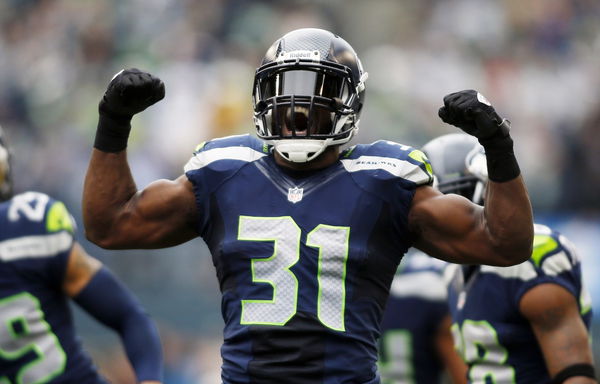
Seattle Seahawks strong safety Kam Chancellor (31) celebrates a hit on St. Louis Rams’ Stedman Bailey in the first half of an NFL football game, Sunday, Dec. 29, 2013, in Seattle. (AP Photo/John Froschauer)
To no one’s surprise, the 2025 Seahawks look a lot like the 2013 Seahawks.
The 2013 Seattle roster was a defensive juggernaut, built by drafting. Notable members of the Legion of Boom, Richard Sherman, Bobby Wagner, and Earl Thomas, were on rookie contracts, allowing the Seahawks to flesh out their roster.
While Seattle didn’t find their quarterback in free agency, Russell Wilson was still a young player and was working towards earning the label as a star. Seattle relied on a heavy run game that featured star running back Marshawn Lynch. The dominance of their defense allowed the offense to focus on establishing the run. Lynch ended the season rushing for 1,257 yards and 12 touchdowns on 4.2 yards per carry.
But the 2013 Seahawks offense also had explosiveness on offense that other defense-heavy rosters didn’t have. Receivers Doug Baldwin, Jermaine Kearse, and Golden Tate would all earn long NFL careers and were solid contributors. While neither had as explosive a season as Smith-Njigba, there was talent at receiver that other defense-first rosters didn’t have.
Seattle’s first Super Bowl came similarly to their second. They utilized quality starters all around to build up their defense and put an emphasis on protecting the ball offensively. Each of the Seahawks Super Bowls has come under a defensive head coach.
The 2013 Seahawks defeated the Denver Broncos 43-8 in Super Bowl XLVIII.
2002 Tampa Bay Buccaneers
Imago
Bildnummer: 00815682 Datum: 26.01.2003 Copyright: imago/KAP/Christiane Müller
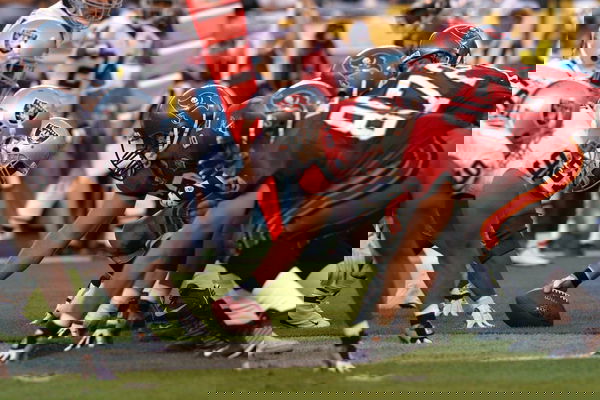
Center Jeff Christy (Tampa Bay Buccaneers, 62) steht Defensive Tackle Rod Coleman (57, Oakland Raiders) an der Line of scrimmage gegenüber; Tampa Bay Buccaneers – Oakland Raiders 48:21, Vdig, quer, Zweikampf, Duell, Pille, Ei, Snap, Linie NFL 2002/2003, Super Bowl XXXVII, Superbowl, Finale, Endspiel San Diego / Kalifornien Spannung, American Football Herren Mannschaft USA Gruppenbild Aktion Personen
I’m assuming you get the trend now.
Led by Jon Gruden, who was acquired in a trade, the 2002 Tampa Bay Buccaneers would go on to win the Super Bowl on the backs of their elite defense.
Similar to Darnold, quarterback Brad Johnson was a veteran quarterback looking for a home. Johnson was in his second season with the Buccaneers when they became champions, and he was serviceable. The then 34-year-old quarterback threw for 3,811 yards, 26 touchdowns, and 8 interceptions.
While Johnson played well, it was the Buccaneers’ defense that only allowed 12.3 points per game, which earned Tampa Bay a Super Bowl.
The Buccaneers also built their roster through drafting, but plenty of their stars were already on second contracts. Legends such as Derrick Brooks, Warren Sapp, John Lynch, and Ronde Barber highlight the elite roster Tampa Bay built.
The Buccaneers beat the Oakland Raiders 48-21 in Super Bowl XXXV.
2015 Denver Broncos
Imago
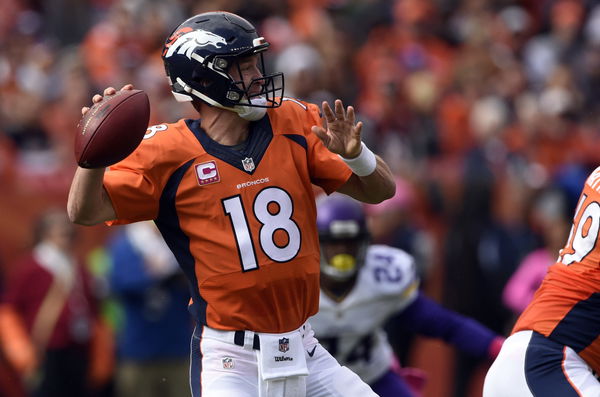
DENVER, CO – OCTOBER 4: Peyton Manning (18) of the Denver Broncos passes the ball for a gain of 27 yards. The Denver Broncos played the Minnesota Vikings at Sports Authority Field at Mile High in Denver, CO on October 4, 2015. (Photo by Helen H. Richardson/The Denver Post)
Darnold at least played well for the Seahawks en route to their Super Bowl. You can’t say the same for the 2015 Denver Broncos.
Peyton Manning was on the back end of his career and was terribly inefficient. In 2015, Manning threw for 2,249 yards and 9 touchdowns. Oh, and 17 interceptions.
Despite the terrible quarterback play, the Broncos were able to win a Super Bowl with an elite defense. From standouts in the second with Aquib Talib and Chris Harris Jr, to the undeniable presence of Von Miller, the Broncos defense terrorized NFL offenses.
Similar to the Seahawks running back duo of Walker III and Zach Charbonnet, the Broncos relied on a two-running back system. Ronnie Hillman led the team with 863 rushing yards, and C.J. Anderson quickly followed with 720 of his own.
With a roster built around limiting opposing offenses and controlling the game with a strong run, the 2015 Broncos have their fair share of similarities to the 2025 Seahawks.
The 2015 Broncos defeated the Carolina Panthers 24-10 in Super Bowl 50.