
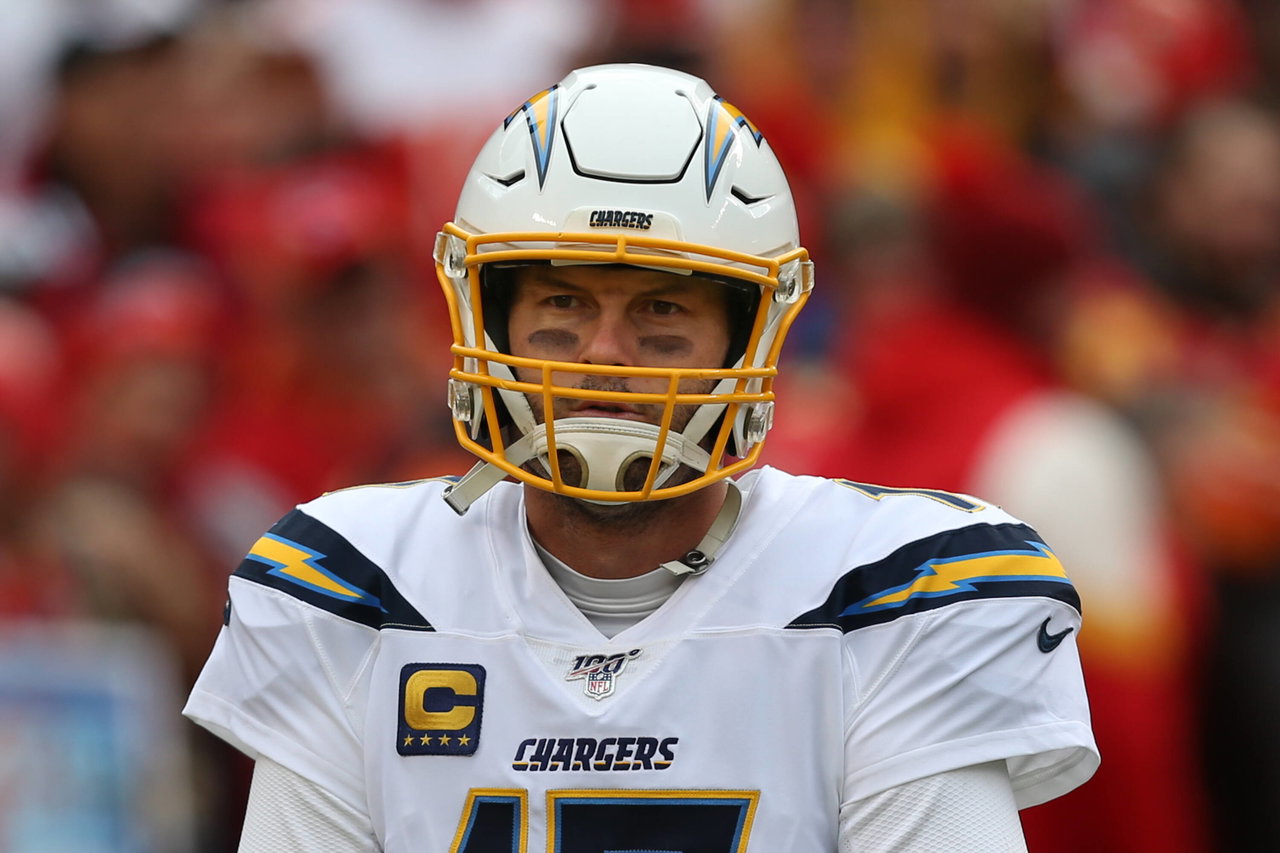
Philip Rivers has returned to the college program where his football journey began, but his appointment as NC State’s head coach has raised questions. FOX Sports Radio host Rob Parker questioned whether Rivers’ NFL career and high school coaching background are enough preparation for one of college football’s biggest jobs.
Watch What’s Trending Now!
During FOX Sports Radio’s The Odd Couple, Parker questioned why NC State would pass over experienced coaches in favor of a celebrated former player.
“Philip Rivers, he’s not qualified. I know he played football,” Parker asserted. “There are plenty of guys who are out there who are actually coaches, who have experience of being coaches.”
Though Parker respects Rivers’ playing career, his language left little room for nuance. He argued that Rivers’ reputation as an NFL star should not automatically make him a suitable candidate for a major college head-coaching job. He took aim at what he sees as a growing tendency for programs to prioritise familiar names over coaching credentials.
“Why are you doing this? Stop big-timing people just cuz they have a name. Oh yeah. Former NFL player. Everybody knows who he is. Does that mean he can coach?” Parker asked.
Rivers has the playing résumé to command attention. He starred at NC State from 2000 to 2003, setting school records with 13,484 passing yards and 95 touchdown passes. He then spent 16 seasons with the Chargers, in both San Diego and Los Angeles, before finishing his career with the Indianapolis Colts in 2020. Rivers ended his NFL career with 63,984 passing yards, 425 touchdown passes, and eight Pro Bowl selections.
His coaching experience, however, has come at the high school level. Rivers led St. Michael Catholic High School in Alabama for six seasons, compiling a 48-20 record and reaching the state semifinals in both 2024 and 2025. While still coaching, he also made an unexpected return to the NFL in December 2025, starting three games for the Colts after joining their practice squad.
For Parker, those credentials do not erase the experience gap between Rivers and coaches who have spent years working towards a college head-coaching opportunity. He suggested that decision-makers are being swayed by celebrity rather than assessing whether a candidate is ready for the responsibility.
“The glare of celebrity is all they look at. Whether someone is qualified or not, or put in their time. Is this right for the kids?” Parker added.
He also stressed that former players deserve respect for reaching the NFL but argued that their playing careers should not let them bypass the traditional coaching path.
“Much respect for you to make the NFL. But there’s plenty of coaches who, on the sidelines, even at the NFL, who would die to be a head coach at some of these programs given the opportunity,” Parker added.
The hosts brought up Jeff Saturday’s appointment as interim head coach of the Indianapolis Colts in 2022 as a cautionary example. Saturday had coached at the high-school level and worked as a Colts consultant, but had no previous NFL or college head-coaching experience. He won his first game, then lost his final seven, finishing 1-7.
Parker said he opposed Saturday’s appointment from the start, arguing that it sent the wrong message to coaches who had spent years working their way up. He also recalled the excitement after Saturday’s first win, when some former players saw the appointment as proof they, too, could skip the conventional route into coaching.
The conversation then widened to the lack of opportunities for African-American coaches in college football and the NFL. The hosts asked why prominent former players are not always considered for openings at major programs, with Parker arguing that the coaching pathway remains uneven. The discussion also touched on limited representation of African-American head coaches in college football, where only 13 of 136 FBS programs had Black head coaches in 2026.
Parker also pointed to Robert Griffin III, a candidate for Baylor’s head-coaching vacancy. The former Bears quarterback, who won the Heisman Trophy in 2011, had publicly expressed interest in the job and spoken with athletic director Doug McNamee. He was expected to interview despite having no previous college or professional coaching experience.
NC State athletic director Boo Corrigan defended the decision to hire Rivers, arguing that his route into coaching was different from the traditional progression through college assistant positions.
“It wasn’t like there was a number of other opportunities to be a [graduate assistant] and do all those things,” Corrigan said. “He grew up a coach’s son. As soon as he got done playing, started coaching. It was so good that he went back and played last year. I think it’s a different progression, but I’m really excited about where we are.”
Rivers also has a personal connection to the program through his son, Gunner, a four-star quarterback prospect in the 2027 recruiting class who committed to NC State earlier this year. The hiring brings the former Wolfpack star back to the university more than two decades after he left.
Rivers now gets to show that his opportunity to show that his experience as a quarterback and high-school coach can translate to the college level. But Parker’s criticism has brought a wider question back into focus: should a famous playing career open the door to a head-coaching job, or should candidates have to work their way through the coaching ranks first?