
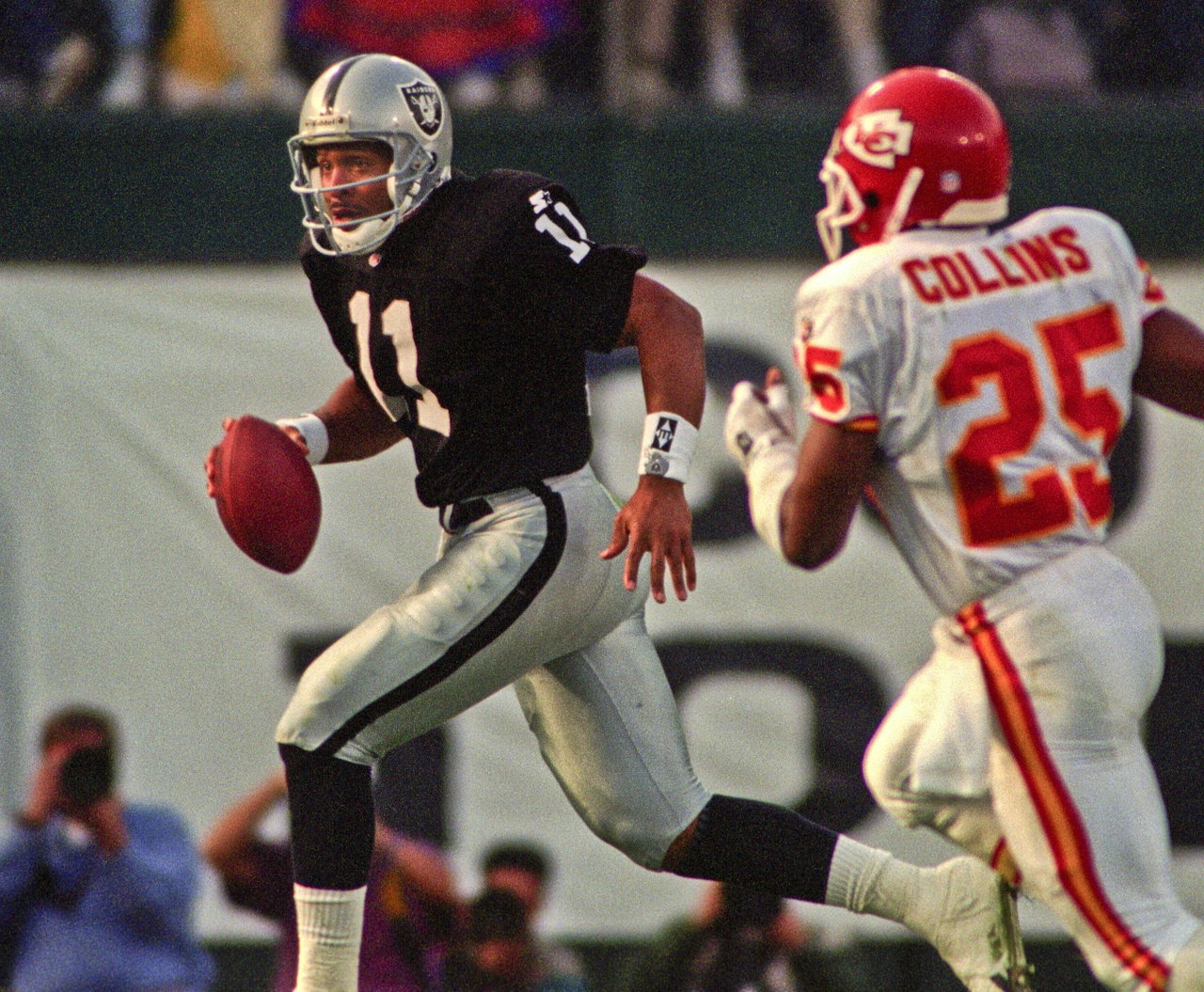
Mark Collins won two Super Bowls with the New York Giants, watching teammates and rivals sacrifice their bodies for the league’s rise to dominance. Collins, along with other former players, is now calling out the league, arguing that its support for men who contributed to its success falls well short of what they’re owed.
Watch What’s Trending Now!
“They could do a f—— lot more. This is a $3 trillion business,” Mark Collins said, per SI’s Matt Verderame. “There are guys who played in this league, but not a lot of us. They could put in an annual quasi-salary of $200,000 to former players, stuff like that. They could do a lot of other things. But in this sport, whether it’s one year, two years, or 13 or 14 years, it’s a contact sport, it’s a tackle sport. It’s not normal.
“Some people try to say, well, some of this could happen to you just by getting older. It could [also] be sped up just by playing football. It’s a hard game. Suicide, CTE, dementia all this stuff is sped up. This is something we signed up for. We get it. I understand. It is a game. It’s a fantastic sport. But a lot of guys put their bodies on the line and sometimes things happen, but the league has to see that as well and take care of those guys who played this game, who got them rich.”
Mark Collins spent his first eight seasons in a Giants uniform, appearing in nine playoff games including two Super Bowl wins, XXI and XXV. He’s one of the lucky ones, at least by his own admission. Unlike several of his former teammates and rivals, Collins hasn’t been diagnosed with any brain-related condition, although he did get a concussion in 1986 when he tried to return a punt even after his helmet fell off.
He’s watched men he once competed against, like Dave Duerson, die by suicide and later be diagnosed with CTE, and that’s shaped how urgently he wants the league to step up support for former players.
Even without a diagnosis of his own, Collins admits there’s a quiet unease that never fully goes away. And that worry isn’t coming out of nowhere. A study published last month found real weight behind it.
Research released by the British Medical Journal looked at 878 NFL players who died between 2016 and 2021 and found that at least one in four had CTE. 235 of the 878 donated their brains, and out of those, 215 were found to have CTE.
The league has made some efforts to deal with the consequences. The settlement regarding concussions allows retired players to receive free tests for baseline brain function and financial compensation of up to $5 million in case of diseases such as ALS, Parkinson’s, Alzheimer’s, dementia, and CTE (only upon death).
Players don’t have to prove football directly caused their condition to qualify, and the fund has no cap and stays open for decades. The NFL has also put money toward safety and education programs, including efforts to make youth football safer.
Still, Collins isn’t the only former player saying it isn’t enough.
Mark Jackson Criticizes NFL’s Response to CTE Crisis
Mark Jackson doesn’t carry around anger about football, even though he’s fairly certain the sport left him with CTE. The former wide receiver, who played for the Broncos, Giants, and Colts, spent his career taking hits that have added up over the decades.
He told Sports Illustrated he has “at least four documented concussions,” including repeated incidents in Minnesota where he was knocked out cold. Jackson brushed it off now rather than letting it eat at him, insisting he’s not interested in playing “the angry guy” role.
But peace with himself doesn’t mean peace with the league.
“Although I’m disappointed that the NFL hasn’t shelled out a quarter of a million or three hundred thousand to every player and called it a day as opposed to having this convoluted system of checking guys to see if you actually have CTE,” Jackson said. “Yeah, I have CTE. It’s almost 100% positive that I do because I have the documented cases in Minnesota.”
More than three decades removed from his playing days, Jackson has also come to see the business side of football with clearer eyes.
“I believe football is a business. I didn’t understand that. Your whole life as an athlete, you’re taught that we’re a family. We take care of each other. We look out for each other. We sacrifice for each other. And you think that the NFL is excluded from that, but it’s not until the end of your career that you realize this is a business.”
Jackson acknowledged that the league has done a lot to improve player safety, but said he’s more concerned about the longevity of former players than the safety of those currently in the league.
At 63, Jackson isn’t hiding from what the game left behind.