Imago
Credits: IMAGO
Imago
Credits: IMAGO
Brett Favre just tossed a surprising MMA grenade into the timeline, and one line from the NFL legend was enough to spark a fresh wave across combat sports. It’s a headline that sounds like pure nostalgia at first until you trace where it came from and why the fight world is actually engaging with it.
Watch What’s Trending Now!
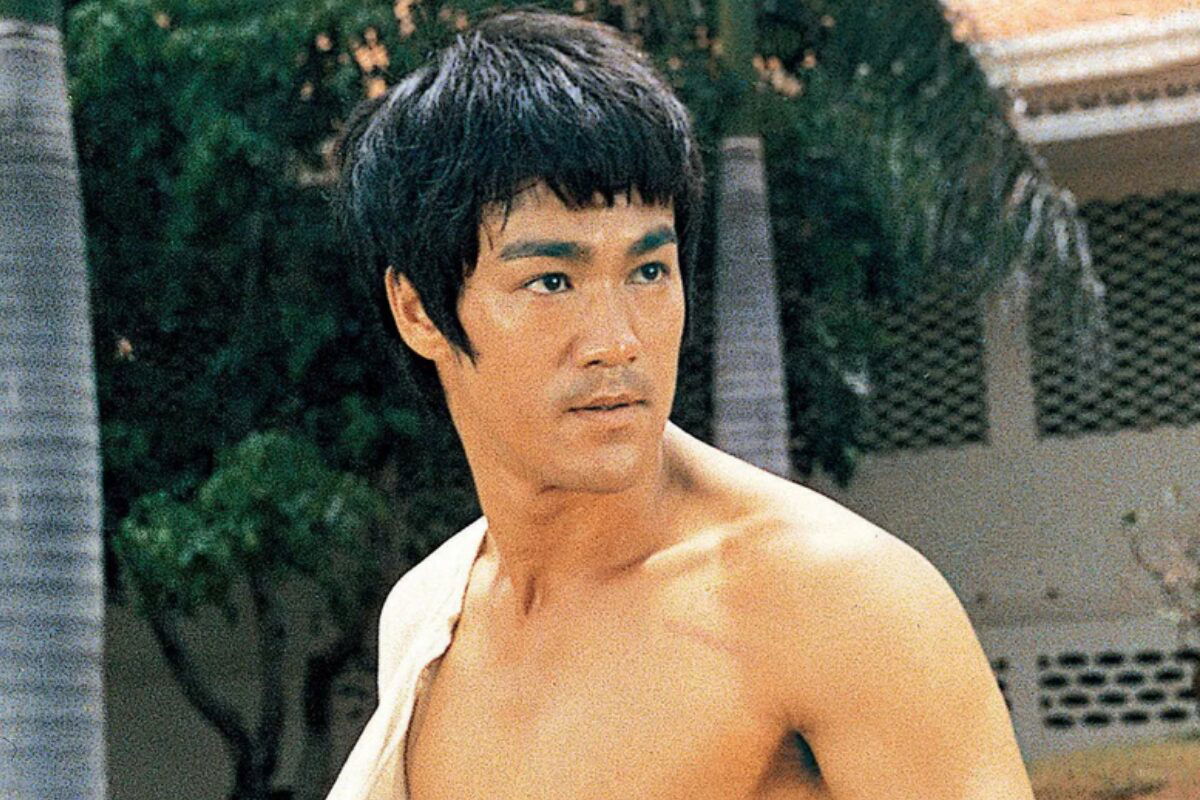
“I’m sure Bruce Lee could be UFC champion today,” according to an X post by NFL legend Brett Favre.
Brett Favre recently shared a quick reaction to a post from David Kano about a podcast episode featuring Forrest Griffin. The conversation centered on a fun but fascinating hypothetical: how would Bruce Lee perform in today’s MMA world?
Griffin appeared on the first episode of the 4th and Favre, where he dove into how much MMA has evolved over the years. At one point, he was asked the big question about Lee’s potential in the modern UFC.
I’m sure Bruce Lee could be UFC champion today. https://t.co/9QDSYirtt0
— Brett Favre (@BrettFavre) February 17, 2026
“No idea, but he would be really good,” Griffin said on the 4th and Favre. “Do you know why? Because he would train as everybody else trains. He was really smart for his time back then, and he understood a lot about mixing your martial arts, as they say. So nothing would change. He would wrestle, he would jits, and he would do all of those.”
Griffin’s point was simple: it’s Bruce Lee’s mindset that would make the difference. He believed Lee was ahead of his time, and he’d adjust, evolve, and train just like any modern fighter and perform.
To explain how much sports in general have changed, Griffin used Favre as an example. He compared the training tools and information available during Favre’s early NFL days to what athletes have now.
“So, think about, like, when Brett Favre was coming up, you know, and they were… You know, overnighting if they could or two-day shipping VHSs so you could do your homework,” he said. “Now, there’s a platform, multiple platforms, so the guys are watching it from every angle. I think knowledge, right—it just goes so fast. It’s on the internet; I can see a kid in China fight and examine the technique. That would have taken, you know, 15 years to make its way to me in my little small Athens, Georgia, right? But now that technique’s everywhere.”
It was an easy comparison to understand. Back then, studying film meant waiting for tapes. Now, fighters and athletes can break down techniques instantly from anywhere in the world. Griffin’s message was that talent still matters, but access to knowledge has completely changed the game.
Interestingly, it’s actually not the first time Favre’s name has been mentioned in connection with the UFC. Favre got involved with the UFC after former UFC fighter Chris Lytle put out his anti-bullying book, “Lights Out on Bullying.”
The initiative was brought to Favre through Sqor, and he didn’t hesitate. For Favre, the issue is clearly personal, particularly with children and grandchildren being raised in a school setting where bullying is a real concern. That perspective didn’t appear overnight; it was forged over years, beginning with Favre’s early life and football journey.
Brett Favre’s path to NFL greatness
Brett Favre was born in Gulfport and raised in Kiln, Mississippi, and his football journey started at Hancock North Central High School. He continues playing college football at the University of Southern Mississippi, where it almost took a different turn.
The scholarship offer he received came with the idea that he might play defensive back. Favre had other plans. He pushed for the quarterback position, won the job as a freshman, and never looked back.
Favre entered the NFL as a second-round pick of the Atlanta Falcons in 1991 but barely saw the field. A year later, a trade to the Green Bay Packers changed everything. In Green Bay, he became the face of the franchise’s revival, leading the team to a win in Super Bowl XXXI, earning three straight MVP awards from 1995 to 1997, making 11 Pro Bowls, and collecting three first-team All-Pro honors.

USA Today via Reuters
Syndication: USA TODAY, Brett Favre has said he didn t know the money he received came from welfare funds. Xxx Sline Brett Favre 081020 Dcb Jpg, 28.10.2021 13:56:50, 17044745, Brett Favre, USATNSYNDICATION, USA TODAY PUBLICATIONxINxGERxSUIxAUTxONLY Copyright: xShelleyxMaysx 17044745
Despite his Ironman reputation, it was not always easy for him physically. He struggled with a concussion in 2004, ankle surgery in 2007, and even a torn biceps tendon in 2008 with the Jets. However, he broke an NFL record with 321 consecutive starts and 366 interceptions.
Favre retired officially on January 17, 2011, after spending the 2010 NFL season with the Vikings, and was inducted into the Hall of Fame in 2016. With such achievements under his belt, Favre truly left an impression, and his words still make an impact.
Written by

Edited by

Kinjal Talreja