Imago
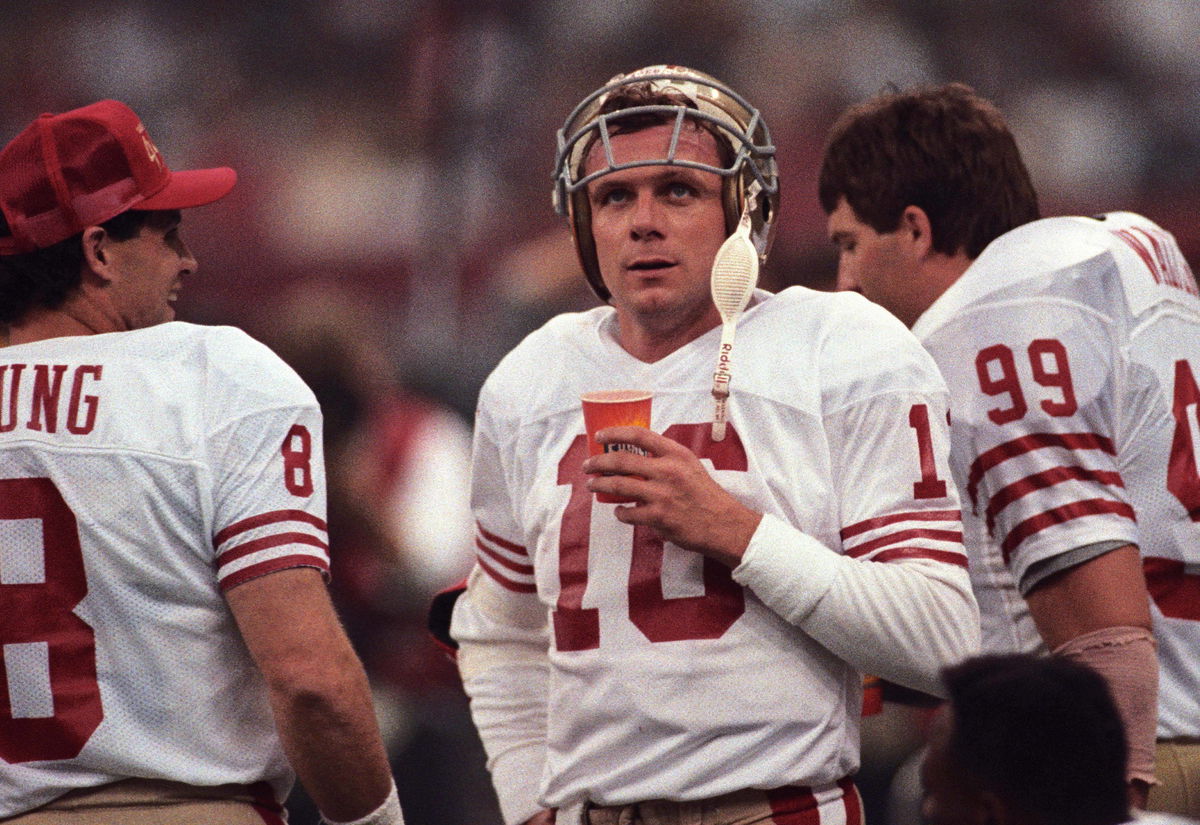
NFL, American Football Herren, USA Super Bowl XXIV Jan 28, 1990 New Orleans, LA, USA FILE PHOTO San Francisco 49ers quarterback Joe Montana 16 on the sidelines with quarterback Steve Young 8 against the Denver Broncos during Super Bowl XXIV at the Superdome. The 49ers defeated the Broncos 55-10. New Orleans Louisiana UNITED STATES, EDITORIAL USE ONLY PUBLICATIONxINxGERxSUIxAUTxONLY Copyright: xBobxDeutschx 8949027
Imago
NFL, American Football Herren, USA Super Bowl XXIV Jan 28, 1990 New Orleans, LA, USA FILE PHOTO San Francisco 49ers quarterback Joe Montana 16 on the sidelines with quarterback Steve Young 8 against the Denver Broncos during Super Bowl XXIV at the Superdome. The 49ers defeated the Broncos 55-10. New Orleans Louisiana UNITED STATES, EDITORIAL USE ONLY PUBLICATIONxINxGERxSUIxAUTxONLY Copyright: xBobxDeutschx 8949027
Essentials Inside The Story
- Joe Montana started and won four Super Bowls with the 49ers
- Joe earned his famous nicknames by leading 31 fourth-quarter comeback wins during his career
- Joe Montana was the first player to be named the Super Bowl Most Valuable Player (MVP) three times
Imagine mastering a language for four years, then showing up at your new job only to discover everyone speaks in code. That was Joe Montana’s welcome to the NFL. After torching defenses and making a name for himself at Notre Dame, the legendary quarterback joined the San Francisco 49ers with expectations already attached to his name. But the first challenge there wasn’t the one most people assume.
Watch What’s Trending Now!
“No, not really,” Montana said when asked if it was easy to make the switch from CFB to the NFL in an interview with Ken Goldin. “Our offensive systems were so different. At Notre Dame, we were pretty much a numbered system. And Bill’s offense when I got here was so confusing because there were numbers and words. The numbers ended up being nothing but protection, and the words kind of told everybody what to do. So it’s a little bit of a learning curve to get to really understand it.”
Starting at Notre Dame in 1974, life was simple. The Irish, under the leadership of head coach Dan Devine, ran a numbered system. Each digit meant a specific formation, direction, and player assignment. Montana called the plays, and his teammates executed. No confusion, just clear designations. And it worked wonders.
Imago
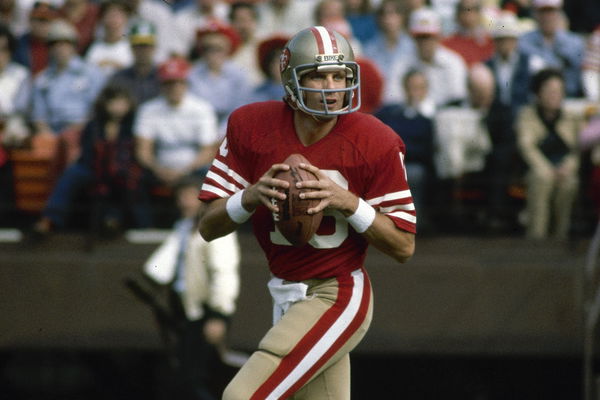
FILE – This is a 1981 file photo showing San Francisco 49ers NFL football quarterback Joe Montana. Soon after the Super Bowl matchup was set, Hall of Famer Joe Montana went to Twitter to send out a picture of his framed jerseys for the Kansas City Chiefs and the San Francisco 49ers. Montana won four Super Bowl titles in 14 years with the 49ers before finishing his career with two seasons on the Chiefs when he made one trip to the AFC championship game.(AP Photo/File)

Tony's Top Prospects For QB For 49ERS
Montana’s defining moment came at the 1979 Cotton Bowl, famously known as the “Chicken Soup Game.” Montana battled Houston and the hypothermia simultaneously on the coldest day in Dallas in years. When his body temperature dropped to 96 degrees, the doctors wrapped him in blankets and fed him chicken soup in the locker room. Most quarterbacks would’ve stayed there. But not him.
Houston held a 34-12 lead in the third quarter when Montana got back under center. He went on to torch Houston for 23 unanswered points in the fourth quarter and closed the game 35-34. Then, the 49ers drafted him in 1979, and things took a turn.
Bill Walsh’s West Coast offense was a completely different ballgame. Colors denoted formations, and numbers signaled plays. The first digit indicated back flow and protection, the second designated the passing concept. For Montana, it was like switching from addition to calculus overnight.
The learning curve was brutal, but Montana cracked the code. By 1981, he was fluent in Walsh’s language, leading the Niners to 13-3. The system that once confused him became his weapon, and four Super Bowl rings followed.
And as Montana mastered Walsh’s system, two nicknames followed him everywhere. They captured both his ice-cold composure and his knack for impossible victories.
Joe Montana and the infamous names that stuck
‘The Comeback Kid’ was a name hard-earned through Joe Montana’s Notre Dame days. Despite being a third-string quarterback, whenever he got the chance, he orchestrated massive comeback wins for his team. Back in 1977, when the Irish faced Purdue, Montana secured a 31-24 victory after taking over when the team was trailing 24-14. Cut to the NFL, and in the early 80s, the Bay Area actually held a contest to come up with a nickname for Montana. But they kept circling back to ‘The Comeback Kid,’ and the only other name that stayed throughout his career was ‘Joe Cool.’
“It became kind of thing in the newspaper for a while that they were trying to find a nickname for me and nothing really stuck,” Montana told Goldin when asked about his nicknames. “Comeback Kid stuck a little bit, and Joe Cool for some other reason.”
Montana earned these monikers by staying calm and pushing the Niners through 31 fourth-quarter comeback wins. That’s thirty-one times he erased deficits when most quarterbacks would’ve folded. And from all these comebacks, two stand above the rest.
“The Catch” from the 1982 NFC Championship game against the Dallas Cowboys is one. The Niners were trailing 27-21 with barely five minutes left on the clock when Montana worked his magic. He engineered an 89-yard drive with the season on the line. Battling three defenders, he lofted a prayer towards the back of the end zone. Dwight Clark leaped and pulled it down for a touchdown. 28-27 over Dallas with 51 seconds left. The dynasty began right there.
And then there was Super Bowl XXIII. Trailing the Cincinnati Bengals 16-13 with 3:10 left on the clock, the ball sat on San Francisco’s 8-yard line. Ninety-two yards to go. The huddle was tense, but Montana looked into the crowd and pointed, “Hey, isn’t that John Candy over there?” His teammates loosened up, and Montana went to work. With 11 plays and 92 yards under three minutes, he hit John Taylor with a 10-yard touchdown strike with 34 seconds remaining. Final: 20-16. That’s Joe Cool.
That’s where the nicknames truly lived; in those moments when everything was falling apart, and Montana acted like it was a walk in the park. He had successfully turned Walsh’s confusing system into a championship language. Joe Montana didn’t just adapt to the NFL. He rewrote what was possible when the pressure maxed out, and the clock hit zero.
Written by

Edited by

Antra Koul