
Long before ESPN became a home for the NFL and Monday Night Football, Bill Rasmussen was frustrated by the limitations of covering sports on local television. As a local sports anchor in Massachusetts, Rasmussen had only three minutes to deliver scores and highlights, with coverage largely revolving around teams such as the New England Patriots, Boston Red Sox, Celtics, and Bruins. He wanted more room for sports, and that frustration would eventually help lead to the creation of ESPN, with Sportscenter becoming the network’s first broadcast.
Watch What’s Trending Now!
However, when ESPN finally went live on September 7, 1979, Rasmussen didn’t know whether anyone was watching. After the network’s first broadcast, he waited for the phone to ring with confirmation that viewers had found the channel. It never did. Nearly five decades later, however, the network Rasmussen built has become not only one of the NFL’s biggest television homes but also one of the biggest names in sports media.
Unfortunately, the network has now lost its founder, as Rasmussen died at the age of 93 on Tuesday after battling Parkinson’s disease for more than a decade. In his honor, the network paid tribute to Rasmussen and his legacy in sports media at the end of Tuesday’s First Take segment or at least they tried. However, the network received backlash after the tribute was abruptly cut off by The Pat McAfee Show.
During the segment, Courtney Cronin broke the news of Rasmussen’s passing. However, the tribute was rushed, with each panelist given only a brief moment to share their thoughts. By the time Cronin began addressing Rasmussen’s legacy, the tribute was cut off midway through her remarks by The Pat McAfee Show‘s intro, as McAfee introduced the DraftKings Thunderdome.
But as the sports media community came together to honor the legend who made modern sports broadcasting possible, fans were understandably outraged by the sudden transition.
“Such an important tribute deserved to air in full without being cut short,” a user wrote.
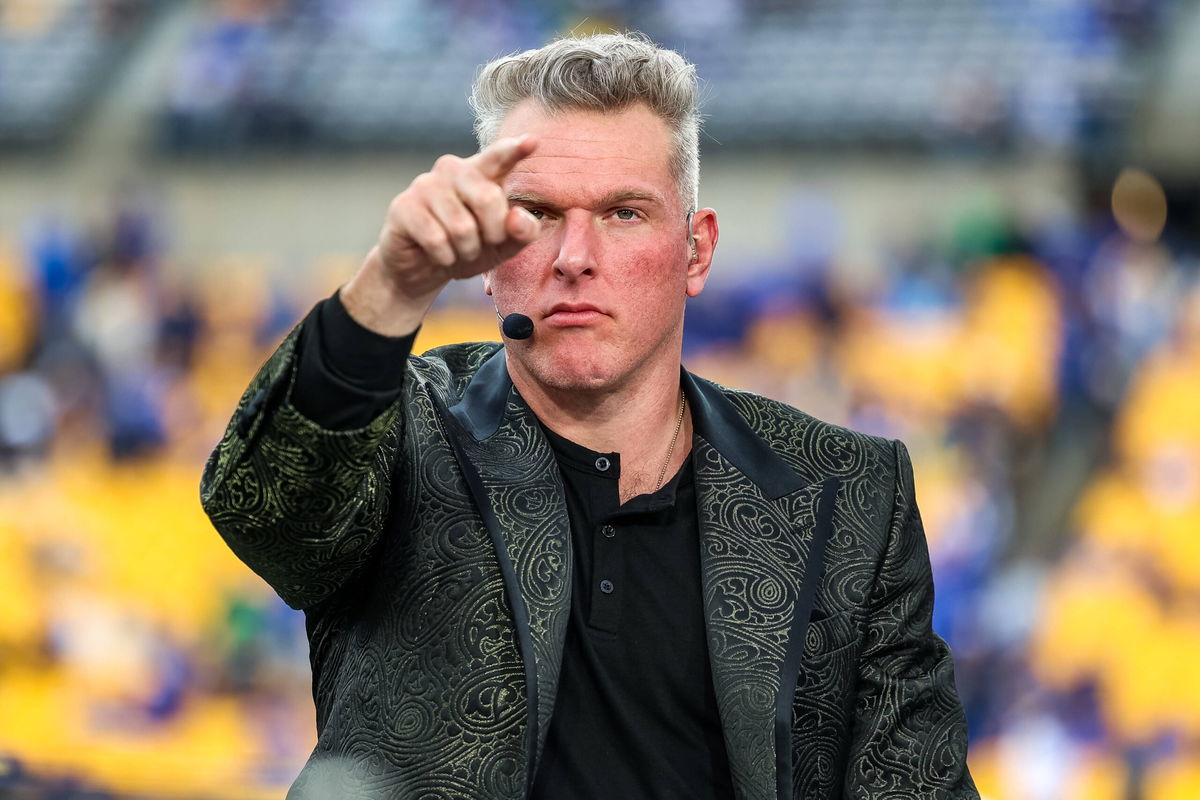
Some fans also began taking jabs at former NFL player and analyst Pat McAfee, calling him out as the reason the tribute was cut short.
“Pat McAfee owns ESPN now lmao,” wrote a fan, while another chimed in with, “Pat McAfee s***s dude.”
After retiring from the NFL, McAfee joined ESPN as a football analyst in 2017. Following a brief stint with Fox Sports’ college and NFL broadcast teams in late 2018, he returned to ESPN in 2019 as part of their Thursday Night College Football coverage.
Since then, McAfee has been a part of multiple panels on ESPN shows. In 2022, he was part of College GameDay Built by The Home Depot, and he also has a college football pregame show that has won three Emmy Awards.
At the same time, McAfee, known for his charismatic on-air presence, has faced criticism for his reporting style. The former NFL player is often seen shouting, yelling, or ranting in his broadcasts, which doesn’t sit well with a lot of viewers.
Just last year, McAfee was accused of crossing journalistic standards when he discussed an unnamed freshman’s intimate relationship with her boyfriend’s father.
The freshman and her family reportedly decided to take legal action against McAfee. But then the ESPN host issued a public apology in the matter. Now, the 39-year-old is back in the spotlight but for all the wrong reasons after his show cut off Bill Rasmussen’s tribute.
“Says a lot. They forgot where they came from. The poetic irony,” another fan wrote on ESPN, cutting short Rasmussen’s tribute, while another adding, “AKA: The current state of affairs at ESPN.”
When Rasmussen wanted to start ESPN, he had just been fired as the New England Whalers’ Communications Director. He put his everything into getting a space on a communications satellite and pitched his 24-hour TV network to many. He finally received backing in 1979 and became ESPN’s first president and CEO. Now, after his death, ESPN Chairman Jimmy Pitaro released a statement.
“Bill was a remarkable man – a visionary and an innovator who conceived the idea of a network entirely devoted to sports,” the statement read. “Quite simply, none of us would be here today if it wasn’t for Bill’s passion and all the hard work and entrepreneurial spirit he put into building ESPN in the late 1970s – key aspects of our company culture that still carry on to this day.”
Rasmussen was diagnosed with Parkinson’s disease back in 2014, and had never shied away from opening up about his disorder. According to Rasmussen:
“For some reason, Parkinson’s is kind of an orphaned malady – people don’t like to talk about it, as if it were taboo. Well, 40 years ago, people didn’t want to talk about a 24-hour sports network either as if competing with “The Big Three” broadcast networks was taboo. We never stopped asking questions, solving problems and selling the dream. A lot of really good people did believe and we see the results of that effort today.”
Rasmussen left the network after only a few years. He started contributing to different media outlets and also wrote a book, Sports Junkies Rejoice: The Birth of ESPN. While the network has surely received criticism lately because of low ratings, it remains a sports media giant built on the foundation Rasmussen helped create.