Imago
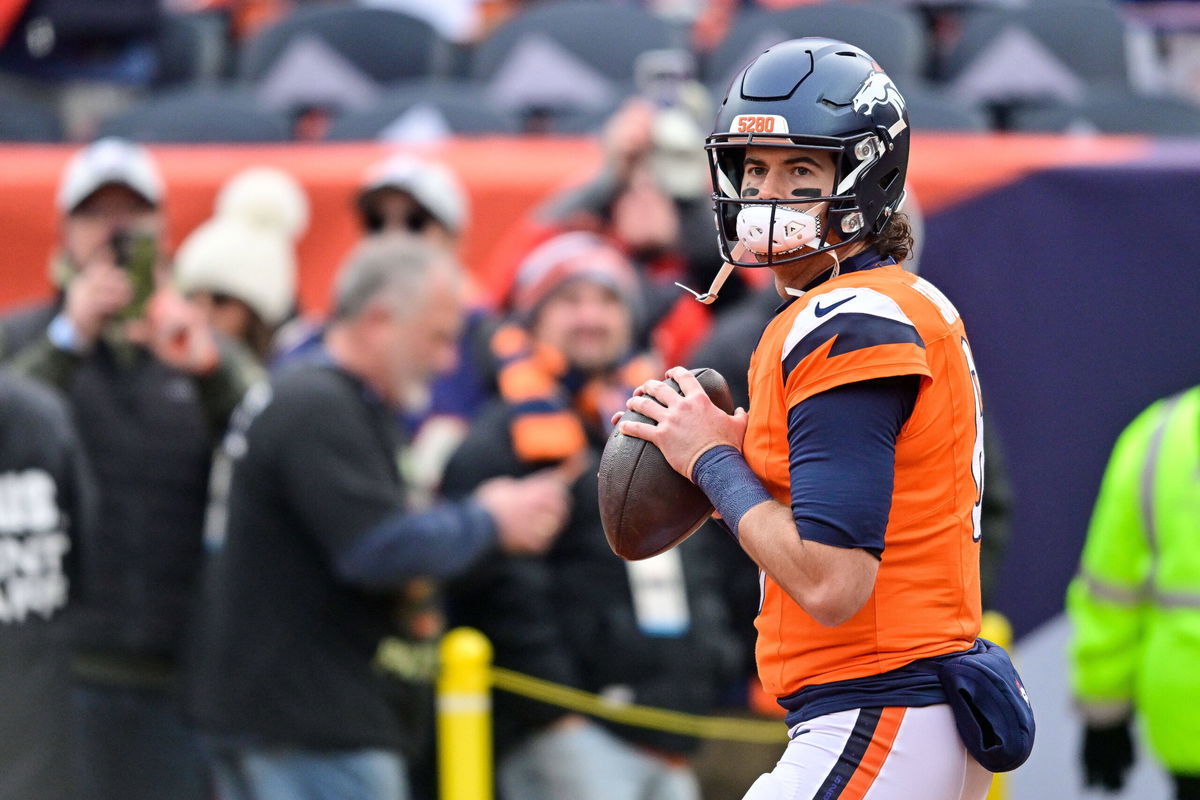
DENVER, CO – JANUARY 25: Denver Broncos quarterback Jarrett Stidham 8 warms up before the AFC Championship Game against the New England Patriots at Empower Field at Mile High on January 25, 2026 in Denver, Colorado. Photo by Dustin Bradford/Icon Sportswire NFL, American Football Herren, USA JAN 25 AFC Championship Game Patriots at Broncos EDITORIAL USE ONLY Icon132260125010
Imago
DENVER, CO – JANUARY 25: Denver Broncos quarterback Jarrett Stidham 8 warms up before the AFC Championship Game against the New England Patriots at Empower Field at Mile High on January 25, 2026 in Denver, Colorado. Photo by Dustin Bradford/Icon Sportswire NFL, American Football Herren, USA JAN 25 AFC Championship Game Patriots at Broncos EDITORIAL USE ONLY Icon132260125010
Essentials Inside The Story
- Patriots' Super Bowl run sparks pushback from a former champion.
- One second-quarter ruling quietly reframes the night.
- Execution erodes as conditions expose playoff margins.
The New England Patriots’ hard-earned ticket to Super Bowl LX has been overshadowed by a cocktail of brutal weather and a major officiating blunder. The current debate is whether the game was a test of football skill or merely a battle against Mother Nature. Though Drake Maye showcased elite poise by scoring the game’s only touchdown, Chiefs legend Mitchell Schwartz isn’t convinced that “survival of the coldest” is how a champion should be crowned.


“This is fun for regular season but I don’t think which team manages 5 inches of snow in an oncoming blizzard is the best way to determine who goes to the Super Bowl,” Schwartz wrote on X. “And trust me that’s coming from someone who LOVED playing in the snow on grass.”
Watch What’s Trending Now!
The statistics from Sunday’s contest back up Schwartz’s frustration.
At kickoff, the mercury sat at 26 degrees with a wind chill that made it feel like a biting 17. By the second half, the temperature crashed further, and visibility became a ghost. Things were so dire that ground crews were forced to deploy snowblowers just to keep the yard lines visible. As for players? They were huddling around heaters, ensuring they didn’t become numb on the grid.
Yet, the game continued until it devolved into a literal standstill.
This is fun for regular season but I don’t think which team manages 5 inches of snow in an oncoming blizzard is the best way to determine who goes to the Super Bowl. And trust me that’s coming from someone who LOVED playing in the snow on grass.
— Mitchell Schwartz (@MitchSchwartz71) January 25, 2026
The offensive rhythm was nowhere to be found, which resulted in a combined four missed field goals, a shanked punt, and endless slips on the turf.
According to Next Gen Stats, team speeds fell off a cliff as the snow deepened:
- Broncos Speed: Dropped from 9.62 mph (1st half) to 8.93 mph (2nd half).
- Patriots Speed: Dived from 10.12 mph (1st half) to 8.51 mph (2nd half).
Things were still manageable in the first half, but neither offense could get much going in the second half. Except for Andy Borregales, who managed a successful 23-yard attempt, kickers went a staggering 1-for-5.
The game reached a fever pitch in the final minutes. After a shanked 26-yard punt by Bryce Barringer gave Denver the ball at the New England 33, it seemed the Broncos were destined to tie. However, Wil Lutz’s 46-yard attempt was tipped by Leonard Taylor III, which sent the ball wide.
Moments later, Jarrett Stidham’s desperate attempt to save the game was intercepted by Christian Gonzalez. And Denver’s season ended at the Patriots’ 10-7 win.
Officiating controversy on Jarrett Stidham’s play
Another highlight from the night was the officiating. It happened in the second quarter, when the Patriots appeared to have scored a defensive touchdown after Christian Elliss forced a fumble from Stidham. Taking advantage of the moment, Elijah Ponder scooped the loose ball and raced into the end zone. But his celebration was cut short by a premature whistle.
Referee Alex Kemp initially ruled the play an incomplete forward pass. As it went under review, Kemp realized that Stidham had actually tossed a backward pass, qualifying it for a fumble.
But since the officials had already blown the play dead, the Patriots were denied the touchdown. Instead, the ball was given at the 12-yard line.
Imago
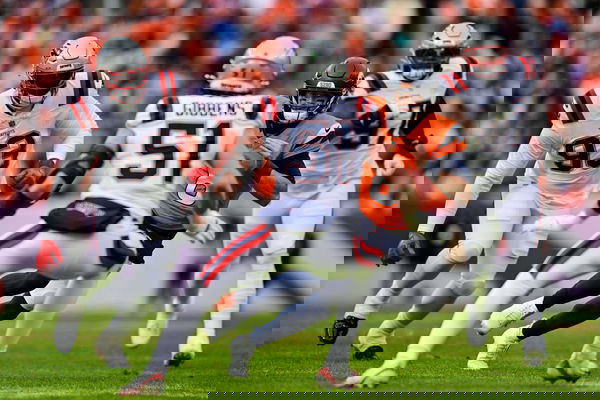
DENVER, CO – JANUARY 25: Denver Broncos quarterback Jarrett Stidham 8 runs with the ball in the second quarter against the New England Patriots the AFC Championship Game at Empower Field at Mile High on January 25, 2026 in Denver, Colorado. Photo by Dustin Bradford/Icon Sportswire NFL, American Football Herren, USA JAN 25 AFC Championship Game Patriots at Broncos EDITORIAL USE ONLY Icon132260125030
“I initially ruled it as a forward pass, which was incorrect,” Kemp said post-game, taking accountability. “The down judge explained that he extended his right arm to signal that he had a backward pass, and at that point, we determined that New England had picked up the then backward pass.”
Though Maye eventually punched it in on a designed run to make up for the lost points, the official timing mistake highlighted a dangerous lapse in judgment. That’s been the talking point of the season. Critics demand more diligence in the future, as a replay can always overturn a fumble into an incompletion. But what it can’t do is “un-blow” a whistle that already killed a live scoring opportunity.
Related Newsletters