
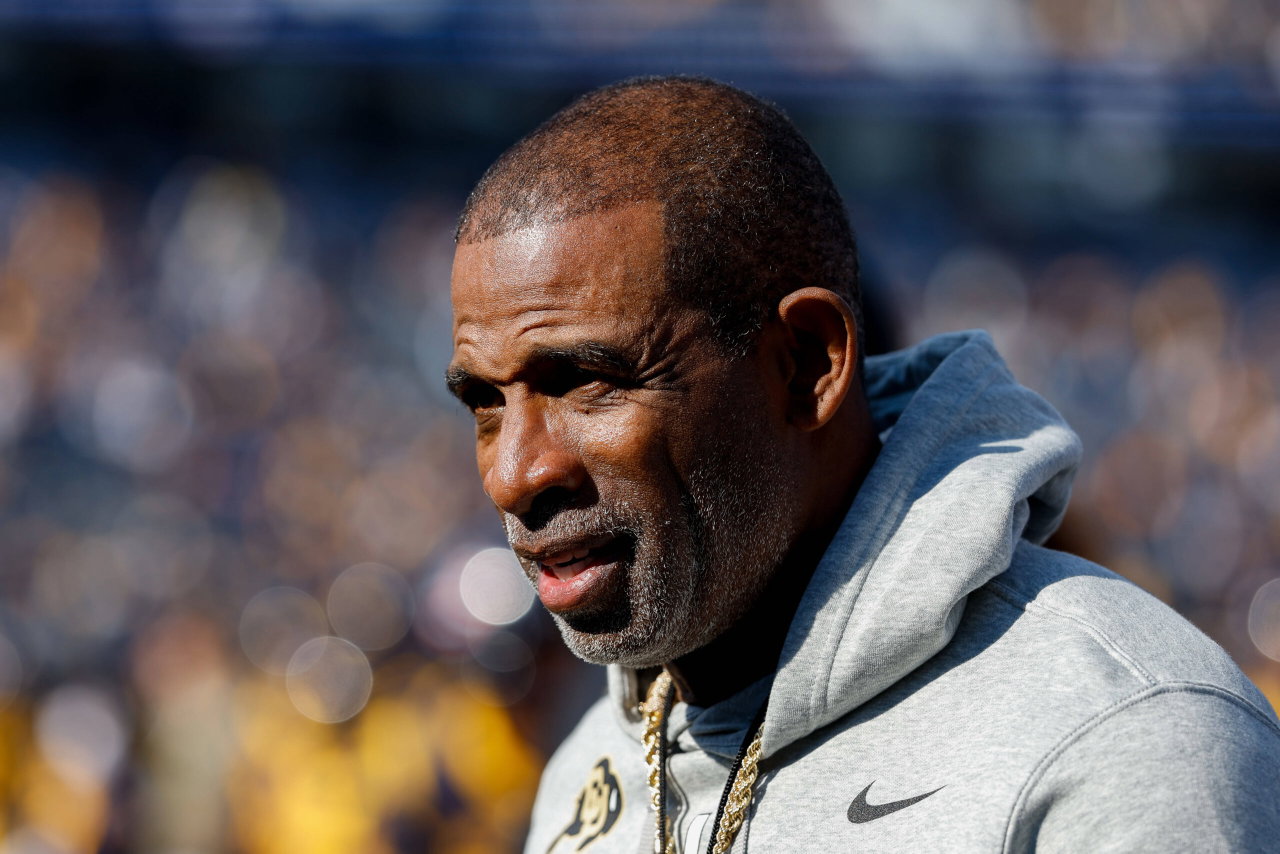
Deion “Coach Prime” Sanders is used to making headlines, but this time, it’s not about a recruit, a rivalry, or a game-day decision. The Colorado Buffaloes head coach has teamed up with Nick Saban for a $10 million mission to help save college sports, and he’s reportedly received nothing in return.
According to Front Office Sports, neither Deion Sanders nor Nick Saban was compensated for their appearance in the commercial ads.
Deion Sanders and Nick Saban are arguably two of the biggest personalities in college football. Before moving to college sports, Deion Sanders spent 14 seasons in the league, winning two Super Bowls while playing with the San Francisco 49ers and the Dallas Cowboys.
Whereas Saban was the head coach of the Miami Dolphins (2005-2006) before spending over a decade in the same role with the Alabama Crimson Tide (2007-2023).
Even though Saban currently does not have any roles within a college football team, he is the leading voice and marquee face of a $10 million ad campaign, through which he wants to protect college football from the current, unregulated system of NIL (Name, Image, and Likeness).
Reportedly valued at $10M, the ad campaign, led by Saban, is urging Congress to pass the PCSA bill immediately:
“College sports are built on tradition. The pride in our schools. The rivalries we pass down. And the way they develop the character of tomorrow’s leaders. That tradition is worth defending.”
The Bill, introduced in the Senate earlier this February, summarizes as,
“This bill establishes requirements for name, image, or likeness (NIL) agreements for college student athletes and provides a limited antitrust exemption for schools and conferences to pool and sell certain college sports media rights. The requirements address elements of the court-approved agreement to settle In re College Athlete NIL Litigation.
“First, the bill statutorily prohibits institutions, conferences, or interstate intercollegiate athletic associations (e.g., the National Collegiate Athletic Association [NCAA]) from restricting student athletes from entering NIL agreements (subject to specified limitations). Students must report to their institution NIL compensation greater than $600.
“The bill requires agents to register with a state and caps agent endorsement contract fees at 5%.
“The bill also provides student athletes with one transfer without losing athletic eligibility and restricts football personnel from becoming the head football coach at a different institution during the same season.”
Furthermore, the bill will also prohibit “institutions, conferences, or specified entities acting for the benefit of an institution from providing athletes with compensation that circumvents the limit on sharing revenue with student athletes established under the House settlement. The bill also makes the limit permanent and provides for an annual inflation adjustment.”
Nick Saban has been vocal about his stance for the last couple of months. Meanwhile, Deion Sanders’ support for the former Alabama HC has only brought more eyes to the $10 million television ad push, titled “Saving College Sports.”
While Saban focused heavily on structural tradition and legal order, Sanders’ decision to shoot his ad spot pro bono stems from a few specific, personal motivations.
“The biggest crowds. The brightest lights. Now that’s prime-time,” Sanders said in his commercial. “And as a coach and father, I’m helping the next generation find their spotlight. That’s why I support the Protect College Sports Act.”
However, although the campaign was funded by Cody Campbell, an oil executive, Texas Tech billionaire booster, and the university’s board of regents chairman, both Nick Saban and Deion Sanders reportedly shot their commercials free of cost.