
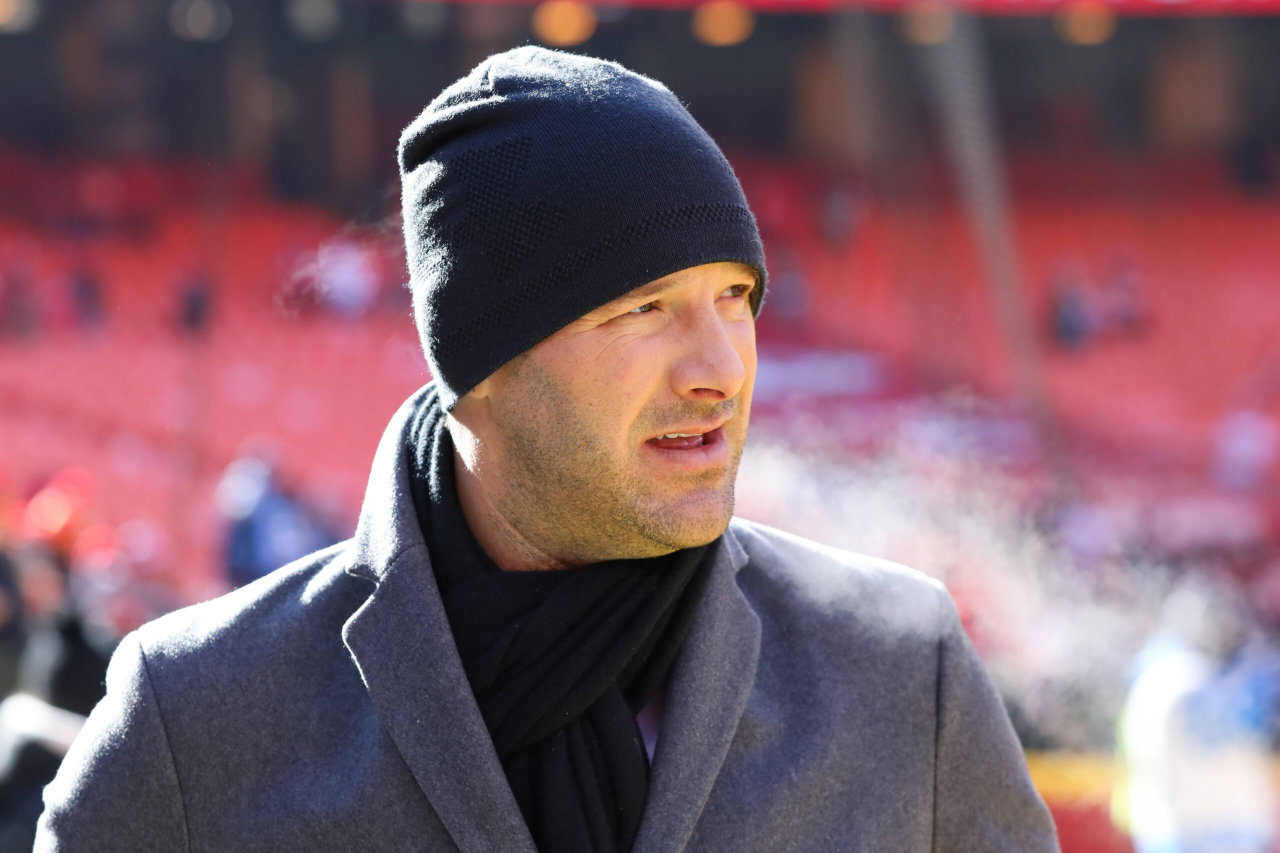
In January 2023, Jim Nantz turned to Tony Romo during CBS’s broadcast of the Bills-Bengals playoff game with a question about Patrick Mahomes’ high ankle sprain. Romo was caught on camera chewing as Nantz waited for an answer. The clip gave critics another moment to pick apart.
Watch What’s Trending Now!
CBS executives had already met with Romo at his Dallas home the previous offseason to discuss his preparation and chemistry with Nantz. But Romo’s response to the growing criticism was blunt: “That’s just noise.” Three years later, CBS had moved on from Romo, and J.J. Watt was the man sitting beside Nantz. Take Sunday’s Cincinnati Bengals–Baltimore Ravens broadcast, for instance.
With the ghost of Romo still hanging over the booth, Watt’s commentary drew fresh scrutiny. Some viewers made it clear they preferred his predecessor. It wasn’t the first time: during the Cowboys-Ravens game in Brazil, viewers had accused Watt of trying too hard to sound like Romo. Now, after signing a multiyear deal to remain CBS’s lead analyst, Watt is still being measured against the man he replaced.
“Tony Romo=JJ Watt,” one fan wrote.
Another was more direct in their criticism: “Bring back Romo. JJ Watt has the linguistics of a 12-year-old.”
“Hey @CBSSports…..Do all us viewers a big favor and bring back Tony Romo…..J J Watt seem like a nice guy……..but he boring as f–k…..Thank you,” another fan wrote on X.
“Is JJ Watt the Tony Romo replacement?” a fan asked.
“Tony Romo is so much better at being an NFL analyst than JJ Watt,” added another.
Sunday’s broadcast offered a specific example of the kind of disagreement that had put him under the microscope, yet again. In the second quarter, Bengals defensive lineman Boye Mafe was flagged for a low block after Derrick Henry cut him down and he appeared to fall into a Ravens offensive lineman. The penalty came as Cincinnati looked set to get off the field on third down.
“That’s big as they were about to get the Ravens off the field,” Nantz said as the flag was announced. Watt immediately questioned the decision. “What’s he supposed to do to avoid that? He got cut, and he’s falling down,” he said.
Watt drew on his 12 seasons as an NFL defensive lineman to explain why he thought Mafe had little control over the collision. “As a defensive player myself, I honestly do not know what you expect me to do in that situation,” he said.
Rules analyst Gene Steratore offered another interpretation. He explained that if Henry’s block had caused Mafe to fall into the offensive player, that could excuse the contact. But Steratore believed Mafe had lowered himself further after the initial contact. “When he’s standing and then he lunges like that, he’s going low on his own,” Steratore said.
Watt acknowledged the distinction, saying, “I get the letter of the law,” but remained unconvinced. “He gets cut block by the other guy. He gets tripped,” he said, arguing that it was difficult to expect a falling defender to control his body in that situation.
The exchange showed Watt’s willingness to challenge a call from a player’s perspective, even when the rules analyst offered a different reading of the play. It did not, on its own, establish that the entire broadcast had gone poorly. But the comparison with Romo is not just about the seat Watt inherited.
Romo became known for anticipating plays before the snap and talking viewers through what a quarterback might see. Watt’s strongest contributions tend to come from his experience on defense: explaining blocking, leverage and the split-second decisions players make during a play. But his energetic delivery has drawn criticism when viewers feel the volume or humor overwhelms the analysis.
That criticism was particularly visible during the Cowboys-Ravens game in Brazil on September 27. As the game tightened late, some viewers said Watt was shouting too much, while others accused him of imitating Romo. One critic, writing about the broadcast, argued that Watt needed “improved situational awareness” to match the best analysts. Those reactions were opinions about his delivery, not evidence that he lacked football knowledge.
Sunday also provided a counterpoint. After Tee Higgins went without a catch in the first half, he caught six passes for 148 yards and a touchdown after halftime. Watt captured the change in a line that was concise and tied directly to the action: “You could not have a bigger tale of two halves right now.” He went on to note that Joe Burrow and Cincinnati’s offense were moving the ball at will.
Watt, a three-time NFL Defensive Player of the Year, retired after the 2022 season following 12 years with the Texans and Arizona Cardinals. His broadcasting career is now on a longer runway: on October 22, CBS confirmed a new multiyear agreement that will keep him as its lead analyst, including for Super Bowl LXII in Atlanta in February 2028.
CBS Sports chairman David Berson also backed the decision, pointing to Watt’s preparation and ability to explain the game to viewers.
“He’s insightful, entertaining, passionate, meticulous in his preparation, and the ultimate teammate,” Berson said. “He has a unique ability to see things and communicate to fans of all levels.”
Watt joined CBS in 2023 as a studio analyst before moving into the broadcast booth the following season. He initially worked alongside Ian Eagle on the network’s second team before being elevated to the lead crew with Nantz and sideline reporter Tracy Wolfson this season.
His promotion followed Romo’s July arrest in Wisconsin on suspicion of operating a vehicle while under the influence. Romo later pleaded no contest to a first-offense charge, and his driving privileges were revoked for six months. CBS and Romo subsequently agreed to part ways, ending his nine-year run as the network’s lead game analyst.
For now, the network has made its choice clear. Watt has a multiyear commitment, and Romo is no longer part of CBS’ plans. The question is whether Watt can turn his playing knowledge and preparation into the kind of on-air timing that made Romo distinctive.