Essentials Inside The Story
- Donald Trump stunned the room by naming a former NFL star during a major event
- The praise also touched on a personal bond and admiration between Trump and Jim Brown
- A heartfelt family reaction followed
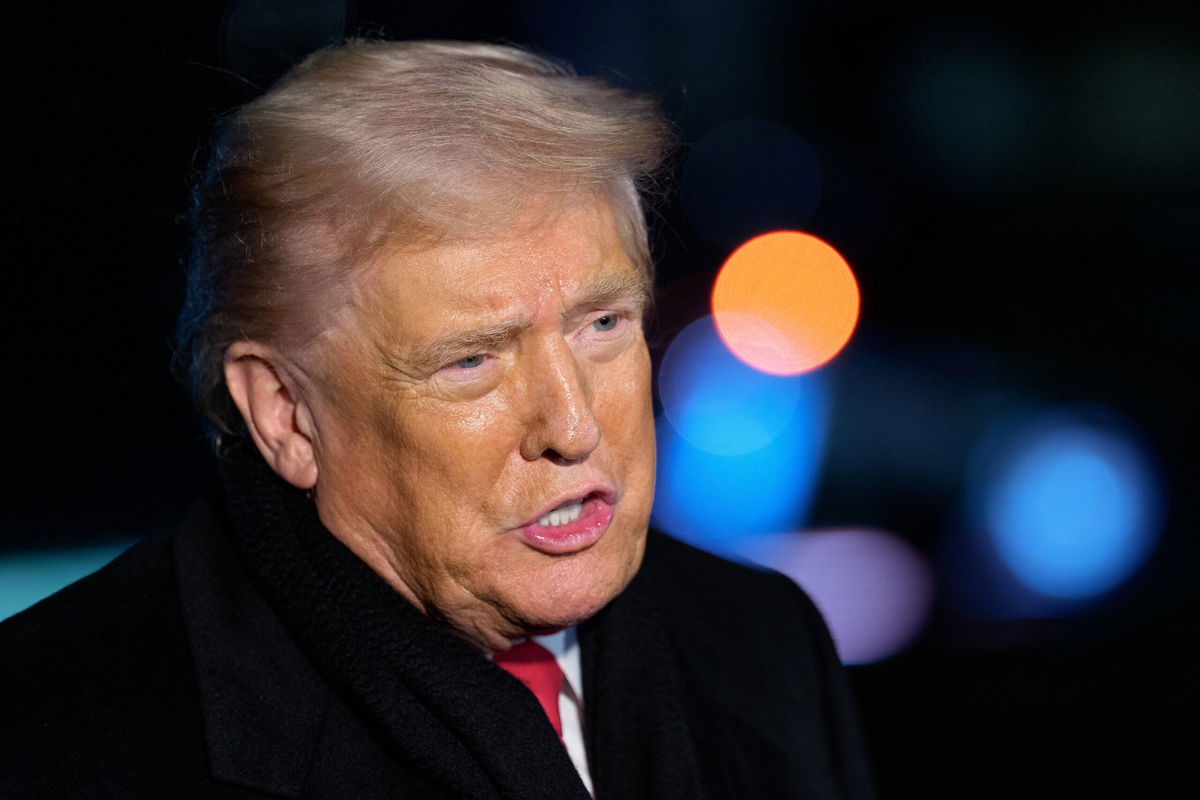
During an unscripted stretch at a White House Black History Month event, Donald Trump began rattling off the names of Black athletes and public figures he described as friends and loyal supporters, including Mike Tyson, Herschel Walker, and Lawrence Taylor. But it was Jim Brown whom he paused on. Trump called him the greatest football player of all time and spoke about him with a familiarity that went beyond a ceremonial tribute. He even noted that Brown “really liked Trump,” a remark that hinted at a relationship built over years of meetings, support, and unexpected political closeness.
Watch What’s Trending Now!
“I would say there can’t be a greater football player than Jim Brown,” Trump said in his presidential speech, and explained why he feels that way. “He really liked Trump, Jim Brown. He was tough. He’d come in, he was very silent. He was silent but deadly. He’s come in and look at people, and if he didn’t like them, he’d just look at me, and he’d go, ‘no good’. He wanted to rip their heart out.”
Many football fans might not agree with the president’s statement, but Trump’s stance is clear. Brown’s résumé, along with the unexpected political relationship the two men developed after the 2016 election, could explain why.
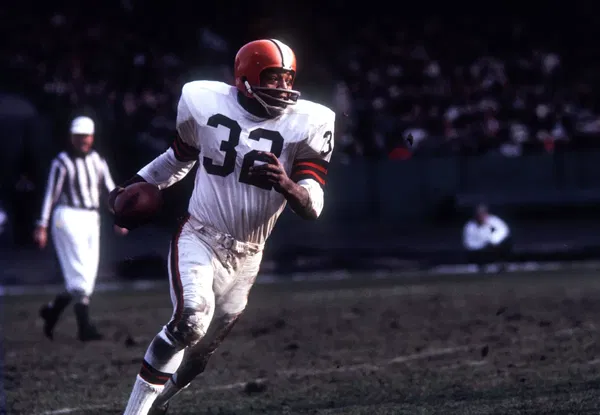
A former running back for the Browns for 9 years, Brown was one of the most productive FBs in NFL history, with a generational dual-threat ability. In less than a decade, he racked up 12,312 yards and 106 touchdowns, about 104.3 rushing yards per game. His receiving ability was almost as good as his rushing consistency, and he finished his career with 262 receptions for 2,499 yards and 20 touchdowns. He’s the benchmark for any RB that has played for the Browns since his retirement in 1965, and will continue to be for anyone that comes in.
NEWS: President Donald Trump revealed that #NFL legend Jim Brown was a huge fan of his and the MAGA movement.
President Trump spoke about the iconic life Brown lived as a player and civil rights activist at today’s Black History event at the White House.
pic.twitter.com/QXXihXE06U— MLFootball (@MLFootball) February 19, 2026
But Donald Trump’s ‘GOAT’ label isn’t just about what Brown did on the field. When Jim Brown met Donald Trump at Trump Tower in December 2016, the country was still reeling from the election result. Brown made one thing clear immediately: he hadn’t voted for Trump. But he also wasn’t interested in disengaging from the new administration.
“We couldn’t have had a better meeting,” Brown said afterward. “The graciousness, the intelligence, the reception we got was fantastic. He’s amenable to listening to people who didn’t vote for him.”
For Brown, that willingness to listen mattered. Then came the quote that defined how he viewed Trump’s rise.
“When he goes through what he went through to become the president, he got my admiration,” Brown said. “No one gave him a chance.”
So, it was about resilience, too. Brown respected the improbability of Trump’s victory. He saw him as a man dismissed by much of the political world, and still fought his way into the White House. Yet Brown was careful to separate that kind of respect from loyalty. To Brown, the presidency represented access and leverage. Once Hillary Clinton lost, he shifted from campaigning to engaging.
“While other people were sitting on their butts complaining, I was putting together a plan,” he said. “They know that I voted for Hillary, but they are willing to work with me because I brought something to them that made sense.”
That “something” was Amer-I-Can, his long-running program focused on education, discipline, and rehabilitation.
“We need jobs, badly. We need to continue education badly. We need to eradicate the violence, badly,” Brown explained. “That does not have a lot to do with Trump, it has to do with all of us.”
Still, his openness toward Trump triggered heavy backlash, especially when Brown criticized Congressman John Lewis for calling Trump an illegitimate president. To Brown, the election was settled. The next step was using power for greater good instead of protesting it.
That mindset carried into the 2018 Oval Office meeting with Kanye West. Even then, Trump praised Brown repeatedly. Calling him “the greatest of all time” and thanking him for supporting what the administration was doing. Brown stayed mostly quiet during the discussion but publicly defended the visit afterward.
“We had the opportunity to meet with the President of the United States, which everybody doesn’t have that privilege,” Brown said. “At 82 years old, the only thing I could talk about was how to help other people.”
He added that Trump “treated us beautifully” and remained open to future conversations. In reality, every meeting was an ask for opportunity, resources, and attention for struggling communities.
Trump viewed Brown as a legendary athlete offering symbolic support.
Brown viewed Trump as a gateway to influence. To sum it up, their relationship was built on access, respect, and Brown’s belief that real change happens closest to power.
The HOFer passed away on May 18, 2023, and would’ve celebrated his 90th birthday on Tuesday. But Trump’s speech in the White House about Brown didn’t go unheard. His daughter, Kimberly, heard the President and reacted to the remark made.
Jim Brown’s daughter reacts to Trump’s remark
Hearing her father being called the greatest of all time, Kimberly took to social media to thank the President for the praise.
“Thank you @potus @realdonaldtrump for recognizing my father Jim Brown at the White House Black History Month Event today,” she wrote.
What looks like a straightforward thank-you post actually fits into a broader pattern of support that can be traced back to the 2024 election cycle.
Back then, Kimberly Brown emerged as a vocal supporter of Donald Trump, appearing on conservative media to explain why she backed him, and repeatedly pointing to her father as the turning point.
“My dad went to go meet with President-elect Trump, and that really opened up my eyes,” she said. “I stayed neutral for about a year, and after that I came out as a Trump supporter because I saw the moves that Donald Trump was making.”
She cited specific policies: criminal-justice reform through the First Step Act, which she said her father consulted on, along with funding for HBCUs, school-choice initiatives, and Trump’s stance on women’s sports.
“I play tackle football. I don’t want to be on the field with a man taking hits,” she said. “That’s putting women at risk. It’s unfair. They’re taking away women’s rights.”
While her endorsement was clear, some of her later public remarks, including speculative claims about Trump’s ancestry, were widely criticized and labeled as misinformation, drawing backlash across political lines.
Still, the throughline in her support remained consistent.
“My dad’s involvement opened my eyes,” Kimberly said.
Jim Brown saw Trump as a doorway to change. Years later, his daughter turned that doorway into open support, showing how one relationship reshaped an entire family’s political path.
Written by

Edited by

Bhwya Sriya