
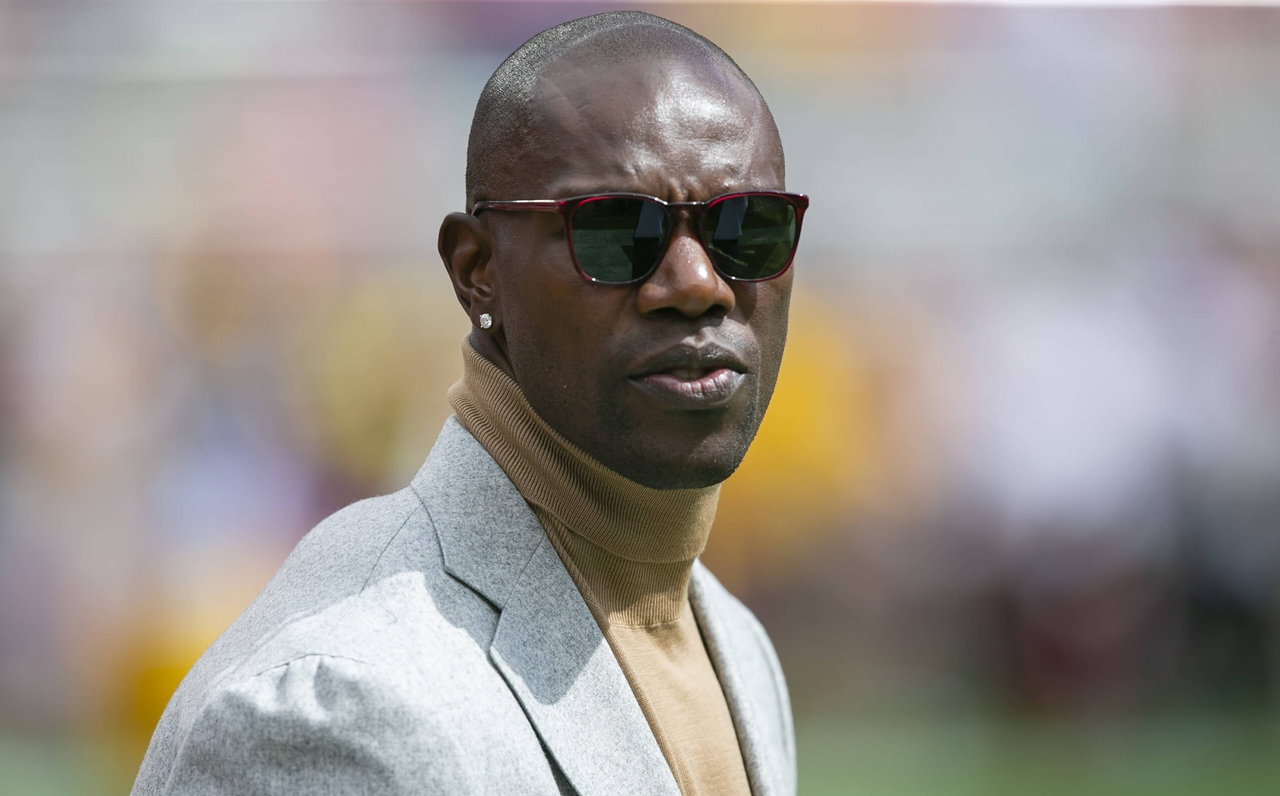
Even before Skip Bayless was a household name as an NFL analyst, he had a feud with former San Francisco 49ers wide receiver Terrell Owens. Back in late 2002, while writing columns for the San Jose Mercury News, Bayless routinely aimed at T.O. when the star receiver ignited headlines with his personality and on-field antics.
Watch What’s Trending Now!
When Terrell Owens pulled out the hidden Sharpie from his socks to sign a football as a TD celebration against divisional rivals Seattle Seahawks on Monday Night Football in 2002 and borrowed a cheerleader’s pom-poms against Green Bay, Bayless went after Owens by sarcastically writing, “What next, pulling a live mic from his sock and performing an upcoming rap release?”
That local hot-take columnist work helped establish Bayless’ sharp-tongued formula before he ever landed at ESPN or FOX. Now, on TV Host Max Kellerman’s Game Over podcast, the Hall of Famer wideout is claiming Skip Bayless deliberately turned him into a personal target to build his national brand.
“I was a target, and I guess he almost kind of made his name off really targeting me…And then I guess I didn’t act a certain way or, I guess, the way a Black athlete was supposed to act,” Terrell Owens stated before going on to explain his extravagant TD celebrations that often were the topic of conversation in the national media.
“Speaking of touchdown celebrations, me being open and me just standing on business and just being outspoken, which I didn’t think was a bad thing. I was honest. Not really outspoken, but I was honest. You ask me something, a press conference or whatever, based on what happened in the game, I was always honest about what I thought happened.”
Terrell Owens earned five 1st-team All-Pro selections and six Pro Bowl nods across 15 NFL seasons. He accumulated 15,934 receiving yards and 153 receiving touchdowns; however, he still accepted that, early on in his career, his youth was a major part of his media interactions.
“I didn’t understand at that time; I was young, I didn’t understand the word, or politically speaking, being politically correct. What you wanted to know, I was going to give it to you. Not really thinking how to process my answers and understand that if I answered a certain way that this may then put another teammate or somebody else in harm’s way. Which is called ‘throwing somebody else under the bus.’ That wasn’t what I was always doing,” Owens said on the podcast.
Bayless’ comments on Owens, perhaps the most infamous incident was the former labelling the latter as the “Team Obliterator” on national television. Owens rejected this narrative. But according to Owens, the worst outcome of Skip Bayless’ comments came as other commentators on the sport started building up this rhetoric even more.
“Everything that I did, I did for my family. And then you look back on my career and how people perceived me and portrayed me, it’s all based on the media’s narrative, and how they pushed that I was arrogant, I was c—y. Skip Bayless has people looking at me, calling me ‘Team Obliterator.’ That I destroyed locker rooms,” Owens furthered.
“Whether it was ESPN, NFL Network, they piggy-backed on that. Your Mark Schlereths, your Sean Salisburys, your Tom Jacksons. I remember all these names because they piggy-backed on what [he] said. And if Skip Bayless had sidebar conversations with teammates or even certain coaches on the team about who I was, as a football player or a person or my character, if they said something negative, they don’t speak for the 73 guys in that locker room. And then he used language like, ’50 percent of the guys liked him, 50 percent of the guys didn’t.’ You didn’t ask 100 percent of the guys to come up with those numbers.”
Owens was on a seven-year, $35 million contract with the Niners that ran through the 2005 season. However, the team decided to trade him before the 2004 season to the Baltimore Ravens, who then traded him to the Philadelphia Eagles after just 12 days.
According to reports, T.O. was trying his best to force his way out of San Francisco. When the move to Baltimore happened, then-Ravens head coach Brian Billick dismissed concerns over Owens’ reputation, stating he didn’t care how he treated people previously because “the Baltimore Ravens weren’t a part of that.” But things quickly fell apart, as Owens had no intention of playing for Baltimore and had already set his sights on joining the Eagles. The fallout from that era created a lasting impression that Owens still finds himself defending against today.
Pointing out the enduring social media reactions, Owens shared: “I read the comments, like, ‘Oh you were trash, you ruined every locker room,’ and they regurgitate basically everything that a lot of the Skip Baylesses were saying about me…But there’s a lot of great players who played on multiple teams. And because of that narrative, that perception of who I was, and it was always something minute, if I got in an argument with a teammate or coach or whatever. They act like I am the only one that has ever had a disagreement or an argument with a teammate or a coach.”
Nowhere was this narrative clearer than Super Bowl XXXIX. 7 weeks after fracturing his right fibula and tearing ankle ligaments, Owens played against New England. He caught 9 passes for 122 yards with practically a broken leg, yet several national pundits criticized him for supposedly making the game about himself.
“If I was white, this would have never been said. It would be looked at something totally different,” Terrell Owens summed up the coverage of his Super Bowl performance, pointing at the double standards.
However, the peak of all this tension came after he had drawn curtains on his career. When, despite being 2nd on the receiving yards All-Time list, HOF voters made Owens wait until his third ballot in 2018. In response, Terrell Owens boycotted the Canton establishment to celebrate at UT Chattanooga instead, confirming on the podcast that he still stands by his decision without any regrets.