
Essentials Inside The Story
- Over 70% of NFL players are Black, yet this representation is not reflected in coaching positions.
- As of now, only 3 HCs are black in NFL.
- While this has raised questions, the NFL’s diversity initiatives are also under fire.
Despite 70% of players being Black, the NFL has struggled to place people of color in positions of power, such as head coach and general manager. Addressing this issue, Pro Football Hall of Famer Marshall Faulk spoke about the Atlanta Falcons’ decision to fire Raheem Morris and highlighted how the problem still looms large, especially after the franchise hired Matt Ryan as president despite his lack of prior experience.
Watch What’s Trending Now!
“Football’s the only sport that players struggle to come off the field and become a coach,” Faulk said during an interview with USA Today. “They look at us like if you’re successful at the game playing, then you won’t be successful at the game in any other capacity. Matt Ryan can be a GM (president of football in Atlanta, where he oversees the general manager). Why do other players kind of go through and jump through the hoops to be a GM?”
The 53-year-old’s concerns about the Atlanta Falcons’ decision also stem from their new head coaching hire of Kevin Stefanski. Raheem Morris was fired after an 8–9 record, while Stefanski was also let go by the Cleveland Browns following a disappointing 5–12 season. The former Rams running back also highlighted how white coaches have found it easier to secure jobs, citing the example of new Arizona Cardinals head coach Mike LaFleur, who spent two years as the Los Angeles Rams offensive coordinator from 2023 to 2025.
“We don’t have the opportunity of (coach Mike LaFleur), who just got the (Arizona) Cardinals head coaching job, who I barely knew was with the (Los Angeles) Rams, you know?” Faulk said. “That’s a hell of an opportunity. And I’m gonna say (Rams) coach (Sean) McVay, he’s done a really good job of getting guys ready to get jobs … It’s just weird that the Atlanta Falcons would fire a guy (Morris) who had a better record than the guy that they hired (Stefanski).”
As highlighted by Marshall Faulk, the hiring of coaches of color has been a recurring issue in the NFL. The clearest example of this came after the 2025 season, when no Black head coaches were hired despite a record number of vacancies. The only minority hire during this cycle was former defensive coordinator Robert Saleh, who was named head coach of the Tennessee Titans.

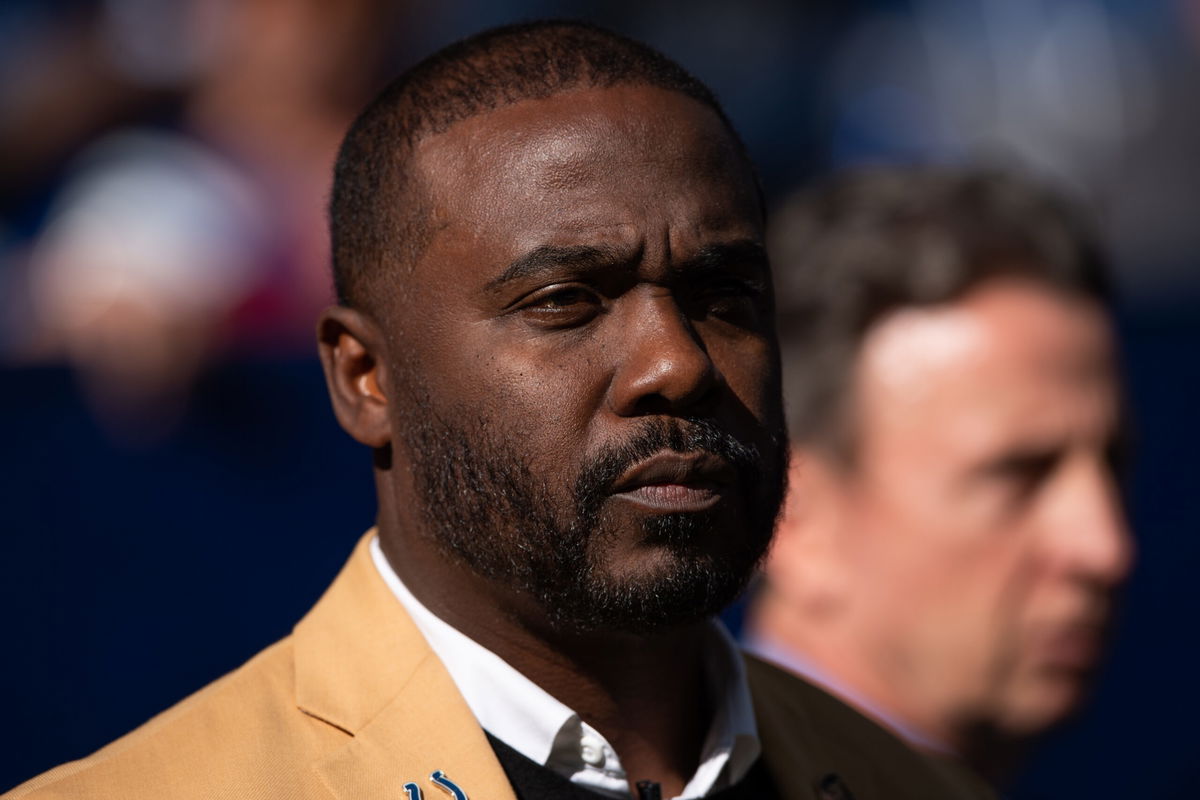
Marshall Faulk, a Pro Football Hall of Famer who now is the head coach at Southern University in Louisiana, has strong opinions about Black coaches trying to land football jobs. 🔗: tinyurl.com/2anhfdza 📷: Kirby Lee-Imagn Images

Heading into the 2026 season, the 32-team league has only three Black head coaches – Todd Bowles (Tampa Bay Buccaneers), Aaron Glenn (New York Jets), and DeMeco Ryans (Houston Texans). This remains a disappointing issue for the league, especially with the implementation of the Rooney Rule. The regulation adopted in 2003 requires league teams to interview ethnic-minority candidates for head coaching and senior football operations jobs.
While this rule has been one of the league’s biggest steps toward ensuring equal opportunity, the NFL has faced legal action over the regulation. Florida Attorney General James Uthmeier recently argued that the NFL’s diversity initiatives may violate Florida’s anti-discrimination law, calling the Rooney Rule “blatant race and sex discrimination” in a March 2026 letter sent to the league.
Addressing the issue, NFL Commissioner Roger Goodell issued a statement.
NFL commissioner addresses subpoena over Rooney Rule
Florida Attorney General James Uthmeier issued a subpoena to the National Football League on May 13 to investigate whether the league has potentially violated civil rights laws related to the Rooney Rule and its broader employment practices, policies, and programs. In response, Roger Goodell said the league is cooperating with Uthmeier during league meetings in Orlando, Florida.
“I think we have been very clear about our programs, and we obviously evaluate them all the time, not just for how they get better, but also to make sure that they’re consistent with the law,” Goodell said. “We’re engaging with the Florida attorney general and will continue to. We’ll share everything we’re doing with them. We think it’s certainly within the law, but also something very positive.”
Now, with only three Black head coaches entering the 2026 season and the Rooney Rule under legal threat, meaningful change remains elusive.