Imago
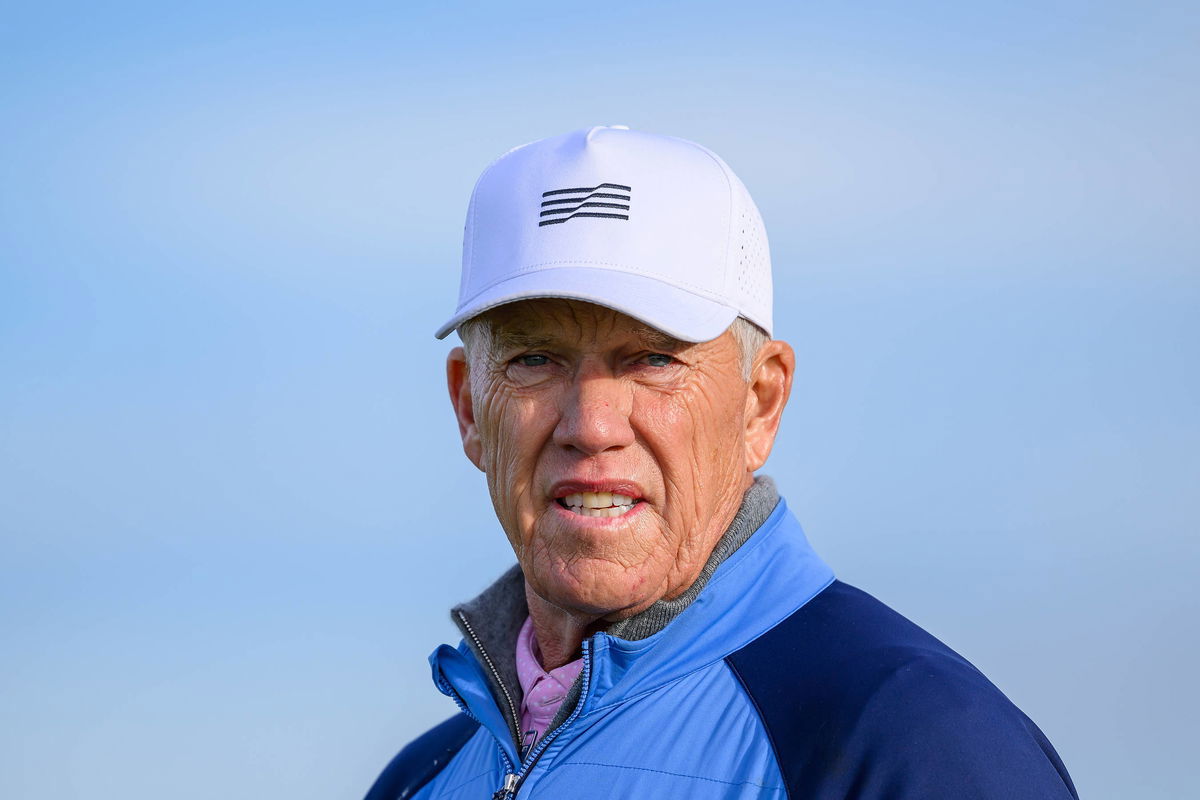
Alfred Dunhill Links Championship 2023 Carnoustie Golf Links 6 October 2023 Former NFL, American Football Herren, USA and Denver Broncos star John Elway on the 1st hole during round two of the Alfred Dunhill Links Championship 2023 on Carnoustie Golf Links, Carnoustie, Scotland on 6 October 2023. Carnoustie Carnoustie Golf Links Angus Scotland Editorial use only , Copyright: xMalcolmxMackenziex PSI-18112-0006
Imago
Alfred Dunhill Links Championship 2023 Carnoustie Golf Links 6 October 2023 Former NFL, American Football Herren, USA and Denver Broncos star John Elway on the 1st hole during round two of the Alfred Dunhill Links Championship 2023 on Carnoustie Golf Links, Carnoustie, Scotland on 6 October 2023. Carnoustie Carnoustie Golf Links Angus Scotland Editorial use only , Copyright: xMalcolmxMackenziex PSI-18112-0006
Essentials Inside The Story
- Montee Ball reflected on the struggles he faced during his time in the NFL.
- The former Broncos running back opened up about a difficult chapter of his career.
- Today, Ball is using those experiences to help others.
- Back in September 2015, a phone call from John Elway changed former running back Montee Ball’s life. The former Broncos’ executive informed Ball that his team was releasing him. At the time, Ball was quietly battling alcohol addiction, and the release pushed him further down a difficult path to recovery. Now sober for years, Ball is determined to turn his painful experiences into a positive force for others.
Watch What’s Trending Now!
Montee Ball is lobbying for a bill at the Colorado State Capitol because he believes that young athletes often struggle silently, which Baltimore Ravens legend Ray Lewis has also pointed out recently. While Ball now serves on the board of 5280 High School, he has also played a key role in supporting the project-based learning school that helps teens recovering from substance abuse.
“For people in recovery – and really everybody, too – the best medicine is service,” Ball said to The Athletic during a recent interview. “Giving back in some way, somehow.”
As a small-town Missouri native, Montee Ball grew up dreaming about playing for the Broncos. And that dream became reality in the 2013 NFL Draft when Denver selected him in the second round with the 58th overall pick. The moment felt surreal, but Ball had already built an incredible college career at Wisconsin, where he became the centerpiece of the Badgers’ powerful rushing attack.
Ball’s talent was undeniable. At Wisconsin, he was the engine of the Badgers’ powerful rushing attack, becoming a College Football Hall of Famer. His dominance was historic; in 2011, he tied Barry Sanders’ single-season record with 39 touchdowns, a key part of a career that saw him rack up over 5,000 rushing yards and star in three straight Rose Bowls.
View this post on Instagram
But while he could evade defenders on the field, Montee Ball struggled to escape the anxiety he carried off it. During college, the RB began relying on alcohol to cope with those internal battles, and his junior season in 2011 showcased both extremes of his life. On the field, Ball shattered records and even became a finalist for the Heisman Trophy, but off the field, it was one of the most difficult periods of his life.
Entering the NFL in 2013 didn’t solve Ball’s problems; the pressure to secure a roster spot in Denver only intensified them. While Ball recorded 559 rushing yards and 4 touchdowns during his rookie season, the Broncos expected him to step into a bigger role in 2014 after RB Knowshon Moreno left the team.
Yet injuries and competition complicated that opportunity, and Ball started only three games in 2014 before being placed on the IR. In 2015, Ball entered the preseason fighting for a roster spot against fellow RBs Juwan Thompson, Ronnie Hillman, and C. J. Anderson.
Then came the call from John Elway.
On September 6, 2015, the Broncos waived Montee Ball. According to Ball, Elway had explained that the RB’s alcohol dependency and his frequent nights out at bars left the Broncos with no choice but to cut ties with him.
Montee Ball reveals how the lack of transparency in football troubled him
Ball recently shared that during his time in Denver’s backfield, he was spending nearly $1,000 every two weeks at a liquor store. His addiction had already taken hold, even though few people around him fully recognized the extent of the problem. He also recalled a moment at practice when, after jogging into the Broncos’ huddle, he saw quarterback Peyton Manning shaking his head in disapproval.
Moments like that made Ball feel exposed, but he still kept his struggles hidden. Why? Because, according to the former Broncos RB, football culture at that time rarely encouraged vulnerability. While Ball feared losing his spot on Denver’s roster, more than that, he feared appearing weak if he admitted that he was struggling with anxiety and addiction.
But the addiction became so severe that Montee Ball sometimes skipped meals, knowing the calories would come from alcohol instead. Yet even people close to him failed to recognize the warning signs, as Bradie Ewing, who was Ball’s teammate in college, also just admitted that he didn’t see the problem until the news of the RB’s arrests became public knowledge.
“He did a really good job of separating those two parts of his life,” Ewing said in a recent interview with The Athletic.
Ball can now openly discuss the darkest period of his career, but nothing shaped his life more than the moment he hit rock bottom by spending time in jail.
How did the experience in prison change Montee Ball’s perspective on life?
On February 5, 2016, Ball was booked into the Dane County Jail in Wisconsin after a physical altercation with an ex-partner at a hotel. The cold concrete floor shocked Ball awake in a way nothing else had before. It was during this time that Ball spent a weekend in jail, and he finally had to confront the reality of his alcoholism that he had spent years avoiding.
The television in the jail aired Super Bowl L between the Broncos and the Carolina Panthers. Ball watched the game from behind bars while the Broncos, the team he had once dreamed of playing for as an eight-year-old, beat the Panthers to secure a 24-10 victory. Just two years before that, Ball had suited up for the Broncos in Super Bowl XLVIII against the Seattle Seahawks, but his team was handed a 43-8 loss. But then in 2016, Ball was sitting in jail watching his former team overcome obstacles to win a championship without him.
Imago
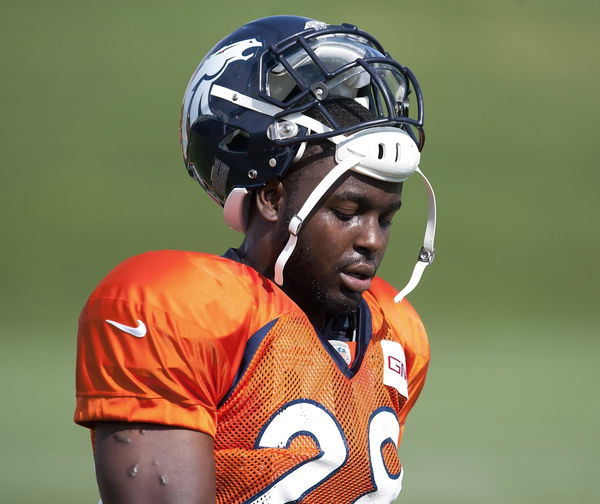
July 26, 2014 – Englewood, Colorado, U.S – Broncos RB MONTEE BALL takes a break during RB drills at the Denver Broncos Training Camp at Dove Valley Saturday morning. NFL American Football Herren USA 2014 – Denver Broncos Training Camp Saturday Morning – ZUMAav4
“I was in denial,” Ball said now while talking about being released by the Broncos, “And I didn’t believe any of it until my feet touched the floor of that jail.”
Following his arrest, Montee Ball’s legal troubles continued as his former partner accused him of assault during an incident back in 2014. In August 2016, Ball received a 60-day jail sentence after pleading guilty to battery related to two domestic disputes and disorderly conduct. Those consequences forced Ball to acknowledge that he was an alcoholic, and he retired from the NFL to begin focusing entirely on recovery.
The last time Montee Ball had a drink was in June 2016. Since then, Ball has worked to rebuild his life. Today, Ball channels his energy into helping others avoid the mistakes he made through his nonprofit, the Game Plan Life Foundation. Ball’s goal is ambitious: he wants more than 1,000 administrators and coaches to attend mental health seminars organized by his foundation over the next three years.
“Your actions always lead you to where they’re going to lead you – and they’re your actions,” Ball noted in his recent interview with The Athletic.
Ultimately, a decade after his life took a dramatic turn, Montee Ball often wonders whether things might have unfolded differently if he had spoken openly about his anxieties earlier. While he can’t change his past, Ball is now focused on what he can control: ensuring the next generation of athletes feels heard.