
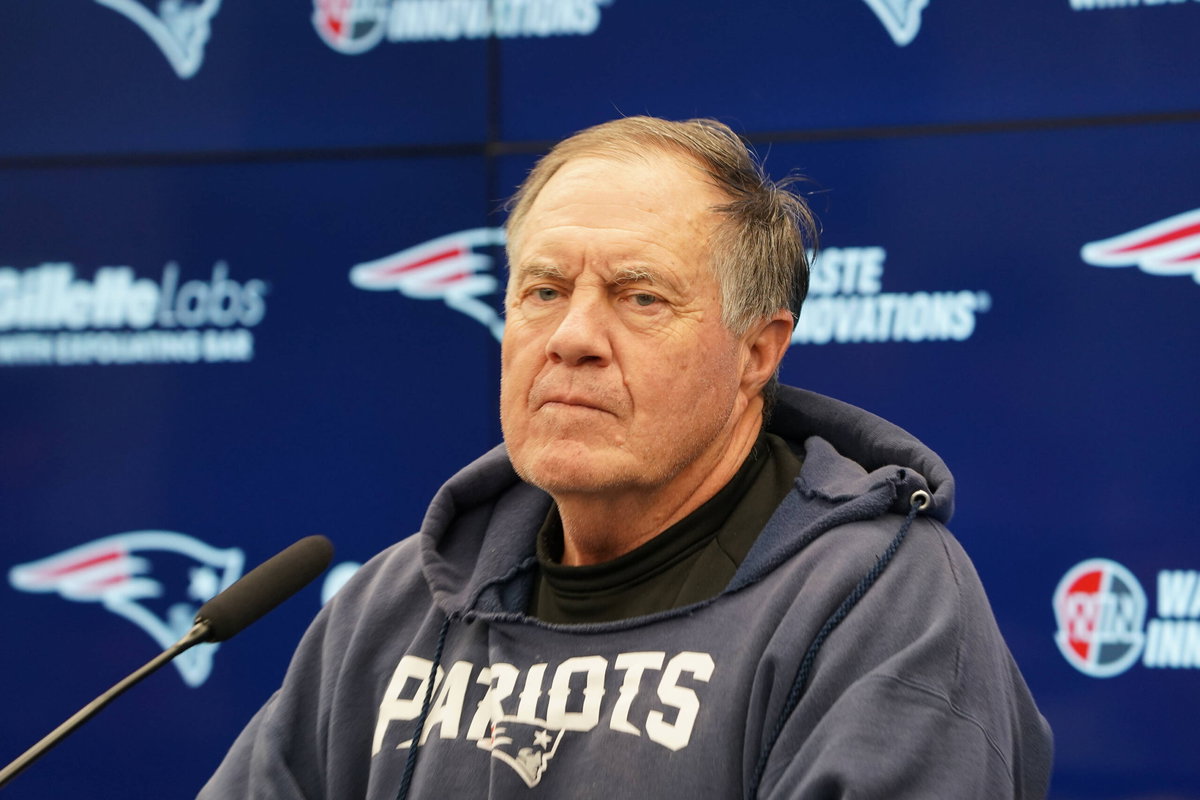
Former New England Patriots head coach Bill Belichick has been under a lot of scrutiny this offseason. The program he currently coaches, North Carolina, finished with an ugly 4-8 record. Then his relationship with 25-year-old Jordon Hudson has added to that scrutiny. To the point that Patriots legend Asante Samuel called him a “hypocrite” for the way Belichick is carrying himself.
Watch What’s Trending Now!
Samuel explained how the former NFL coach was really strict about how players conducted themselves in public. “He told us to stay off and don’t have family distractions,” Samuel told TMZ in March. So, as fresh clips of Belichick started making the rounds on social media showing how he behaves with the media in post-game pressers and sideline exchanges, Samuel hopped in with an opinion on that as well.
“Belichick is such a jerk to the reporters 😂😂😂😂😂😂😂,” tweeted the former New England Patriots’ cornerback, Asante Samuel, on his X.
The legendary cornerback’s comment was notable because he wasn’t just watching the head coach from outside. The cornerback experienced firsthand the demanding environment that HC built in New England.
Moreover, Belichick’s press conferences have rarely been about giving information or brief explanations. He only answers them in short sentences. The same thing happened during the Tar Heels’ game against the Clemson Tigers.
With North Carolina up 14-3, ESPN sideline reporter Stormy Buonantony asked Belichick about the team’s penalties, to which he simply answered: “Too many.” Buonantony later revealed that the brief, 20-second exchange was quite the experience for her.
“I’m fine, I made it out alive, guys,” she told Wischusen and analyst Louis Riddick. “But I did just want to say, very different feel on the sideline than we had yesterday at our meetings, right? The way he was talking, it was story time.”
Throughout his coaching career, preparation, discipline, and limiting unnecessary information were important. The six-time Super Bowl champion as an HC felt: why give the opponent an advantage by revealing something that could be kept private? His interaction with the media followed the same principle whether he coached the Patriots or North Carolina.
A straightforward question leads to a few words. Another question follows, and suddenly Belichick’s response becomes more interesting than the original topic. His ability to keep conversations strictly limited to football has made his interaction a lasting symbol of his legacy even after leaving the NFL.
He won his first three Super Bowl wins (2001, 2003, 2004) with the Patriots, but after his three more Super Bowl wins (2014, 2016, 2018), he was asked more and more to explain his methods, decisions, players, and victories. Yet the coach who built his career around controlling information rarely seemed interested in giving the media much of it.
That fact again makes Samuel’s post less about isolated exchange and more about the personality that followed Belichick throughout his coaching career. Whether viewed as discipline or a strategy, as Samuel bluntly put it, Belichick’s approach has left an impression.