
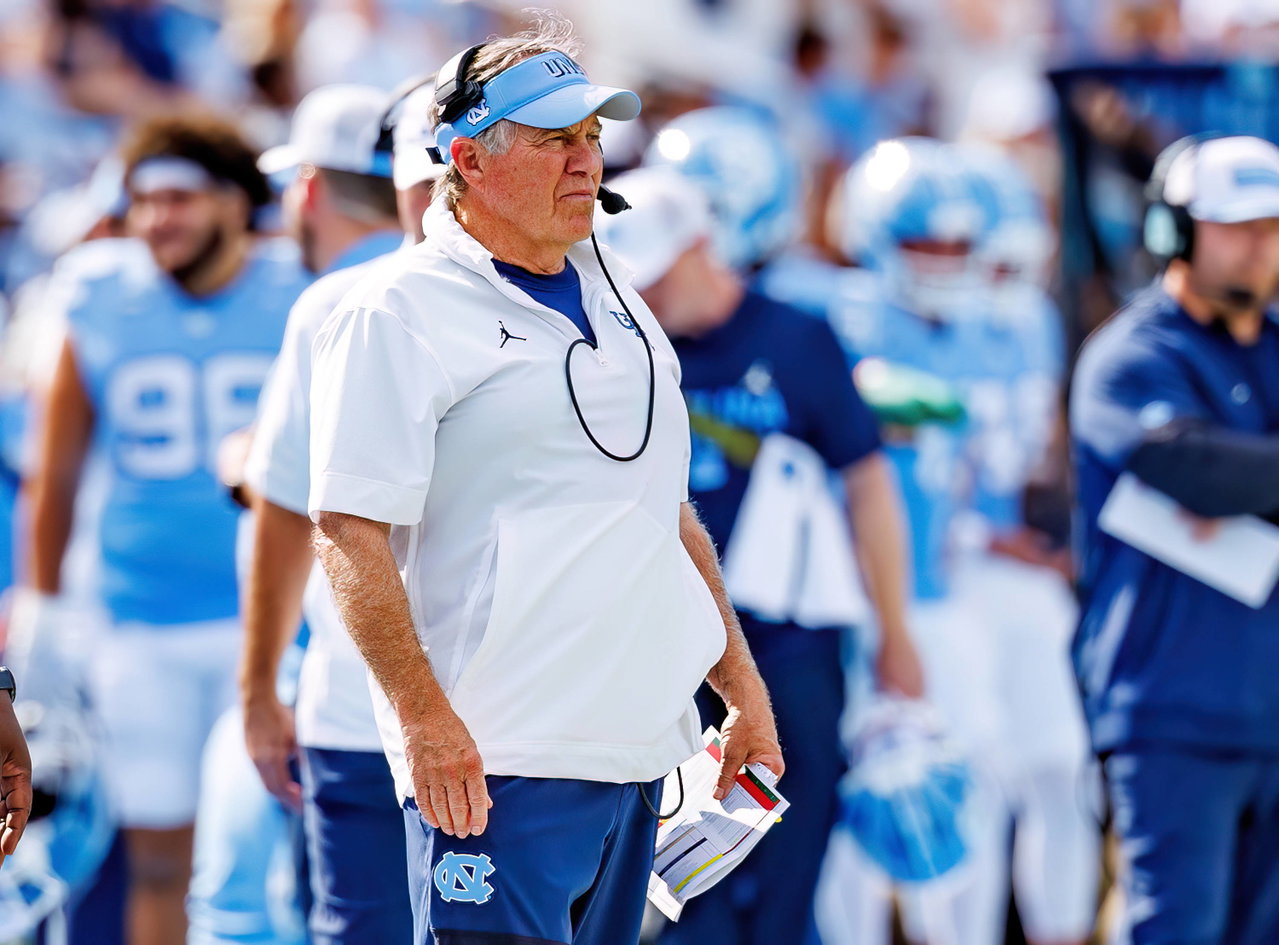
Essentials Inside The Story
- Bill Belichick's former team voiced their concerns after he was snubbed despite a glorious NFL coaching career.
- Apart from biases against Belichick, the Hall of Fame's own rules prevented Belichick from becoming a first-ballot inductee.
- We had predicted last month that the Hall could announce amendments to its bylaws.
Back in 2024, when the Hall of Fame changed its bylaws to reduce an NFL coach’s wait for induction from five seasons after retirement to one, it seemed the universe had cleared a path for coaches like Bill Belichick to reach Canton. After all, what more could you do to achieve eternity in a competitive league where the legend turned an overlooked New England Patriots into the NFL’s modern dynasty? Unfortunately, when the ballot did come calling, that was exactly what Belichick was forced to think.
Watch What’s Trending Now!
It didn’t take too long to wonder why he didn’t get in. But the snub hit so hard that even the Patriots’ biggest icons — who might as well have sworn never to shake hands with Belichick — former quarterback Tom Brady and team owner Robert Kraft, came out to speak for him. It wasn’t enough. But last month, as Canton hosted the biggest NFL honors, some jokes hit hard. And just as we had predicted then, the committee has decided on some changes that will ensure no such snubs will ever happen again.
“The Hall continually reviews its bylaws to ensure the selection process reflects the highest standards of integrity and the magnitude of election to the Pro Football Hall of Fame,” President & CEO Jim Porter said in the release yesterday. “There is no more important task at the Hall of Fame than the election of each new class.”
The weekend after the Hall of Fame induction ceremony in Canton, the Hall’s board of members sits to discuss any changes they may be required to make. Considering the possible reasons why Belichick was snubbed, it was a no-brainer that they would be announcing improvements soon. And so, they did:
- Moving forward, the Selection Committee will be reduced from 50 to 28 members. The Hall says this will create more focused deliberations and address inconsistencies that surfaced during this year’s vote. They have not yet announced their final Selectors for the Class of 2027.
- After a six-year hiatus that began during the COVID-19 period, the Hall will be returning to an in-person annual meeting to consider candidates.
- The categories: 15 Players, 3 Seniors, 1 Coach, and 1 Contributor will change to 13 Players plus one Coach and one Contributor.
- Seniors on final ballot: Eliminates the previous maximum of three Seniors, with all eligible Players now considered together in a single pool regardless of how long they have been retired.
There are many more changes, but when it comes to Belichick, those last two changes are quite important.
You see, in his first ballot, instead of pairing Belichick with coaches, the committee moved him to the Senior category. Each of the 50 selectors could vote for only three candidates in that pool, and a nominee needed at least 40 votes to be elected. Considering that former players like Roger Craig’s case was more urgent than Belichick, who would one day certainly end up wearing the Golden Jacket, the committee chose the player. This was one of the ways the Hall’s own bylaws directly prevented the Patriots legend from going to Canton. The other one, while indirect, still became too crucial to ignore.
Porter said previous selection process bylaws left open the possibility of “unintended biases.” I believe you already know what really happened in this case…
In his Patriots run, controversies were not alien to Belichick. Spygate and Deflategate trapped the coach in the crossfire, and he only made the first one worse by acknowledging how the entire league was doing it; they were just not getting caught. Talk about being too honest and stubborn for your own failure. But the thing is, the Hall might have announced the changes right after Belichick’s snub; the plans to introduce these were already in motion for years now.
The Hall’s improved voting process may not have much to do with Bill Belichick
Considering the timing of the announcement, it won’t come as a surprise that many would connect these changes to the snubbed coach. While he may never be the first-ballot inductee ever, the Hall may have more reasons than one person to make these changes.
Apparently, the work was already in motion for two and a half years now to look into the criteria of the voting process. After in-depth deliberation by Hall of Fame staff members, Board members, Hall of Famers, and Selection Committee members, the board has approved the new bylaws. Of course, they announce new changes every year, with the changes in the integral voting process coming most recently in 2024.
Then, the Hall had announced changes like coaches not needing to wait five years after retirement to be eligible for induction in Canton. They had also announced separate screening committees for modern-era and seniors, among many others. This time, the Hall went deeper into the technicalities.
The unintended biases Porter talked about were possible in three main areas: the disparate skills of the individuals making the initial presentations of nominees for election at the annual meeting; the assignment of a Selector to each of the NFL’s 32 member clubs; and issues related to players reaching their final years of eligibility in the Modern-Era Players category, as the Hall’s statement read. But they have hopefully ended such biases from occurring.
Now, there will be one non-member of the Selection Committee who will make all initial presentations when the committee sits at the annual Selection Meeting. Selectors won’t be assigned to specific NFL teams either, something that may have led to Belichick’s snub as well. But what was interesting to see was that when the world learned of this news, people who were no longer close to Belichick raised their voices against the voting criteria.
Belichick may no longer be the biggest name in New England, but he still has some supporters
Belichick’s run with the Patriots ended after the 2023 season, when he and the franchise agreed to part ways in January 2024 after 24 seasons together. In that period was a dynasty that ran for two decades. But the reaction to Belichick’s omission had already spread well beyond the Hall’s voting room. Tom Brady, who spent 20 seasons playing under Belichick in New England, said he could not make sense of the decision.
“I don’t understand it,” Brady said during an appearance on Seattle Sports. “If he’s not a first-ballot Hall of Famer, there’s really no coach that should ever be a first-ballot Hall of Famer, which is completely ridiculous because people deserve it.”
Robert Kraft, who was also a finalist for the 2026 class, echoed that stance despite the well-documented tension surrounding the end of his partnership with Belichick.
“Whatever perceptions may exist about any personal differences between Bill and me, I strongly believe Bill Belichick’s record and body of work speak for themselves,” Kraft said in a statement. “He is the greatest coach of all time, and he unequivocally deserves to be a unanimous first-ballot Pro Football Hall of Famer.”
Patriots’ former tight end Rob Gronkowski also endorsed head coach Belichick after he felt short on his first eligibility.
“I don’t have a vote, I don’t have a say, but there’s gonna be no doubt that Coach Belichick shall be in the Hall of Fame last year,” Rob Gronkowski on NBC. “He definitely got snubbed last year; he should’ve been in as a first ballot. For whatever reason he wasn’t, but 100% needs to go in this year coming up.”
Whether these changes actually get Belichick into Canton this year remains to be seen. The new bylaws don’t guarantee anyone’s induction. They simply reshape the odds. But the fact that the sport’s most decorated living coach had to become a cautionary tale before the Hall moved to fix a process it now admits was flawed says plenty about how reactive institutional change tends to be.