Imago
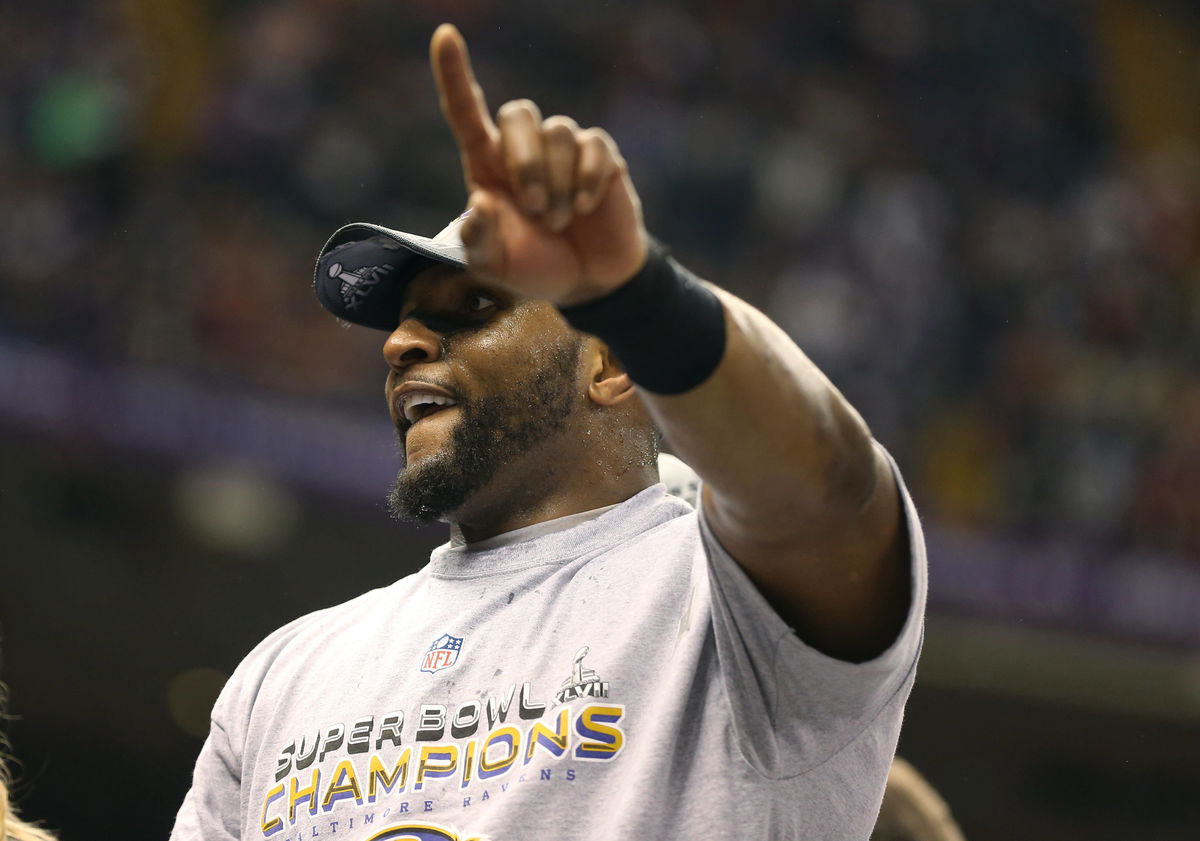
NFL, American Football Herren, USA Super Bowl XLVII-Baltimore Ravens vs San Francisco 49ers Feb 3, 2013 New Orleans, LA, USA Baltimore Ravens inside linebacker Ray Lewis celebrates after defeating the San Francisco 49ers in Super Bowl XLVII at the Mercedes-Benz Superdome. New Orleans Louisiana UNITED STATES, EDITORIAL USE ONLY PUBLICATIONxINxGERxSUIxAUTxONLY Copyright: xMarkxJ.xRebilas-USAxTODAYxSportsx 7020958
Imago
NFL, American Football Herren, USA Super Bowl XLVII-Baltimore Ravens vs San Francisco 49ers Feb 3, 2013 New Orleans, LA, USA Baltimore Ravens inside linebacker Ray Lewis celebrates after defeating the San Francisco 49ers in Super Bowl XLVII at the Mercedes-Benz Superdome. New Orleans Louisiana UNITED STATES, EDITORIAL USE ONLY PUBLICATIONxINxGERxSUIxAUTxONLY Copyright: xMarkxJ.xRebilas-USAxTODAYxSportsx 7020958
Imago
NFL, American Football Herren, USA Super Bowl XLVII-Baltimore Ravens vs San Francisco 49ers Feb 3, 2013 New Orleans, LA, USA Baltimore Ravens inside linebacker Ray Lewis celebrates after defeating the San Francisco 49ers in Super Bowl XLVII at the Mercedes-Benz Superdome. New Orleans Louisiana UNITED STATES, EDITORIAL USE ONLY PUBLICATIONxINxGERxSUIxAUTxONLY Copyright: xMarkxJ.xRebilas-USAxTODAYxSportsx 7020958
Imago
NFL, American Football Herren, USA Super Bowl XLVII-Baltimore Ravens vs San Francisco 49ers Feb 3, 2013 New Orleans, LA, USA Baltimore Ravens inside linebacker Ray Lewis celebrates after defeating the San Francisco 49ers in Super Bowl XLVII at the Mercedes-Benz Superdome. New Orleans Louisiana UNITED STATES, EDITORIAL USE ONLY PUBLICATIONxINxGERxSUIxAUTxONLY Copyright: xMarkxJ.xRebilas-USAxTODAYxSportsx 7020958
Essentials Inside The Story
- Ray Lewis spoke out at the Florida Capitol alongside grieving families.
- He urged parents to rethink how they connect with their kids.
- A push for stronger awareness around youth sports safety is gaining momentum.
While Baltimore Ravens legend Ray Lewis is still grieving the loss of his son, he’s starting a difficult conversation about connecting with today’s youth. Back in 2023, Lewis faced a situation no parent should ever endure when his son passed away due to an accidental overdose. Now, nearly three years later, while Lewis joined other families grieving the loss of their kids in Florida, he chose to address issues about parenting, mental health, and the growing addiction to social media among the youth.
Watch What’s Trending Now!
“There are a lot of issues,” Ray Lewis said while addressing the media at the Florida Capitol on February 25. “A lot of issues on why our kids are dying. There are a lot of things that we need to take a different approach to when we think about the things that our children should be exposed to. Social media is worse than drugs now because it’s taking the ability to be a parent simply away. Instead of hugging a child, we now give them an iPad.”
On February 25, Ray Lewis joined lawmakers at the Florida Capitol at a conference to honor the families of two former student-athletes whose deaths have been associated with brain injuries and long-term effects of head trauma. While the event focused on concussion awareness, Lewis widened the lens as he urged parents to reflect on how today’s environment, especially social media, shapes children’s mental and emotional well-being.
Ray Lewis believes that social media is harmful to the youth, not because technology itself is evil, but because it often replaces connection, which has some major consequences. Lewis is now fighting alongside other families for better protection for young athletes. There is also a House Committee preparing to vote on a bill that would require guardians and parents to get educated about the risks of contact sports. Meanwhile, Florida lawmakers are pushing legislation to increase awareness around concussions and brain injuries in youth sports.
Lewis’ message underscores a painful reality: many young people, including athletes, struggle with their mental health in silence.


“Social media is worse than drugs now.”
Former Ravens LB Ray Lewis lost one of his sons in 2023 to an accidental overdose, and his son was later said to have had Stage 2 CTE. Now, Lewis speaks on the importance of taking care of yourself.
Via: WPTV pic.twitter.com/BM6kXCPZR7
— The Sporting News (@sportingnews) March 1, 2026
“I think we just have to be more diligent and understand that there are so many ways to take care of yourself if you’re gonna engage in the sports and not sit up on the phone all night and think you could just get up and do it all over again. We just got to help our kids more with the education of the game of science,” Ray Lewis further suggested.
The Hall of Famer’s words carry weight because they come from his own experience with his son, Ray Lewis III. On June 14, 2023, Lewis III was found unresponsive in a Central Florida residence. Authorities later confirmed that alcohol and narcotics, including an anti-anxiety pill, were also present near Lewis III’s body. The officers then failed to revive Lewis III, and he passed away at just 28 years old. Later reports, however, suggested that chronic traumatic encephalopathy (CTE), a degenerative brain disease caused by repeated head trauma may have contributed to behavioral and mental health struggles leading up to his death.
How did concussions and brain injuries lead to Ray Lewis III’s death?
Ray Lewis III started playing tackle football at age five. Lewis III later followed in his father’s footsteps, playing as a running back for the Miami Hurricanes and the Virginia Union Panthers. Although he briefly shifted his focus to music, football remained a part of Lewis III’s life until his sudden death in 2023. Then, in 2024, Boston University’s CTE Center confirmed that Lewis III had stage 2 CTE, which might be due to the concussions that he suffered while playing football.
“Little did I know when I put my son in tackle football at age 5, I ran the risk of having to bury him 22 years later,” Lewis III’s mother, Tatyana McCall, said in a press release from the Concussion Legacy Foundation in 2024. “I would have done something different now, knowing the risks. We need to wait until our babies are at least 14 to allow them to play tackle football. It also breaks my heart that you have to die to get a diagnosis for this disease.”
In 2019, Boston University researchers found that each additional year of tackle football was associated with a significantly higher likelihood of developing CTE. Looking back, the warning signs were also there in Lewis III’s case as he reportedly experienced memory loss, impulsive behavior, and emotional instability, which are some symptoms commonly associated with CTE. Lewis III’s family sensed something was wrong, but didn’t fully understand what they were facing until it was too late.
Therefore, with more awareness now, Ray Lewis joins other parents in pushing for more education and stronger safety rules so parents know the real risks of contact sports. Lewis isn’t attacking any sport, but he’s asking for change.
“What is it that we’re not hearing? What is it that we’re not saying? And what is it that we’re not doing? There’s something that has to change; if not, our kids don’t have a future,” Lewis also said in the conference on February 25.
Through his Ray Of Hope Foundation, Lewis is turning personal tragedy into a tangible resource, aiming to provide the mental health support for young people that he now so passionately advocates for.
Related Newsletters