
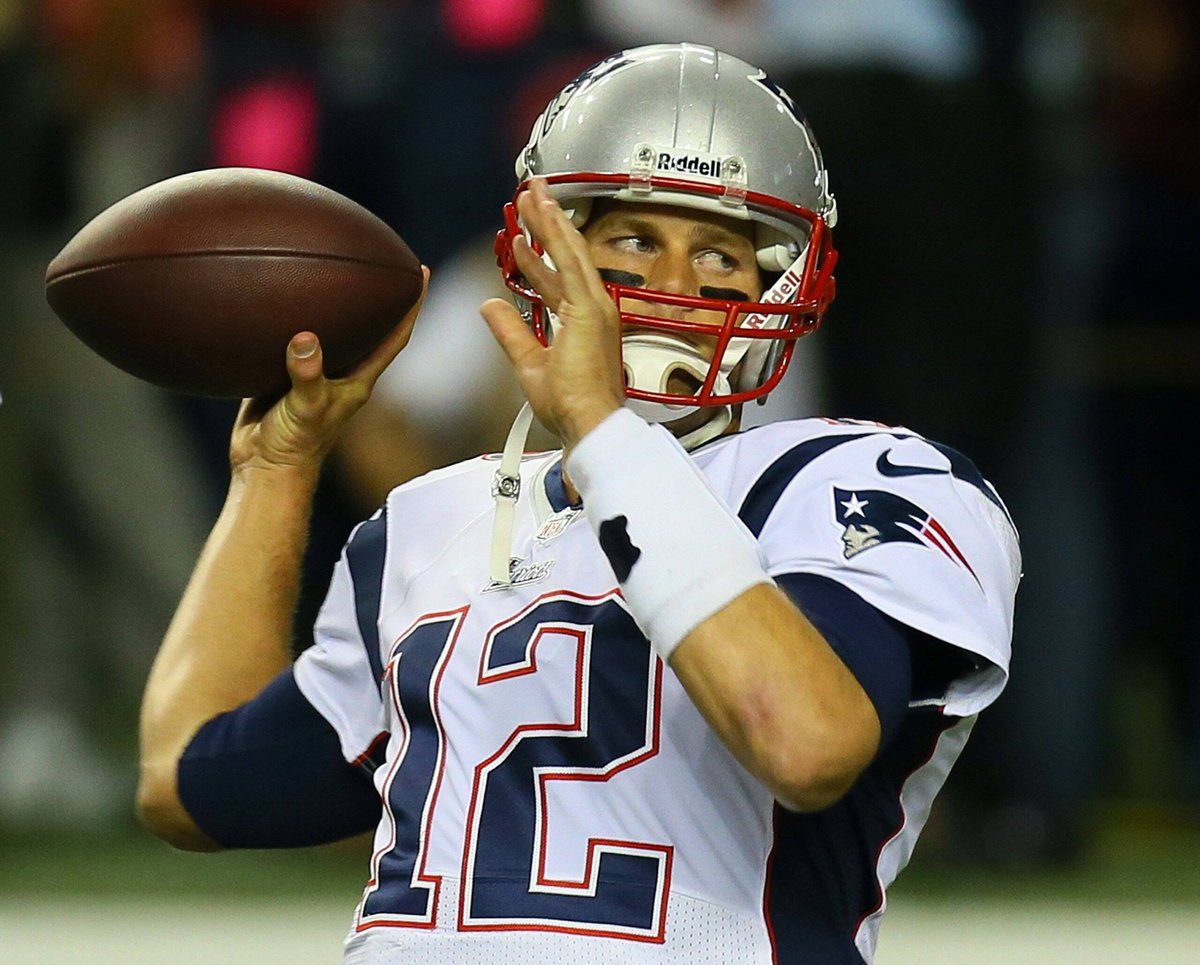
On September 23, 2001, former New York Jets linebacker Mo Lewis collided with New England Patriots quarterback Drew Bledsoe near the sideline in the fourth quarter of their matchup. A lot changed on that possession, as Bledsoe was out for the entire season. Tom Brady, the second-year backup at the time, jogged on minutes later, and the rest was history for the Patriots, as a dynasty was born after that introduction. The league never forgot that moment, and neither did the man who got shoved out.
Watch What’s Trending Now!
On the No Free Lunch podcast with Ndamukonh Suh, Bledsoe opened up on what he really felt when he returned to find his spot as a QB was taken.
“When I got hurt, I’d been the guy. Since like my sophomore year of high school, I was the guy. And I had just signed a 10-year extension with the Patriots. I was going to be the guy forever,” Bledsoe recalled. “I got hurt and this disrespectful little [expletive] out of Michigan, this Brady kid came in and all of a sudden the team’s playing pretty good. Well, I get healthy, and I’m assuming my job’s going to be there. And my job wasn’t there. And so when you ask about the price I paid, the price was my pride.”
Bledsoe hadn’t parachuted into Foxborough as a backup. He arrived in 1993 as the No. 1 overall pick, eight years before the Pats took a swing on Tom Brady. Until that point, Bledsoe had dragged the offense forward, made three Pro Bowls with New England, and started the first Super Bowl appearance (XXXI) in franchise history. By 2001, the Patriots were his team. The locker room, the front office, the fanbase – everyone assumed he’d be the quarterback for years.
View this post on Instagram
Now, Bledsoe has previously said that Tom Brady “always carried himself with class,” and that their relationship remained respectful, even as he struggled with how the Patriots handled the transition. The “disrespectful” comment now is about the whole situation itself, and not particularly about Brady’s behavior.
The night Bledsoe got hit, Brady had already taken the huddle. The Patriots finished the season 11-5 with Brady under center, won the AFC East, reached the Super Bowl, and beat the St. Louis Rams. Interestingly, Bledsoe, back from injury, relieved Brady in the AFC championship game and helped the team win against the Pittsburgh Steelers. The Pats still named Brady the starter for Super Bowl XXXVI, and that decision folded like a trapdoor under Bledsoe’s feet.
“I had to sacrifice my pride in order to take a new role that I’d never been in – being the support guy on the sidelines, and supporting Tom and supporting the team and being a team-first guy,” Bledsoe continued. “But the breakthrough for me was, ‘okay, you can be a good person and a good teammate when it’s the hardest.’”
The resentment was real. Years later, in the E:60 documentary, Bledsoe revealed that he didn’t wear his Super Bowl XXXVI ring for a long time. He didn’t want to give it back – he was proud of being part of a title. But he also didn’t want to parade it like he’d been handed a clean ending.
“Truth be told, I didn’t wear (the Super Bowl 36 ring) for quite a while,” Bledsoe had admitted. “I didn’t know where it was for a long time. But now I wear it, every now and then. I’m proud of it, partly because I could’ve torn down the whole show if I wanted to be an idiot. And instead, I tried to be a good teammate. So, I’m proud of it, but it took a little while.”
He stayed in the room, behind the scenes, and the Pats didn’t have to watch him burn the place down. Bledsoe accepted the clipboard, the water bottles, and the edge of the huddle. The championship ring finally sits on his hand, and his image has shifted from ‘sidelined franchise quarterback’ to ‘The QB who didn’t collapse the locker room.’
The injury that nearly ended Drew Bledsoe’s career is the hinge that connects the two halves of this story. A crack in his chest on that September 2001 sideline opened the door for Tom Brady to walk through. The pride Bledsoe talks about on the No Free Lunch podcast makes even more sense when you see just how close he came to death – and just how little choice he had in who took over.
The bleed that ended Bledsoe’s Patriots era
That hit from Mo Lewis looked painful even in a highlight reel as he ran right into Drew Bledsoe’s chest cavity. The impact tore a blood vessel, flooding blood into the space between his lungs and chest wall. But nobody had any idea. At the time, Bledsoe had stayed on for one more drive after being hit, before a concussion designation would sideline him. Brady had noticed that Bledsoe was having trouble speaking or following the game.
Tom Brady came in as the backup, and we know how that turned out. But as Bledsoe walked back to the locker room, a medical staff decided to check up on him. Soon after, Bledsoe was fighting to stay conscious while being rushed to the hospital. The Patriots’ team physical, Dr. Thomas Gill IV, later said that if left untreated, Bledsoe “could have died.”
When Bledsoe finally regained his senses at the Massachusetts General Hospital, the doctors had inserted a chest tube to drain the blood and wired him into a transfusion line. Outside, he’d never be the Patriots’ starting quarterback again.
The doctors later confirmed he’d lost more than two liters of blood – roughly a quarter of what someone of Bledsoe’s build would have carried.
Imago
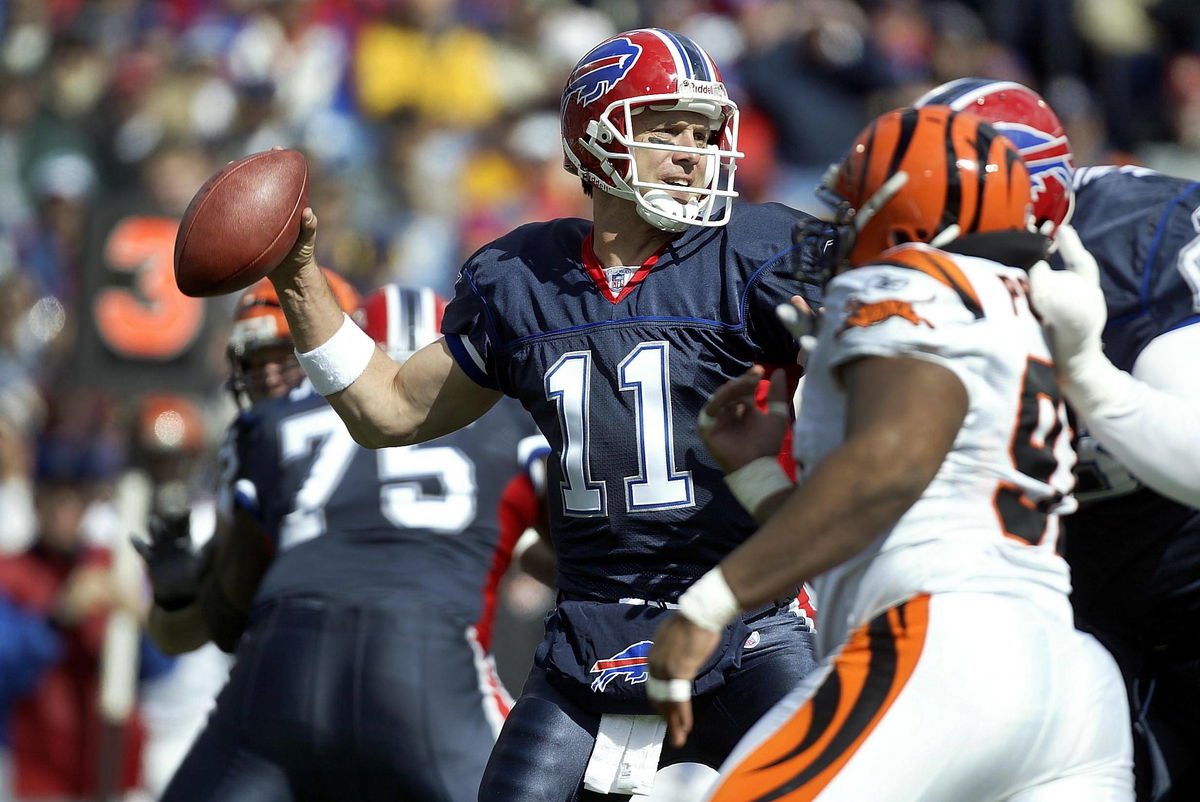
US PRESSWIRE Sports Archive Oct 5, 2003 Orchard Park, NY, USA FILE PHOTO Buffalo Bills quarterback Drew Bledsoe 11 in action against the Cincinnati Bengals at Ralph Wilson Stadium. Orchard Park, New York, UNITED STATES, EDITORIAL USE ONLY PUBLICATIONxINxGERxSUIxAUTxONLY Copyright: xMPS-USAxTODAYxSportsx 4351378
The medical reality was worse than the narrative around it. The public story that year was about how a young backup played well, took over, and won a Super Bowl. The private one was about a quarterback walking up in a hospital, realizing he’d almost died. The team never had a choice about who was available, and because of that, the old starter had to now accept that he was a backup.
Now, head coach Bill Belichick had later revealed that he was already planning to bench Bledsoe around that time. They got that chance when Bledsoe got injured, and Brady transformed the Patriots in a single season. The decision to start Brady in the Super Bowl that year felt like a validation of the new plan.
The final image isn’t Tom Brady raising the Lombardi or Drew Bledsoe throwing the ring in a drawer. It’s Bledsoe walking through the streets of Boston years later, the Patriots’ legacy behind him, and being greeted like a local. The way he’s still folded into the city’s rhythm – that’s the quiet receipt for the pride he set down. The loss of the job stings; the space he’s carved out since then doesn’t, and that’s captured in the words of the man himself.
“I walk down the street and instead of autographs and selfies and all that stuff, like, ‘Hey Drew, what’s up, man? Good to see you. How’s the wine?” Bledsoe shares. “They feel like I’m actually one of them. Like I’m family. I was there for nine years … and the fact that I wrote them a thank you note in all three major papers on my way out the door. You know, that’s been the payoff for that sacrifice.”