
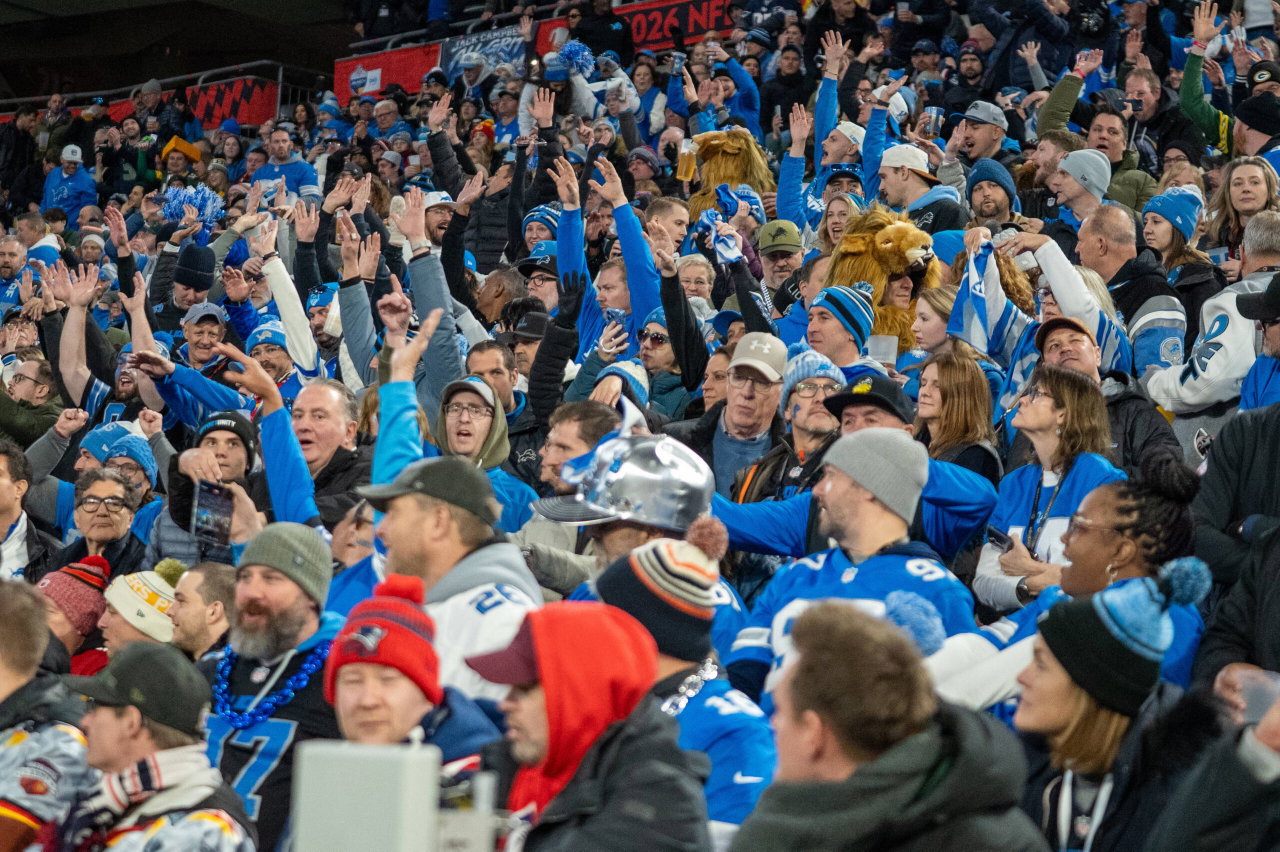
Thanksgiving football has become part of the American holiday routine. Millions of fans now plan their day around the NFL schedule, from Detroit’s traditional afternoon kickoff to Dallas’ annual home game. But the league’s Thanksgiving spectacle did not begin with a grand plan. It grew out of one team’s attempt to win over a city and a gamble that changed the NFL’s calendar for generations.
Watch What’s Trending Now!
The sport’s connection to Thanksgiving, however, goes back much further. College teams had played on the day since the 19th century, and the NFL itself held six Thanksgiving games during its inaugural 1920 season.
The Chicago Bears and Chicago Cardinals also met regularly on the holiday in the years that followed. Red Grange even made his NFL debut for the Bears on Thanksgiving in 1925.
However, the modern tradition took shape in Detroit in 1934.
Radio executive George A. Richards purchased the Portsmouth Spartans and moved the franchise to Detroit earlier that year. He renamed the team the Lions, but the new club faced a challenge. Detroit already had a major sporting attraction in the Tigers, and the Lions needed to capture the city’s attention.
Which NFL fan base is the most loyal? The fans' top 3
Fans are weighing in on this one
See the full top 32Richards saw Thanksgiving as an opportunity. He arranged a holiday matchup against the Chicago Bears, who entered the game with an 11-0 record. Detroit had also made an impressive start at 10-1, so the contest offered more than a marketing spectacle. It carried major divisional implications.
Richards also secured a national radio broadcast through NBC’s 94-station network. Graham McNamee and Don Wilson called the game, which gave the Lions exposure beyond Detroit.
The response exceeded expectations. The 26,000 available tickets sold out two weeks before kickoff. The Pro Football Hall of Fame estimated that another 25,000 people might have attended if the stadium had offered enough seats.
The Bears eventually won 19-16, but Richards had achieved his larger objective. The Lions had captured the city’s attention, and Thanksgiving football had found a lasting home in Detroit.
A Defeat That Helped Build a Tradition
The Bears defeated Detroit again, 10-7, in a rematch three days later. But the Lions returned stronger the following season. In 1935, Detroit beat Chicago 14-2 on Thanksgiving, clinched the Western Division, and later defeated the New York Giants to win its first NFL championship.
The holiday fixture continued through 1938 before the Second World War interrupted it from 1939 to 1944. Detroit brought the tradition back in 1945 and has hosted Thanksgiving ever since.
The NFL also expanded the broadcast reach of the occasion. The 1934 contest had made history as the first nationally broadcast Thanksgiving game on radio. In 1953, the Packers and Lions played the first nationally televised Thanksgiving matchup.
For more than three decades, Detroit was the NFL’s main Thanksgiving host. That changed in 1966, when the Dallas Cowboys joined the holiday schedule.
The league wanted a second Thanksgiving host, but several teams reportedly declined the opportunity. Dallas general manager Tex Schramm saw a chance to raise his team’s profile. The Cowboys had not yet enjoyed a winning season, and a nationally televised holiday game offered valuable exposure.
Schramm volunteered Dallas, but he wanted a home game. The Cowboys faced the Cleveland Browns on November 24, 1966, and won 26-14 before 80,259 fans at the Cotton Bowl.
Dallas hosted Thanksgiving games through 1974 before the NFL handed the slot to the St. Louis Cardinals in 1975 and 1977. Following the 1977 season, commissioner Pete Rozelle approached Schramm about bringing the Cowboys back to the holiday schedule. Schramm agreed on one condition: Dallas had to host the game permanently. Rozelle accepted, telling him, “It’s yours forever.”
The agreement helped establish the two-team Thanksgiving structure that fans came to expect. Detroit and Dallas became the holiday’s regular hosts, apart from their respective interruptions.
In 2006, the NFL added a third Thanksgiving game in primetime. The holiday had grown from Richards’ original Detroit experiment into a full-day football event.
The 2026 schedule brings the story back to where it began. The Detroit Lions will host the Chicago Bears on November 26, 92 years after their first Thanksgiving meeting in 1934.

A Thanksgiving matchup you won’t want to miss 🔥 CHIvsDET – Thursday 1pm ET on CBS/Paramount+ Stream on @NFLPlus

The matchup is the 21st Thanksgiving meeting between the franchises. Chicago leads the holiday series 11-9, although Detroit won their most recent Thanksgiving encounter, 23-20, in 2024.
The 2026 game opens a three-matchup Thanksgiving slate. Philadelphia will visit Dallas later in the afternoon, before Kansas City travels to Buffalo for the night game. The Lions-Bears meeting gives the holiday schedule a direct link to the event that helped establish the NFL’s tradition.
Netflix’s Arrival Signals a New Chapter for Thanksgiving Football
The NFL is no longer limiting its holiday football schedule to Thursday. In 2006, the league introduced a third Thanksgiving game in primetime. Amazon added a Black Friday matchup in 2023. Now, Netflix has secured another window with the first-ever Thanksgiving Eve game.
On November 25, 2026, the Green Bay Packers face the Los Angeles Rams at SoFi Stadium. Netflix will stream the matchup globally, and U2 will headline the halftime show. The agreement gives Netflix the Thanksgiving Eve game through 2029.
The expansion reflects the commercial appeal of holiday football. Last year’s Thanksgiving tripleheader averaged 44.7 million viewers per game, according to the NFL. The Chiefs-Cowboys matchup alone averaged 57.2 million, setting a regular-season viewership record.
However, the move to streaming has also raised concerns about accessibility. Senator Tammy Baldwin criticized the decision to put Packers-Rams on Netflix, arguing that fans in parts of Wisconsin would need a paid subscription to watch their own team. Her proposed For the Fans Act seeks to protect free local access to games involving teams based in each state.
The NFL’s broadcasting model is also facing scrutiny from the Department of Justice. In April 2026, the department opened an inquiry into whether the league’s television agreements could violate antitrust rules, including concerns about subscription costs. The investigation puts the NFL’s growing reliance on streaming services under a new spotlight.
In 1934, Richards used a Thanksgiving broadcast to sell Detroit football to a new audience. Nine decades later, the NFL is using the same holiday window to reach subscribers worldwide. The motive to grow the game remains familiar, but the business behind it has changed dramatically.